
Yahoo Nears $1.4 Billion Deal to Sell AOL to Italy’s Bending Spoons

Yahoo is close to finalizing a deal to sell its AOL unit to Italian technology company Bending Spoons for about $1.4 billion, according to four sources familiar with the matter. The sale would mark the latest chapter in the decline — and reinvention — of one of the internet’s earliest giants.

The Milan-based app developer is in advanced negotiations to purchase AOL, the sources said, but cautioned that no final agreement has been signed, and the talks could still collapse.

Yahoo, owned by Apollo Global Management, did not respond to Reuters’ request for comment, while both Bending Spoons and Apollo declined to discuss the ongoing talks. Apollo acquired a 90% stake in Yahoo from Verizon in 2021 in a $5 billion deal.

FROM INTERNET ICON TO REVAMP OPPORTUNITY

Once the dominant force of the early internet, AOL was synonymous with the “You’ve Got Mail” era and played a defining role in the online revolution of the late 1990s. Its 2000 merger with Time Warner, then the largest corporate deal in history, ended in massive losses and regulatory scrutiny — symbolizing the collapse of the first dot-com boom.

A successful sale to Bending Spoons would be a fresh start for the AOL brand, adding its advertising and subscription-based services — including LifeLock, LastPass, and McAfee Multi Access — to the Italian company’s fast-expanding portfolio.

A source familiar with AOL’s recent performance said the company has seen 20% year-over-year website traffic growth, driven primarily by users aged 25 to 54, a shift from its traditionally older demographic. The rise is attributed to new content verticals such as Health, Science & Tech, Home & Garden, and True Crime.

BENDING SPOONS: EUROPE’S RISING TECH STAR

Founded in 2013 by Luca Ferrari, Bending Spoons has become one of Europe’s most prominent tech firms, known for acquiring struggling digital platforms and modernizing them. Its apps now attract 300 million monthly users worldwide.

The company was valued at $2.55 billion after a February 2024 funding round, earning it “unicorn” status — a rarity in Italy’s tech ecosystem.

Bending Spoons has recently been on an acquisition spree, purchasing WeTransfer earlier this year and agreeing to take Vimeo private for $1.38 billion in what is currently its largest deal.

Adding AOL’s global reach would further bolster the company’s ambitions and position it as a potential IPO candidate in the United States. CEO Luca Ferrari previously told Reuters that while no immediate plans exist for a public listing, the firm is “working to be ready” and looking to expand beyond Europe.

If completed, the $1.4 billion AOL acquisition would cement Bending Spoons’ role as a new European powerhouse reviving legacy internet brands for the AI and mobile era.
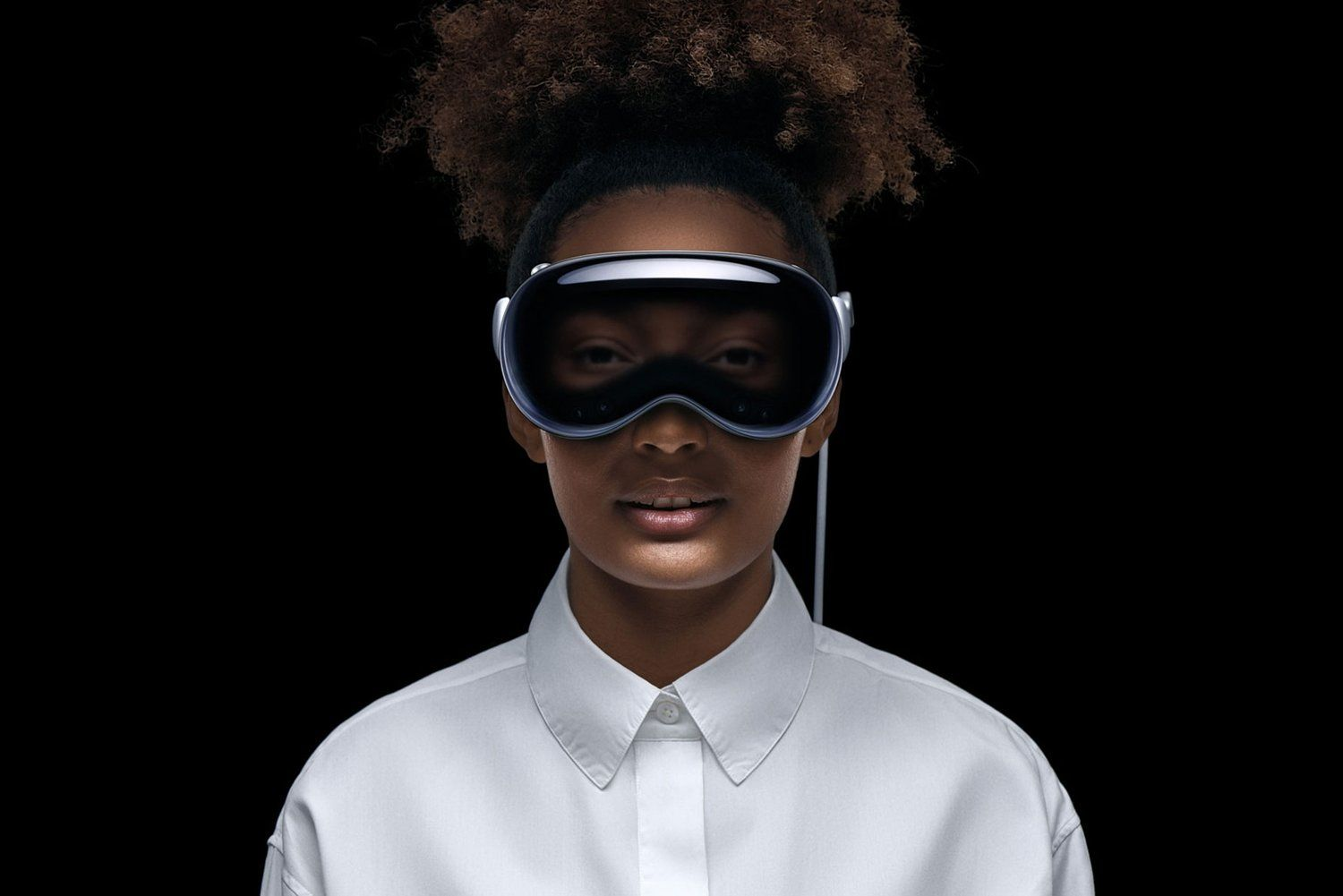

Apple Halts Vision Pro Overhaul to Focus on AI-Powered Smart Glasses

Apple has paused development of its next-generation Vision Pro headset to redirect resources toward the creation of artificial intelligence-powered smart glasses, according to a report by Bloomberg News citing people familiar with the matter.

The company had been working on a cheaper and lighter version of its $3,499 Vision Pro — code-named N100 — with a tentative release window in 2027. However, Apple reportedly told employees last week that development teams will now shift their focus to an AI glasses project, accelerating its timeline to compete directly with Meta Platforms’ smart eyewear.

The decision reflects Apple’s changing strategy in the face of slowing Vision Pro sales. The mixed-reality headset, launched in February 2024, received strong initial attention but quickly lost momentum amid limited mainstream content and competition from more affordable alternatives like Meta’s Quest series.

TWO NEW GLASSES MODELS IN DEVELOPMENT

Apple is said to be working on two distinct smart glasses models:

  • N50, the first version, will connect to an iPhone and will not include a display. Apple aims to unveil this model as early as next year, with a public release planned for 2027.

  • A second, more advanced model — equipped with a built-in display — is now being fast-tracked for release around 2028, according to Bloomberg’s sources.

The advanced model is seen as Apple’s answer to Meta’s Ray-Ban Display glasses, which CEO Mark Zuckerberg showcased in September along with a new Oakley-branded “Vanguard” model designed for athletes.

Apple’s upcoming glasses will reportedly emphasize voice control and AI-driven functions, integrating tightly with iPhone services and Apple’s growing ecosystem of on-device intelligence.

SHIFTING STRATEGY IN THE AI ERA

The move highlights Apple’s broader push to catch up in artificial intelligence, an area where competitors such as Google and Meta have been more aggressive.

At Apple’s September product launch event, the company introduced new iPhones and a slimmer iPhone Air, but industry analysts noted the absence of major AI announcements, raising questions about Apple’s roadmap in the rapidly evolving AI market.

By contrast, Google’s Gemini-powered Pixel phones and Meta’s AI-integrated wearables have taken the spotlight in the consumer AI space.

When contacted by Reuters, Apple declined to comment on the report.

If the timeline holds, Apple’s shift could mark a major strategic pivot from mixed reality to wearable AI, positioning its smart glasses as a potential successor — not just a companion — to the iPhone.

How Silicon Valley’s “Warlord” Steven Simoni Took AI Weapons From Meme to Military Contracts

At a film premiere in New York’s East Village, tech entrepreneur Steven Simoni, dressed in a designer Celine tracksuit and wearing a silver chain, laughed as he introduced himself:

“I’m a warlord now, bitch.”

The remark, half-joking and half-serious, summed up Simoni’s latest transformation — from Silicon Valley startup founder to defense-tech provocateur.

Simoni, who once sold his QR-code payment company Bbot to DoorDash for $125 million, is now co-founder of Allen Control Systems, a startup that builds AI-powered autonomous machine guns designed to shoot drones out of the sky. Its flagship product, called the Bullfrog, combines advanced targeting systems with AI algorithms capable of identifying and destroying unmanned aerial vehicles.

“The future is basically Skynet,” Simoni quipped, referencing the self-aware AI from The Terminator. “I want to supply those products to the government so they can use them.”

The 39-year-old Navy veteran has raised $40 million for his new venture — including a round led by Craft Ventures, the firm co-founded by David Sacks, now the Trump administration’s AI czar. Allen Control Systems has also secured prototype testing contracts with the U.S. Army and Special Operations Forces, marking a dramatic pivot from Simoni’s previous life in hospitality tech.

A Silicon Valley Shift Toward War Tech

Simoni is part of a growing movement in Silicon Valley where entrepreneurs and venture capitalists are redirecting their focus from consumer apps to military technology. Inspired by companies like Anduril (founded by Oculus creator Palmer Luckey) and Palantir, this new generation of startups is developing autonomous defense systems, drone swarms, and battlefield AI for the Pentagon.

“I hate war, but war is always going to happen anyway,” Simoni said. “So, someone’s going to make this product at some point.”

He has embraced the “warlord” persona, using it as both satire and branding. His brash approach has earned him appearances on Fox News, invitations to defense summits, and meetings with high-ranking military officials.

During a podcast episode of The Drone Ultimatum, General James Rainey, head of Army Futures Command, said the Pentagon is working to “get fiscal agility to go out to great U.S. tech companies” like Simoni’s and put technology in the hands of warfighters faster.

The U.S. Army confirmed it is in the process of awarding Allen Control Systems a contract to evaluate whether the Bullfrog can integrate with existing Army platforms.

From QR Codes to Combat

Simoni and co-founder Luke Allen met in the U.S. Navy while working on nuclear reactors. After several failed startups, they found success in hospitality tech, creating a QR ordering platform that exploded in popularity during the pandemic. But when Russia invaded Ukraine shortly after selling Bbot, they turned their engineering focus to defense.

Allen began prototyping the Bullfrog in 2023, while Simoni provided funding and eventually took over as CEO. “Every company needs a front man,” Simoni said.

Their product — a turret-mounted AI gun priced around $350,000 — can rotate 400 degrees in under a second. In demos, it has successfully shot drones from the sky, though occasional malfunctions persist. “It’s in its post-adolescent stage,” Simoni joked.

Prototype units bear playful names like Eminem and Bob Ross, and internal circuit boards are printed with caricatures of Simoni and Allen. “If Russia or China recover one of these, they’ll see our faces,” Simoni said. “We’re laughing at them.”

Politics, Parties, and Pentagon Access

Simoni has leveraged both charisma and connections. He has hosted fundraisers for Republican lawmakers and appeared alongside influential figures at Executive Branch, the elite private club founded by Donald Trump Jr., which caters to defense investors and political insiders.

His relationships with venture capitalists like Sacks have also brought him close to the heart of Washington’s defense-tech network. “The generals love me,” Simoni said after attending karaoke nights with military officials.

But not everyone is impressed. Critics within the tech community have mocked his transition from software to AI-powered weaponry. One software engineer publicly rejected his recruitment email with the caption:

“Imagine selling a $125M startup and deciding building AI guns is your life mission.”

Simoni responded by posting a photo of himself wearing a T-shirt printed with her post, grinning. “I don’t have to imagine it,” he wrote.

The Next Arms Dealer?

Allen Control Systems is already expanding its portfolio, developing laser dazzlers to blind drones and an aerial system called Scourge. Simoni plans to take the company public via a SPAC merger as early as 2025, betting that retail investors will embrace a “real-life Terminator company.”

“Whenever I go on Fox News, my inbox is filled with thousands of messages: What’s the ticker?” Simoni said.

Whether Silicon Valley’s new “warlord” becomes the next Palmer Luckey or the next cautionary tale depends on how fast he can turn hype into battlefield-ready hardware.

As one defense anthropologist put it:

“When it comes to weapons systems, failure isn’t just a bad demo — it can be catastrophic.”