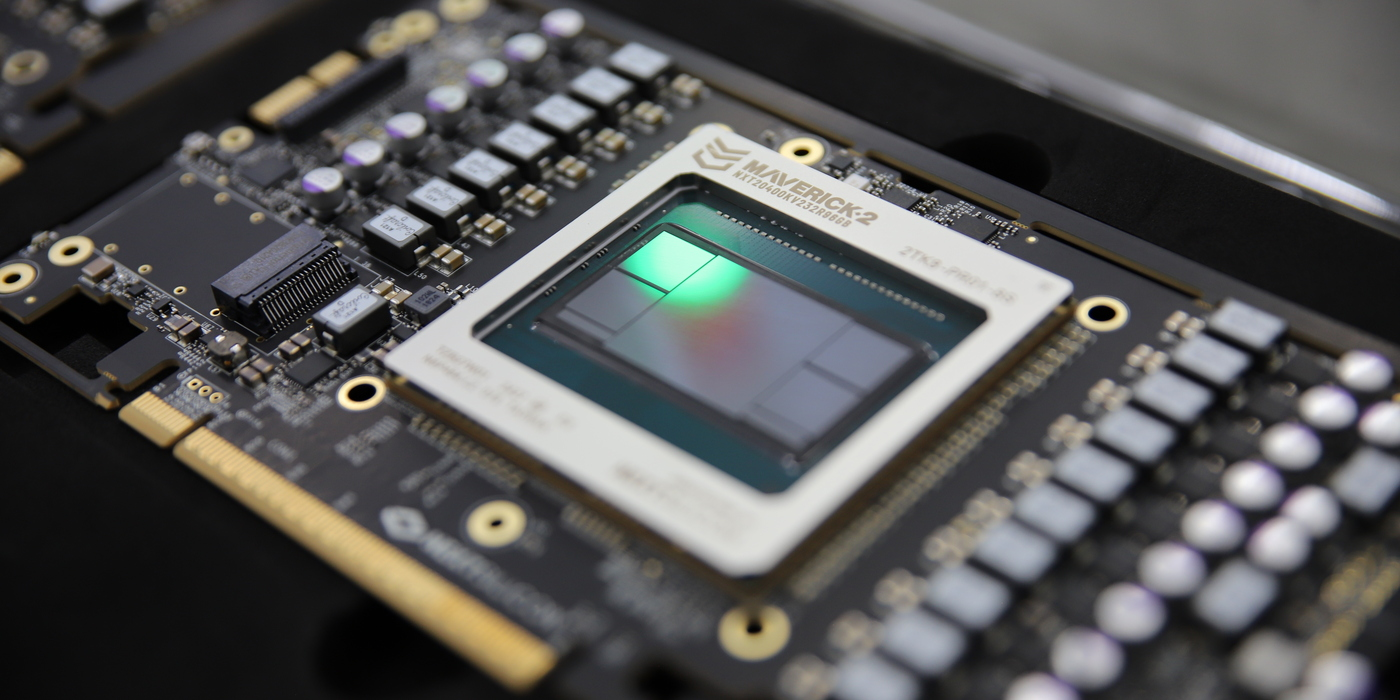
NextSilicon Unveils New Processor to Compete with Intel, AMD, and Nvidia

Israeli startup NextSilicon has announced the development of a new central processing unit (CPU) aimed at challenging industry leaders Intel and AMD, while positioning itself as an alternative to Nvidia’s computing systems. The company’s flagship “Maverick-2” chip is already in production and is designed for high-precision scientific computing tasks such as nuclear weapons modeling — an area historically dominated by Nvidia.

NextSilicon, which has raised $300 million in funding, revealed that its upcoming CPU is based on RISC-V, an open-source instruction set architecture increasingly adopted by major chipmakers like Nvidia and Broadcom. The CPU is currently a test prototype but will eventually complement the company’s Maverick-2 chip to create a more complete high-performance computing ecosystem.

The startup claims its chips can perform certain computations faster and more efficiently than Nvidia’s offerings, without requiring software rewrites. U.S. Sandia National Laboratories has been testing systems powered by NextSilicon chips for three years. According to senior scientist James H. Laros III, the results have been “impressive,” showing strong potential for advancing computational performance while minimizing code changes.


OpenAI to Offer UK Data Residency Through Government Partnership

penAI is introducing a new UK data residency option, allowing businesses and government bodies to store their data locally. The initiative, officially announced by Deputy Prime Minister David Lammy, stems from a partnership between OpenAI and the UK Ministry of Justice (MoJ). It aims to enhance privacy, cybersecurity, and national resilience while unlocking greater potential for AI innovation across the public sector.

Lammy highlighted how AI is already transforming operations within the MoJ. Over 1,000 probation officers will use “Justice Transcribe,” an AI-powered tool that records and transcribes conversations, cutting administrative time and improving efficiency. “By adopting AI, we’re freeing up staff to focus on what truly matters—protecting the public,” Lammy said.

OpenAI CEO Sam Altman noted a fourfold increase in UK users over the past year and expressed excitement about how local businesses are leveraging AI for productivity gains. The UK data residency option will be available for customers using OpenAI’s API Platform, ChatGPT Enterprise, and ChatGPT Edu. The move comes as OpenAI continues to expand its product ecosystem, recently launching ChatGPT Atlas, an AI-driven browser designed to transform online search.

Waymo Begins Manual Autonomous Vehicle Tests at Newark Airport

Alphabet’s self-driving technology unit, Waymo, has started manual testing of its autonomous vehicles at Newark Liberty International Airport. This initiative marks a significant step toward introducing its robotaxi services to one of the busiest airports in the New York metropolitan area.

The testing, conducted with human drivers, is part of a collaboration between Waymo and the Port Authority of New York and New Jersey. The company aims to carefully evaluate airport traffic patterns, ensuring safe and efficient integration of self-driving vehicles into real-world environments.

Although Waymo’s expansion has been gradual due to strict regulations and costly technology, it continues to advance through partnerships with ride-hailing platforms and fleet operators. The company’s move coincides with Tesla’s upcoming rollout of its long-awaited robotaxi network in the U.S. Meanwhile, Waymo plans to launch its fully driverless ride-hailing service in London by 2026, expanding its global footprint.