
Conservative Activist Robby Starbuck Sues Google Over Defamatory AI ‘Hallucinations’

Conservative activist Robby Starbuck has filed a lawsuit against Google, accusing the company’s artificial intelligence systems of generating and spreading false and defamatory claims about him, including labeling him a “child rapist,” “serial sexual abuser,” and “shooter.”

The complaint, filed in Delaware state court, alleges that Google’s Bard and Gemma chatbots produced fabricated statements that reached millions of users, citing non-existent sources and failing to correct errors after being notified. Starbuck is seeking at least $15 million in damages.

A Google spokesperson, Jose Castaneda, acknowledged that the allegations stem from AI “hallucinations” — a known issue with large language models (LLMs) where systems generate false or misleading information. “We disclose this issue and work hard to minimize it,” Castaneda said. “But as everyone knows, if you’re creative enough, you can prompt a chatbot to say something misleading.”

Starbuck, a vocal critic of diversity, equity, and inclusion (DEI) policies, said the false claims have caused reputational damage and personal safety risks. “No one — regardless of political beliefs — should ever experience this,” he said. “We must demand transparent, unbiased AI that cannot be weaponized to harm people.”

The lawsuit details how, in December 2023, Bard falsely linked Starbuck to white nationalist Richard Spencer using fabricated citations. Later, Google’s Gemma chatbot allegedly repeated similar falsehoods, accusing Starbuck of spousal abuse, participation in the January 6 riots, and even appearing in Jeffrey Epstein’s files.

Starbuck said these false claims have led to harassment and threats, citing the recent assassination of conservative activist Charlie Kirk as evidence of escalating risks for public figures.

This is not Starbuck’s first legal battle with Big Tech. He previously sued Meta Platforms over similar AI-generated falsehoods earlier this year; the two parties settled in August, and Starbuck has since advised Meta on AI ethics and accuracy.

The case highlights growing concerns over AI defamation risks and the legal responsibilities of tech companies deploying generative models capable of producing false, reputationally damaging statements.

Belgium Considers Power Limits for Data Centres Amid AI-Driven Energy Surge

Belgium’s electricity grid operator Elia is weighing plans to introduce energy allocation limits for data centres, as a wave of AI-fueled demand threatens to strain the country’s power network and crowd out other industries.

Under the proposal, Elia would place data centres in a separate consumption category, giving them a fixed share of grid capacity. The move aims to prevent high-energy facilities from monopolising the grid while still allowing flexible connections that could be curtailed during peak demand or congestion.

The proposal comes as the global race to build AI data infrastructure drives electricity demand to unprecedented levels. In Belgium alone, requests from data centre operators have surged ninefold since 2022, Elia told Reuters. Reserved capacity for 2034 already exceeds twice the 8 terawatt-hours projected in national grid development plans.

“These volumes were not anticipated when Belgium’s grid scenarios were designed,” Elia said, warning that speculative projects risk blocking capacity for other sectors if left unchecked.

The issue will be addressed in Belgium’s next federal grid development plan (2028–2038), Energy Minister Mathieu Bihet told parliament this week. “I will pay particular attention to this during the plan’s approval,” he said.

Belgium’s debate reflects a broader European challenge: balancing energy-intensive AI operations with industrial and environmental goals. Data centres—essential for AI model training and cloud computing—are rapidly becoming one of Europe’s largest sources of new electricity demand.

Tech giants such as Google are already ramping up investment. The U.S. company plans to spend €5 billion ($5.8 billion) expanding its Belgian data centre campuses as part of its global AI strategy.

If approved, Elia’s proposal could make Belgium one of the first European nations to formally cap grid access for AI infrastructure—signalling a shift toward tighter energy governance in the digital age.

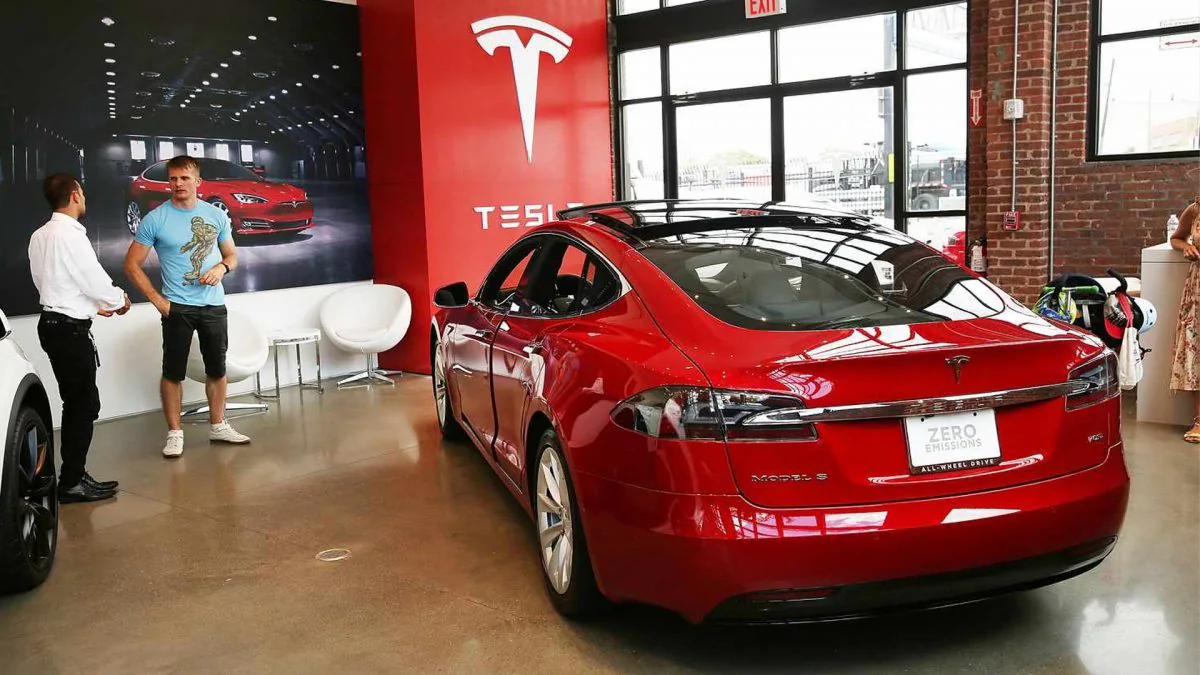
Tesla Set for Strong Quarter as Buyers Rush to Beat Expiring U.S. EV Tax Credit

Tesla is expected to post a strong third-quarter performance, boosted by a surge in U.S. sales as customers rushed to buy electric vehicles before the $7,500 federal EV tax credit expired. The results, due later on Wednesday, will be closely watched for signals on how CEO Elon Musk plans to sustain growth amid tightening competition and political controversy.

The company’s new, cheaper “Standard” versions of its Model 3 and Model Y have driven fresh demand. These models are roughly $5,000 to $5,500 cheaper than earlier trims, featuring smaller batteries, weaker motors, and stripped-down interiors that omit rear screens and seat pockets. Tesla also temporarily reduced lease prices on premium versions to clear inventory.

However, these aggressive price cuts and feature reductions have squeezed profit margins, a growing concern for investors. Analysts estimate Tesla’s automotive gross margin, excluding regulatory credits, will fall to 15.6%, down from 17.05% a year earlier.

Tesla’s overall revenue is expected to rise 4.2% year-on-year to $26.24 billion, according to LSEG data, though analysts will also look for signs that sales of pollution credits — which Tesla sells to gasoline carmakers — have tapered off following Trump administration policy changes.

Beyond financials, investors are eager for updates on Tesla’s robotaxi rollout, which Musk has described as the company’s next growth engine. He has claimed Tesla’s robotaxis could serve half the U.S. population by year-end, though specifics remain elusive. Analysts at Cantor Fitzgerald said the top questions now involve “fleet size, cumulative miles, and service territories” expected by Q4 and 2026.

Despite a slowdown in sales of its aging lineup and consumer backlash linked to Musk’s far-right political rhetoric, Tesla shares have risen nearly 10% this year, buoyed by a proposed $1 trillion pay package for Musk. Still, Tesla remains one of the weaker performers among the “Magnificent 7” tech giants.

The earnings call, set for 5:30 p.m. EDT, may offer a clearer view of how Musk plans to balance his AI and robotics ambitions with Tesla’s core vehicle business — the source of most of its revenue today.