
Netflix Shares Fall 5.6% After Brazilian Tax Dispute Hits Quarterly Earnings

Netflix (NFLX.O) shares dropped 5.6% in after-hours trading on Tuesday after the streaming giant missed Wall Street’s third-quarter profit estimates due to an unexpected $619 million tax expense in Brazil. Despite record ad sales and a promising year-end outlook, the extra charge dragged down earnings and overshadowed otherwise steady revenue growth.

For the quarter ending in September, Netflix reported net income of $2.5 billion, or $5.87 per share, missing analyst forecasts of $3 billion and $6.97 per share, according to LSEG data. Revenue met expectations at $11.5 billion, while operating margin reached 28% — a figure that would have exceeded 31.5% without the one-off tax payment.

The setback comes as Netflix pursues growth beyond streaming through advertising and video games, competing with YouTube, Amazon Prime Video, and Disney+. Analysts said the tax issue weighed on investor sentiment, though the company’s fundamentals remain strong. “All things considered, this was another robust quarter, despite a blip due to an unforeseen expense,” said PP Foresight analyst Paolo Pescatore.

For the fourth quarter, Netflix projected revenue of $11.96 billion, slightly above Wall Street’s $11.90 billion forecast, and earnings per share of $5.45, one cent ahead of estimates.

Executives also addressed ongoing industry consolidation, saying Netflix would remain selective. Co-CEO Ted Sarandos said the company has “no interest in owning legacy media networks” but may consider acquiring intellectual property. Co-CEO Greg Peters added that competitors’ mergers would not affect Netflix’s competitive position.

The company said it delivered its strongest ad-sales quarter to date, though it did not disclose figures. Analysts believe subscription fees will continue to drive the bulk of Netflix’s growth. “Sustained revenue growth will predominantly come from subscriptions,” said eMarketer’s Ross Benes.

Netflix will end 2025 with a packed lineup, including the final season of “Stranger Things” and two live NFL games on Christmas Day. “We’re finishing the year with good momentum and an exciting Q4 slate,” the company said in its shareholder letter.
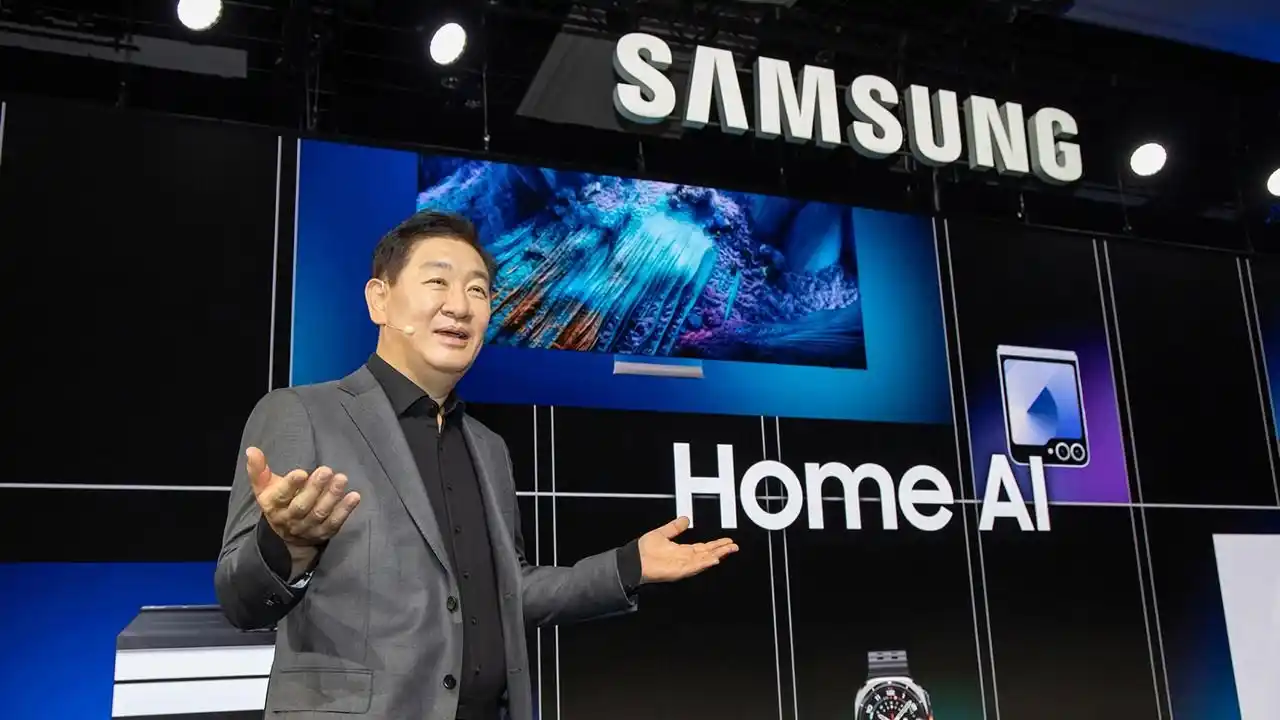
Samsung Unveils Galaxy XR Headset to Challenge Apple’s Vision Pro With Help From Google and Qualcomm

Samsung Electronics (005930.KS) has officially entered the extended reality (XR) arena with the launch of its Galaxy XR headset, developed in collaboration with Google and Qualcomm, as it seeks to rival Apple’s Vision Pro and Meta’s Quest devices.

Priced at $1,799, roughly half the cost of Apple’s headset, the Galaxy XR marks Samsung’s most ambitious push into next-generation computing. It runs on the Android XR operating system and features Google’s Gemini AI, which allows users to interact with real-world environments by identifying and analyzing objects in view.

The Galaxy XR combines virtual reality (VR) and mixed reality (MR) capabilities, letting users watch YouTube videos, play games, or explore 3D environments while maintaining awareness of their surroundings. Qualcomm’s Snapdragon XR2+ Gen 2 chip powers the headset, ensuring high performance for immersive AI-driven experiences.

Executives from Samsung and Google said the device, developed under the codename “Moohan” (meaning infinite in Korean), has been in the works for nearly a decade. “We believe now is the right moment to bring this to market,” said Jay Kim, executive vice president of Samsung’s mobile division.

Google’s AI integration is central to the headset’s appeal. Gemini can understand what users see and provide information, directions, or contextual responses in real time. “Google entering the fray again changes the dynamic,” said Anshel Sag, an analyst at Moor Insights & Strategy, noting that the software adds an estimated $1,000 in value to the device.

Buyers this year will receive 12 months of Google AI Pro, YouTube Premium, Google Play Pass, and exclusive XR content. Samsung is also working with Warby Parker and Gentle Monster to develop lighter, glasses-style models in future releases.

The launch comes as the head-mounted display market remains challenging. Research firm Gartner expects the global sector to grow modestly to $7.27 billion next year, while shipments of mixed reality devices are projected to fall 20% in 2025, according to Counterpoint Research.

Still, analysts say Samsung’s lower price and powerful partnerships position it as a credible challenger. “With a more competitive price point than Apple’s Vision Pro, Samsung’s Project Moohan headset could become a strong contender in the premium XR market,” said Flora Tang, senior analyst at Counterpoint.

Meta Strikes $27 Billion Financing Deal With Blue Owl for Massive Louisiana AI Data Center

Meta (META.O) has finalized a $27 billion financing partnership with Blue Owl Capital (OWL.N) to fund its largest data center project to date — a massive AI computing hub in Louisiana designed to supercharge the company’s artificial intelligence ambitions.

The agreement, Meta’s biggest-ever private capital deal, gives Blue Owl-managed funds a majority ownership stake in the joint venture, while Meta retains 20% equity. Blue Owl contributed about $7 billion in cash, and Meta will receive a $3 billion one-time payout, according to Tuesday’s announcement.

The planned Hyperion Data Center in Richland Parish, Louisiana, will deliver over 2 gigawatts of computing capacity, a figure that underscores the escalating global demand for infrastructure to train large language models such as ChatGPT and Google Gemini. Blue Owl co-CEOs Doug Ostrover and Marc Lipschultz called the project “an ambitious step toward powering the next generation of AI infrastructure.”

The move comes amid a historic wave of investment in AI-related data centers. According to Morgan Stanley, leading tech giants — including Alphabet, Amazon, Meta, Microsoft, and CoreWeave — are collectively set to spend $400 billion this year building AI infrastructure.

Meta CFO Susan Li described the partnership as “a bold step forward,” noting that the project will create more than 500 jobs and help the company diversify its financing strategy while reducing exposure to debt.

Industry analysts say the deal enables Meta to offload capital risk while maintaining operational control of a strategic AI asset. “It allows Meta to finance expansion without taking on heavy debt — a smart hedge if the AI market overheats,” said Alvin Nguyen, senior analyst at Forrester.

The Hyperion facility is expected to go online within four years, with Meta holding lease options to extend. Once operational, it will stand among the largest data centers in the world, symbolizing the scale of investment driving the AI revolution.