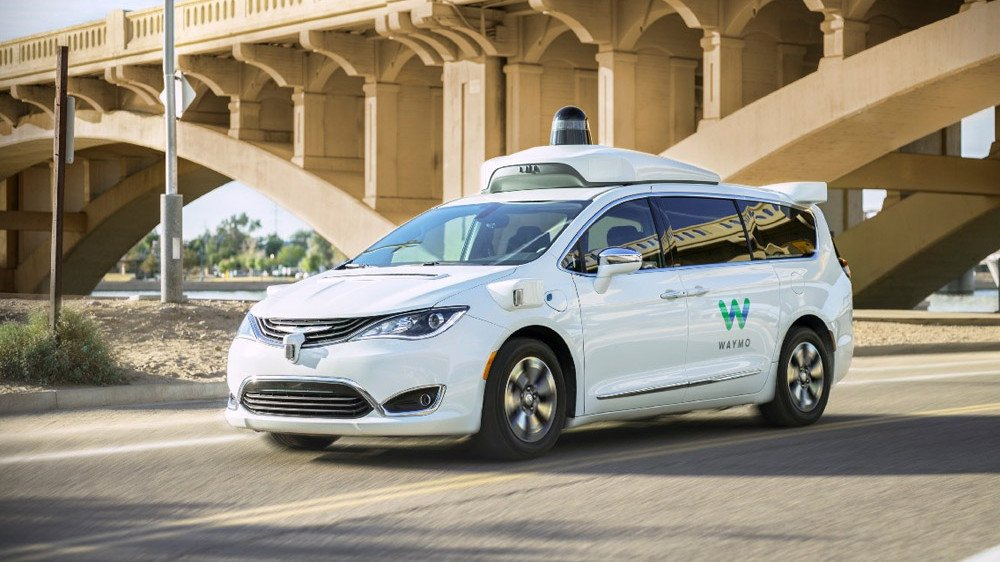
U.S. Safety Regulators Probe Waymo Robotaxis Over School Bus Incident

U.S. auto safety regulators have opened a preliminary investigation into Waymo, Alphabet’s self-driving car unit, after reports that one of its robotaxis failed to stop properly for a school bus in Georgia. The probe, launched by the National Highway Traffic Safety Administration (NHTSA), covers about 2,000 vehicles equipped with Waymo’s fifth-generation Automated Driving System.

The investigation follows a media report showing a Waymo vehicle maneuvering around a stopped school bus with its red lights flashing and stop arm extended while children were disembarking — a clear violation of school bus safety protocols. NHTSA said the vehicle initially stopped before moving around the bus, suggesting a potential software or perception failure.

Regulators noted that given Waymo’s extensive operations — the company’s autonomous cars have logged over 100 million miles and currently drive 2 million miles per week — similar incidents could have occurred previously. The agency emphasized the need to evaluate how Waymo’s technology responds to critical real-world safety cues, particularly around children and pedestrians.

Waymo acknowledged the event, saying it has already implemented software improvements to enhance behavior around school buses and will issue further updates soon. “Driving safely around children has always been one of our highest priorities,” a company spokesperson said, explaining that the vehicle’s sensors may not have initially detected the flashing signals due to its angle of approach.

The company operates a fleet of over 1,500 driverless vehicles in Phoenix, San Francisco, Los Angeles, and Austin. The new probe comes months after NHTSA closed another 14-month investigation into Waymo’s earlier collisions with stationary objects, which led to two vehicle recalls.
Netherlands Struggles to Resolve Nexperia Standoff With China as Carmakers Warn of Shortages

The Netherlands is locked in a tense dispute with China over chipmaker Nexperia BV, as high-level talks between Dutch Economy Minister Vincent Karremans and China’s Commerce Minister Wang Wentao failed to produce a breakthrough on Tuesday. The impasse is deepening concerns among European carmakers, who rely heavily on Nexperia’s chips for production.

The standoff began after the Dutch government seized control of Nexperia last month, citing national security risks tied to its Chinese parent company, Wingtech Technology, which is listed in Shanghai. In retaliation, Beijing blocked exports of Nexperia’s finished chips from China, effectively freezing the company’s supply chain and alarming automakers already facing global component shortages.

Karremans said both sides discussed “further steps toward reaching a solution acceptable to all parties,” but China’s response was sharply critical. The Chinese commerce ministry accused the Netherlands of “overstretching the concept of national security,” warning that the seizure “has seriously affected the stability of global supply chains.”

The fallout is hitting the automotive sector hardest. Germany’s VDA auto industry association warned that production could soon face “considerable restrictions or even stoppages” if the chip flow is not restored quickly. Nexperia’s components, while not high-end, are vital for mass-market electronics and car manufacturing, and both sides of its operations — European production and Chinese packaging — are struggling to find alternatives.

The dispute comes amid escalating global trade frictions, including U.S. import tariffs and Chinese export curbs on rare earth materials, compounding pressures on Europe’s already fragile industrial supply lines.

Apple Nears $4 Trillion Valuation as iPhone 17 Demand Surges in China and U.S.

Apple shares soared 4.2% to $262.9 on Monday, pushing the tech giant’s market capitalization to $3.9 trillion — within striking distance of becoming the third company ever to hit $4 trillion. The surge follows stronger-than-expected early sales of the iPhone 17 series, which has outperformed its predecessor across key markets.

Data from Counterpoint Research showed that iPhone 17 sales in China and the United States were 14% higher during the first 10 days compared to the iPhone 16 launch, signaling renewed momentum for Apple’s flagship product. The rally places Apple just behind AI-chip leader Nvidia, now the world’s most valuable company.

Brokerage Evercore ISI added Apple to its Tactical Outperform List, predicting that the company will exceed quarterly forecasts and issue optimistic guidance for the December period. Analysts pointed to robust online orders in China, where delivery times suggest particularly strong early demand.

Apple’s September launch introduced an upgraded iPhone lineup, including the slimmer iPhone Air, while keeping prices stable despite U.S. tariff pressures. “The demand trends are clearly on the front foot again,” said Art Hogan, chief market strategist at B Riley Wealth.

After struggling earlier this year due to weakness in China and tariff concerns, Apple’s stock has rebounded since August, buoyed by its $100 billion U.S. investment plan aimed at mitigating trade risks. If the rally holds, Monday will mark Apple’s largest one-day gain in four weeks, setting the stage for its October 30 earnings report.