U.S. lawmaker warns TikTok algorithm licensing deal poses national security risks

A senior U.S. lawmaker raised fresh concerns Thursday over a proposed licensing deal for TikTok’s algorithm as part of the planned sale of the app’s U.S. operations by its Chinese parent company ByteDance, warning that any continued Chinese influence over the technology could threaten national security.

Representative John Moolenaar, chair of the House Select Committee on China, said he is awaiting a formal briefing on the deal, which would reportedly allow the new U.S. owners of TikTok to license the platform’s algorithm from ByteDance.

“I think anytime you have China with leverage over the algorithm, that’s a problem,” Moolenaar said during remarks at the Hudson Institute, adding that the arrangement could leave room for undue influence.

The White House previously said the agreement meets the national security requirements set out in a 2024 law mandating ByteDance to divest TikTok’s U.S. assets or face a ban. President Donald Trump signed an executive order on September 25 approving the sale and granting 120 days to complete the transaction.

Under the proposal, ByteDance would retain less than 20% ownership in the new U.S. entity, with Americans holding the remaining board seats. The algorithm, which drives TikTok’s recommendation system, would be retrained and monitored by U.S. security partners.

Moolenaar, however, expressed skepticism that the algorithm could be fully reprogrammed or separated from its Chinese origins, noting, “It’s still very much a work in progress.”

TikTok did not immediately respond to requests for comment.
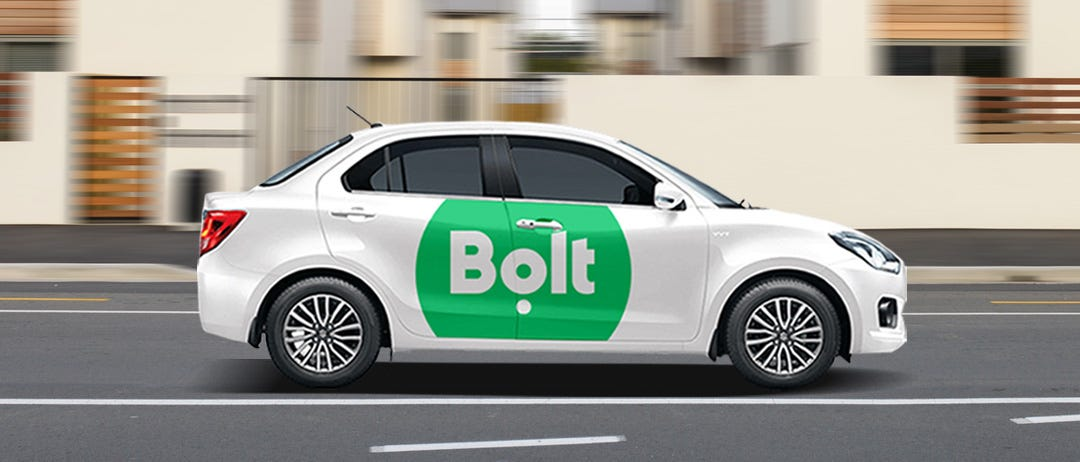
Bolt CEO urges EU to prioritize self-driving tech to compete with U.S. and China

Europe must invest far more aggressively in autonomous vehicle technology if it wants to remain competitive against the United States and China, according to Markus Villig, CEO of Estonian ride-hailing and food delivery company Bolt.

Speaking to journalists on Friday, Villig said the European Union’s heavy focus on electric vehicles (EVs) risks sidelining what he called the “core technology of the next decade” — self-driving systems.

“There’s so much attention on EVs, but we’ve lost the plot on autonomous driving,” Villig said, warning that the technology gap between Europe and its global rivals is widening fast.

U.S. firms like Alphabet’s Waymo and Tesla, as well as Chinese players such as Baidu, WeRide, and Pony.ai, are leading the autonomous driving race. Waymo is preparing to launch autonomous ride-hailing services in London next year, highlighting Europe’s reliance on foreign technologies.

Villig said that the EU should treat autonomous mobility as a strategic technology, not just an industrial one, with implications for security and digital sovereignty. While the bloc is spending tens of billions of euros on EV subsidies and supply chains, he argued that comparable funding for self-driving development is virtually absent.

He proposed that the EU support domestic startups through subsidies and exclusive operating licences for robotaxis in certain cities, to help local firms gain scale before foreign competitors dominate the market.

Villig was scheduled to meet EU technology chief Henna Virkkunen later on Friday to discuss Europe’s role in the next generation of transport innovation.

Stellantis partners with Pony.ai to develop self-driving vehicles in Europe

Stellantis and Pony.ai announced on Friday a new partnership to jointly develop and test autonomous electric vehicles across Europe. The collaboration aims to bring SAE Level 4 self-driving capabilities—meaning hands-off and eyes-off driving—to Stellantis’ next-generation electric vans.

The project will integrate Pony.ai’s advanced autonomous driving software with Stellantis’ battery-electric medium-sized van platform, beginning with the Peugeot e-Traveller model. Initial testing will take place in Luxembourg before expanding to multiple European cities starting in 2026.

Founded in 2016, Pony.ai operates fully driverless robotaxi services in several major Chinese cities and will manage the European initiative through its Luxembourg-based division.

The partnership will initially focus on light commercial vehicles (LCVs)—a segment where Stellantis’ Pro One division already holds a dominant market position in Europe. Both companies said the collaboration will prioritize safety, performance, and regulatory compliance, ensuring the technology meets Europe’s evolving standards for autonomous mobility.

The move underscores Stellantis’ ambition to lead the electrification and automation of commercial transport, blending software innovation from Asia with European engineering expertise.