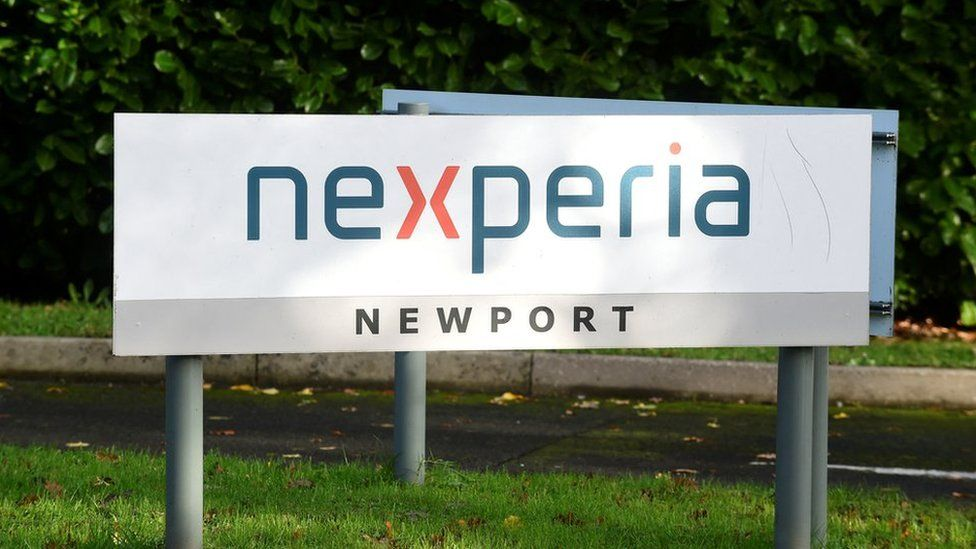
Automakers warn Nexperia chip dispute could hit U.S. production within weeks

A U.S. automaker group representing companies including General Motors, Ford, Toyota, Volkswagen, and Hyundai warned Thursday that the ongoing chip supply disruption involving Dutch firm Nexperia could soon halt vehicle production in the United States.

The Alliance for Automotive Innovation said the issue stems from a trade and ownership dispute between the Dutch government and China, which has forced Nexperia to halt guaranteed deliveries of crucial automotive semiconductors.

“If the shipment of automotive chips doesn’t resume – quickly – it’s going to disrupt auto production in the U.S. and many other countries and have a spillover effect in other industries,” said John Bozzella, the group’s CEO.

Some automakers told Reuters that U.S. production lines could be affected as early as next month, although they declined to be named due to the sensitivity of the issue.

The dispute escalated after the Dutch government seized control of Nexperia on September 30, citing national security concerns over its Chinese owner, Wingtech. The move followed U.S. pressure to curb potential technology transfers and the Chinese commerce ministry’s export controls restricting shipments of Nexperia-made components.

Nexperia’s chips, while not the most advanced, are vital to car manufacturing and electronic component assembly. Analysts warn that even short-term supply interruptions could ripple across global production lines.

European automakers have also raised alarms. The ACEA, Europe’s car industry body, said the situation could lead to “significant disruption” across manufacturing networks if not resolved quickly.

Salesforce faces lawsuit from authors over AI model training data

Salesforce (CRM) is facing a proposed class action lawsuit accusing it of using copyrighted books without permission to train its xGen artificial intelligence models. The complaint, filed Wednesday in a U.S. court, was brought by authors Molly Tanzer and Jennifer Gilmore, who allege that the cloud-computing firm infringed their copyrights by using their works to develop language-processing AI.

The lawsuit claims Salesforce used “thousands of pirated books” written by the plaintiffs and other authors to train its AI systems, echoing similar suits filed against other tech giants like OpenAI, Microsoft, and Meta over the use of copyrighted material in AI training datasets.

“It’s important that companies that use copyrighted material for AI products are transparent,” said Joseph Saveri, the authors’ attorney, who has led several high-profile copyright cases against AI companies. “Our clients deserve fair compensation when their creative work is used.”

Salesforce has declined to comment on the lawsuit.

In an ironic twist, the complaint notes that Salesforce CEO Marc Benioff has previously criticized other AI firms for using “stolen” training data, arguing that compensating creators would be “very easy to do.” The lawsuit quotes that statement, suggesting Salesforce failed to follow its own advice.

The case adds to a growing list of legal battles testing how intellectual property laws apply in the age of AI model training, with potentially wide-ranging implications for the industry.

TSMC lifts full-year revenue forecast on soaring AI demand

Taiwan Semiconductor Manufacturing Co (TSMC) raised its full-year revenue forecast on Thursday, signaling confidence in the ongoing AI megatrend after posting record quarterly profits that beat expectations.

The world’s largest contract chipmaker now expects mid-30% revenue growth in 2025, up from its previous forecast of around 30%. The company cited booming demand for AI chips, which continues to exceed earlier projections.

“AI demand actually continues to be very strong — stronger than we thought three months ago,” CEO C.C. Wei told investors. “We are also receiving very strong signals from our customers requesting capacity to support their business.”

TSMC reported a 39.1% rise in third-quarter net profit to T$452.3 billion ($14.76 billion), surpassing analysts’ estimates of T$417.7 billion, according to LSEG SmartEstimate data. The company said it remains “prudent” in planning for 2026 amid global trade uncertainty.

The Taiwanese chipmaker supplies giants such as Apple, Nvidia, AMD, and Broadcom, all of whom are expanding their investments in AI-driven data centers. Recent multi-billion-dollar partnerships between OpenAI, chipmakers, and infrastructure providers have reinforced expectations of sustained semiconductor demand.

Despite trade tensions and U.S. tariffs, Wei said he remained optimistic: “Even if the China market was not available, AI’s growth will still be very dramatic.”

TSMC’s shares have risen 38% in 2025, outpacing Taiwan’s broader market, reflecting investor confidence that the company remains central to the global AI hardware boom.