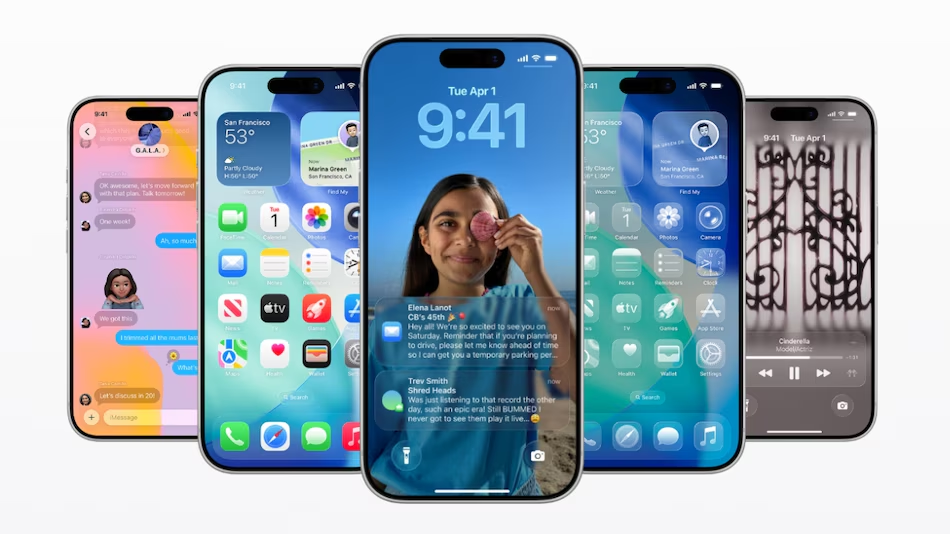
Apple Expected to Release iOS 26.1 This Week, iOS 26.2 Beta to Follow Soon

Apple is reportedly preparing to roll out the iOS 26.1 update as early as Monday, according to Bloomberg journalist Mark Gurman. This update, while relatively minor, introduces a new Tinted toggle for Liquid Glass, aimed at improving readability across supported iPhones. iOS 26.1 is expected to build on the foundation of iOS 26, which was first announced at WWDC 2025 and released to eligible devices in September, providing incremental improvements and optimizations for the operating system.

Following the public release of iOS 26.1, Apple is expected to launch the iOS 26.2 beta as early as Tuesday. Gurman notes that this beta will likely arrive shortly after the iOS 26.1 rollout, ensuring developers and early testers have access to the latest build for testing and feedback. While the first beta may not include major new features, it is expected to lay the groundwork for future updates that could expand functionality or refine existing tools.

The iOS 26.2 developer beta is also anticipated to be released alongside early beta versions of iPadOS, watchOS, and macOS, allowing Apple’s ecosystem of devices to be tested in parallel. This coordinated approach ensures that developers can optimize apps and features for multiple devices at once, maintaining consistency and stability across the Apple ecosystem. The initial beta is expected to focus primarily on performance improvements, bug fixes, and background optimizations rather than introducing headline features.

Overall, the upcoming updates highlight Apple’s continued effort to refine iOS 26 and maintain a smooth user experience. While iOS 26.1 delivers a small but useful enhancement with the Tinted toggle, the subsequent iOS 26.2 beta will give developers an early look at potential improvements and prepare the platform for more substantial updates in the coming months. Users can expect these updates to arrive shortly, barring any last-minute delays, ensuring that Apple devices remain optimized and up-to-date.
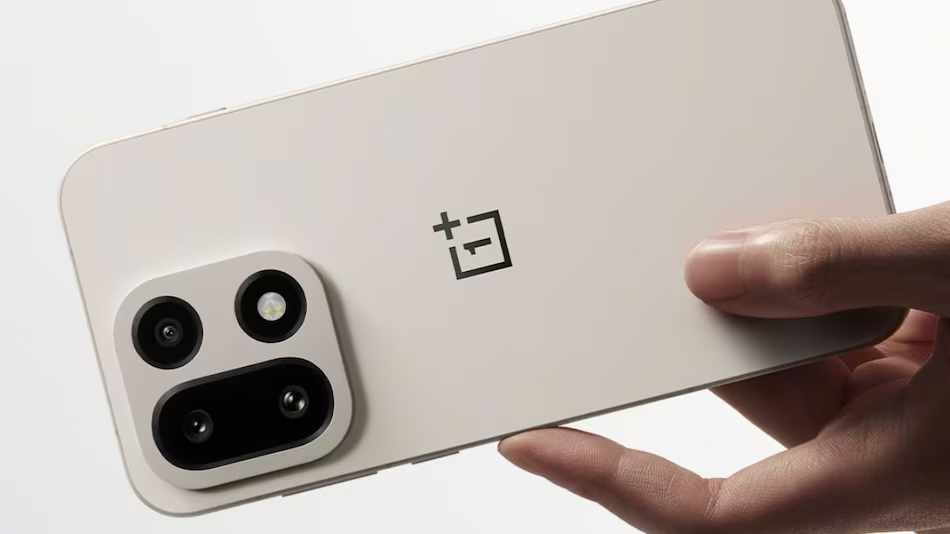
OnePlus Introduces OP Gaming Core Tech Featuring HyperRendering and OP FPS Max for 15 Series

OnePlus has officially unveiled its OP Gaming Core technology, designed to enhance mobile gaming performance across its devices. The company claims that this new technology combines chip-level optimizations with advanced hardware and software tools to deliver smoother control, greater responsiveness, and more stable gameplay. Central to OP Gaming Core is the OnePlus CPU Scheduler, which helps maintain a consistent 120fps experience in popular mobile games, ensuring that gameplay remains fluid even under heavy load. The technology is further supported by the OnePlus Performance Tri-Chip and OP FPS Max, which work together to optimize high-frame-rate gaming performance.

According to OnePlus, the OP Gaming Core is built on more than 20,000 lines of original code, allowing it to operate at the hardware level rather than just through software tweaks. This approach provides a deeper integration with Android, enabling smoother frame delivery and better resource management. The technology is reportedly backed by 254 gaming-optimization patents, highlighting the brand’s investment in creating a robust foundation for mobile gaming. By working directly with the system’s hardware, OP Gaming Core aims to reduce lag, stabilize frame rates, and improve overall game responsiveness.

The OnePlus Performance Tri-Chip is a critical component of this system, integrating three physical chips to optimize processing, graphics rendering, and memory access simultaneously. Combined with OP FPS Max, the technology allows games to run at higher frame rates while maintaining visual fidelity and stability. This setup not only improves competitive gaming performance but also ensures a more immersive experience for casual players who want fluid, high-quality gameplay.

OnePlus has confirmed that the OP Gaming Core technology will be featured on the upcoming OnePlus 15 series, making it the first devices to benefit from these enhancements. By integrating deep hardware-level optimizations with advanced software tools, OnePlus aims to set a new benchmark for mobile gaming performance, positioning the 15 series as a flagship choice for gamers seeking both speed and reliability. This launch underscores the company’s commitment to blending cutting-edge technology with practical gaming innovations for everyday users.

MediaTek Dimensity 8500 SoC Specifications and Architecture Leaked Ahead of Possible Launch

MediaTek is reportedly testing its upcoming Dimensity 8500 chipset, expected to succeed the Dimensity 8400 SoC. The new chip is anticipated to power next-generation mid-range smartphones, including an unnamed Honor device with a 10,000mAh battery and the rumored Xiaomi 17T. Early leaks have shed light on the chipset’s architecture, fabrication node, and peak clock speeds, suggesting that it will deliver both higher performance and improved efficiency compared to its predecessor, which currently powers devices like the Vivo Y300 GT.

According to tipster Digital Chat Station on a Chinese microblogging platform, the Dimensity 8500 is said to be manufactured using TSMC’s 4nm process technology, offering better power efficiency and thermal management. The chipset is expected to feature an octa-core CPU with Cortex-A725 cores, capable of reaching a peak clock speed of 3.4GHz in prototype tests. These specifications indicate that the Dimensity 8500 could offer significant performance gains over the Dimensity 8400 while maintaining energy efficiency suitable for high-capacity batteries.

On the graphics front, the Dimensity 8500 is rumored to include an improved Mali-G720 GPU clocked at 1.5GHz, which should enable smoother gaming performance and better handling of graphics-intensive tasks. Benchmark leaks suggest that the chip has achieved over 2.2 million points on AnTuTu, highlighting its potential as a strong contender in the mid-range segment. Performance comparisons indicate that the Dimensity 8500 could surpass competitors such as the Snapdragon 8 Gen 3 and Snapdragon 8s Gen 4 in GPU performance, positioning it as a capable chip for gaming and multimedia applications.

With these specifications, the MediaTek Dimensity 8500 is shaping up to be a compelling option for next-generation mid-range smartphones, combining high efficiency, powerful CPU and GPU performance, and support for large batteries. Devices powered by this chipset are expected to offer a balanced mix of performance and energy efficiency, making them suitable for gamers, content creators, and everyday users alike. As testing continues, the official launch is likely to follow soon, potentially bringing a new wave of mid-range smartphones with flagship-like performance at a more accessible price point.