
Xbox Set to Host First-Party Games Showcase in January

Xbox Preparing for a Developer Direct Showcase in January 2025

Microsoft is reportedly gearing up for a major Xbox event in January 2025, likely to be another installment of its Developer Direct showcase. This event is expected to offer new updates on the company’s first-party games and provide a glimpse of what’s coming to Xbox Game Pass in the near future. The timing of this event is consistent with previous Developer Direct showcases, with the 2024 edition taking place on January 18. During the 2024 event, Microsoft revealed exciting updates such as the upcoming Indiana Jones and the Great Circle, as well as updates on highly anticipated titles like Senua’s Saga: Hellblade II, Avowed, and more.

A Big Year Ahead for Xbox Game Pass

Tom Warren from The Verge recently shared his expectations for the upcoming Xbox event, noting the growing strength of Xbox Game Pass releases. He pointed out the successful drops such as Indiana Jones and the promising lineup scheduled for 2025, including games like Avowed, South of Midnight, Doom, Towerborne, Fable, and Outer Worlds 2. These releases are expected to maintain the momentum for the gaming service, with many games launching directly into Xbox Game Pass on day one, keeping the subscription service fresh and exciting for subscribers.

Highlights from the 2024 Xbox Developer Direct

At the 2024 Xbox Developer Direct on January 18, Microsoft gave fans a deeper look at its upcoming titles. One of the standout announcements was the reveal of Indiana Jones and the Great Circle by MachineGames, which made its debut on Xbox Series S/X and PC on December 9. The action-adventure title, based on the iconic movie franchise, is also set to launch on PS5 in 2025. Additionally, the event provided key information about Senua’s Saga: Hellblade II, confirming its release date, and gave a sneak peek at Avowed, Obsidian’s highly anticipated fantasy RPG.

Looking Ahead to 2025

As we head into 2025, the next Xbox Developer Direct showcase promises to continue Microsoft’s trend of revealing big titles and major updates. With many fans excited for the next chapters in franchises like Fable and Doom, along with new IPs like South of Midnight and Towerborne, January’s event is expected to be another significant moment for Xbox. Whether it’s updates on existing projects or brand-new game announcements, Microsoft is likely to keep the momentum going into the new year, ensuring a packed lineup for its console and Game Pass subscribers.
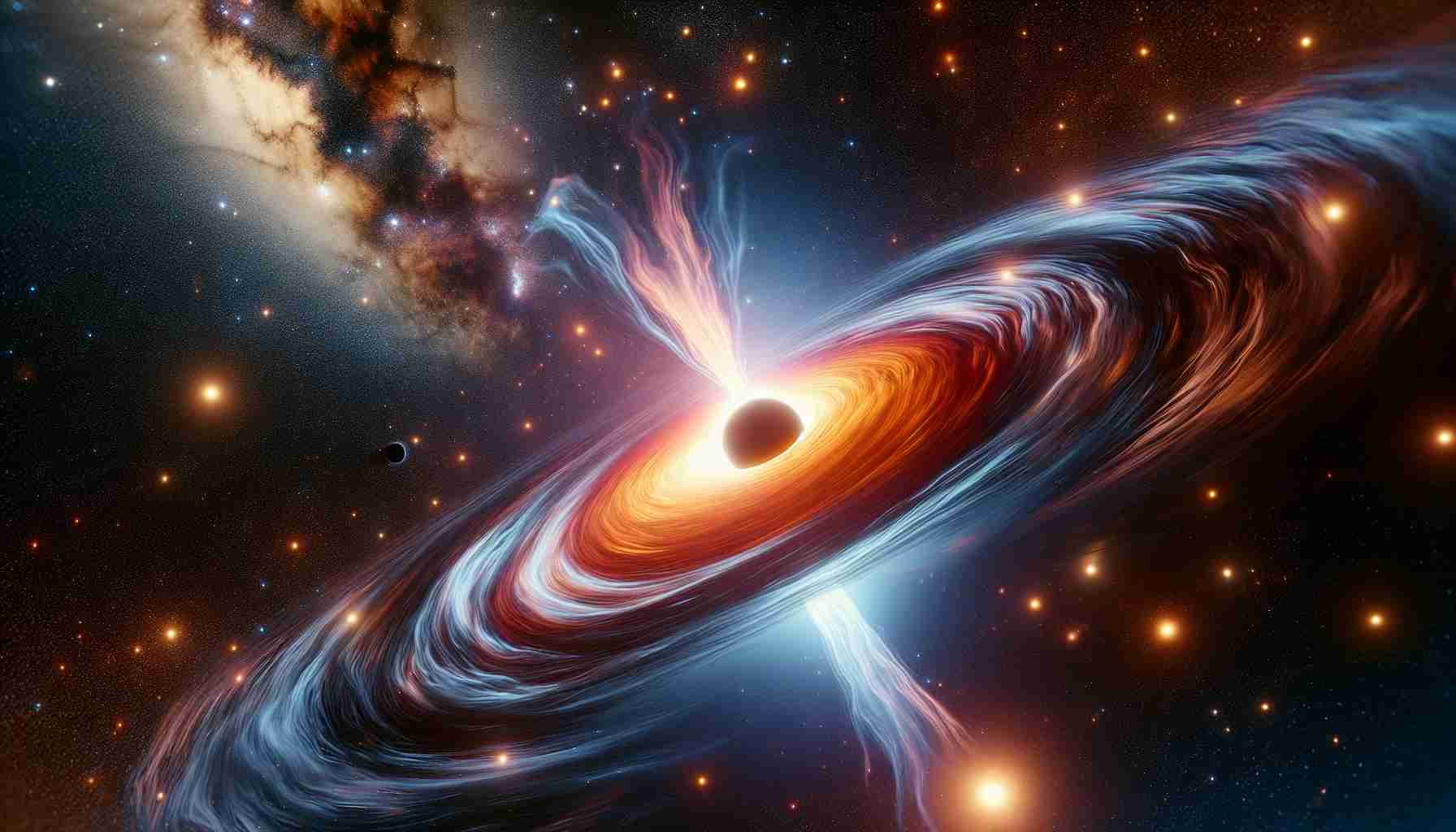
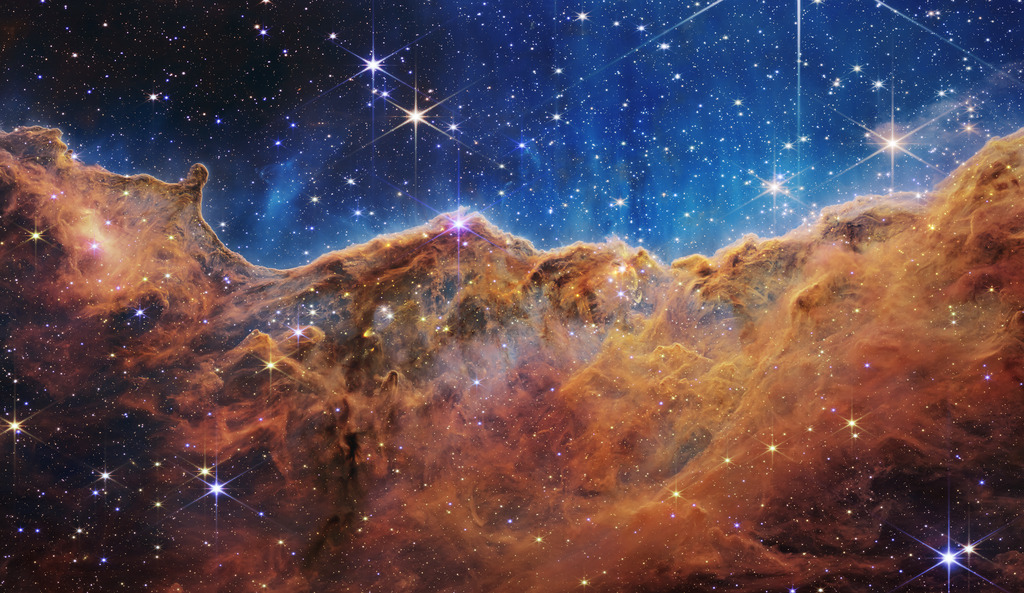
Binary Star System D9 Discovered Orbiting Sagittarius A Near the Heart of the Milky Way*

Binary Star System D9 Found Orbiting Sagittarius A Near the Heart of the Milky Way*

A remarkable discovery has been made with the detection of a binary star system, designated D9, orbiting Sagittarius A*, the supermassive black hole at the center of the Milky Way galaxy. This groundbreaking finding, published in Nature Communications, marks the first time that a binary system has been observed so close to such a powerful gravitational force. The observation was made using data collected from the European Southern Observatory’s (ESO) Very Large Telescope (VLT). The D9 system was found in the S cluster, a densely packed region of stars and objects located near Sagittarius A*. The discovery provides crucial insights into how stars and their systems can persist and even thrive in extreme gravitational environments.

A Challenge to Previous Assumptions About Black Holes

The discovery of D9 challenges previous assumptions about the nature of black holes and their surroundings. Lead researcher Florian Peißker from the University of Cologne explained in the study that black holes might not be as destructive to nearby stars and systems as previously thought. The findings suggest that despite the immense gravitational forces exerted by Sagittarius A*, a binary star system like D9 is capable of surviving and even continuing its orbit for millions of years. This discovery offers a new perspective on the dynamics around black holes and the potential for star systems to form and persist in these regions.

A Rare Phenomenon Near the Supermassive Black Hole

Binary star systems, where two stars orbit each other, are relatively common throughout the universe, but the existence of such a system in close proximity to a supermassive black hole is extremely rare. Previously, it was assumed that the intense gravitational pull from a black hole would disrupt or destabilize any star system within its reach, making it nearly impossible for a binary system to survive in such an environment. The D9 system, however, defies this notion, providing a rare opportunity for astronomers to study stellar dynamics in one of the most extreme gravitational environments in the universe.

The Future of the D9 System

Though the discovery of D9 is fascinating, it is not expected to last indefinitely. The binary system is believed to be approximately 2.7 million years old, and due to the strong gravitational forces from Sagittarius A*, the two stars are predicted to merge into a single star within the next million years. This eventual merger provides further opportunities for researchers to study the long-term effects of a supermassive black hole on nearby star systems. As the system evolves, it will offer valuable insights into the interaction between stars and black holes, shaping our understanding of cosmic environments.

James Webb and Chandra Telescopes Capture Stunning Images of Star Clusters in Remote Galaxies

James Webb and Chandra Telescopes Capture Breathtaking Images of Distant Star Clusters

A stunning new image has emerged from the far reaches of the Small Magellanic Cloud, a galaxy located around 200,000 light-years away from Earth. This captivating image showcases the star cluster NGC 602, captured through the combined efforts of the James Webb Space Telescope (JWST) and NASA’s Chandra X-ray Observatory. The cluster, situated in an environment resembling the early universe, is marked by low levels of heavy elements. The surrounding region is teeming with dense dust clouds and ionized gas, offering a glimpse into active star formation processes that unfold under conditions vastly different from those in our own solar neighborhood.

A Wreath of Stars and Dust

The Webb Telescope’s near-infrared and mid-infrared imaging data unveil a striking wreath-like structure encircling the star cluster. This ring of dense dust clouds appears in an array of vivid colors—green, blue, orange, and yellow—while Chandra’s X-ray data paints the image with vibrant red tones, signifying high-energy radiation from young, massive stars. These stars, with their powerful winds, illuminate the surrounding gas and dust, offering a breathtaking view of stellar creation. The combined glow from lower-mass stars extends across the region, creating an image that bears a festive resemblance to a holiday wreath.

Insights Into Stellar Formation

The environment around NGC 602 provides valuable insights into the conditions under which stars are born in the early universe. The low concentration of heavy elements and the ongoing star formation within this region highlight the differences between the star formation processes observed in distant galaxies and those in our own. This discovery adds another layer to our understanding of how stars and galaxies evolve in the vast expanse of space. The remarkable detail captured by both Webb and Chandra offers a unique window into a distant past, shedding light on cosmic events that shaped the universe as we know it.

The Christmas Tree Cluster in Stunning Detail

In addition to NGC 602, another remarkable image has been produced featuring the star cluster NGC 2264, also known as the “Christmas Tree Cluster.” Situated about 2,500 light-years away, this cluster consists of young stars, aged between one and five million years. A composite image, blending Chandra’s X-ray data with optical observations captured by astrophotographer Michael Clow in November 2024, reveals a cone-shaped structure dotted with starlight, resembling a cosmic Christmas tree. The combined data from both the X-ray and optical wavelengths provide a new level of precision, offering an in-depth view of the cluster and its surrounding nebula. These images underscore the power of modern telescopes in unveiling the wonders of the cosmos.