
iPhone 18 Pro Series May Feature Transparent Back Design and Hole-Punch Display

iPhone 18 Pro Series Could Bring Bold Transparent Design and Hole-Punch Display

Apple’s next-generation flagship smartphones — the iPhone 18 Pro and iPhone 18 Pro Max — are already making headlines nearly a year ahead of their expected launch. Following the debut of the iPhone 17 lineup in September, new leaks suggest that Apple is planning a significant design refresh for its 2025 Pro models. According to early reports, the company might take inspiration from the design language of UK-based startup Nothing and earlier innovations from brands like HTC.

A major highlight of the leak points to the possibility of a transparent rear panel, marking a dramatic shift from Apple’s usual minimalist, solid-color aesthetic. If true, this would be the first time Apple adopts a design that exposes some of the internal components, adding a futuristic and tech-centric look. The iPhone 18 Pro Max may also feature a steel-encased battery, possibly for added durability and heat management — a design choice that could enhance both performance and longevity.
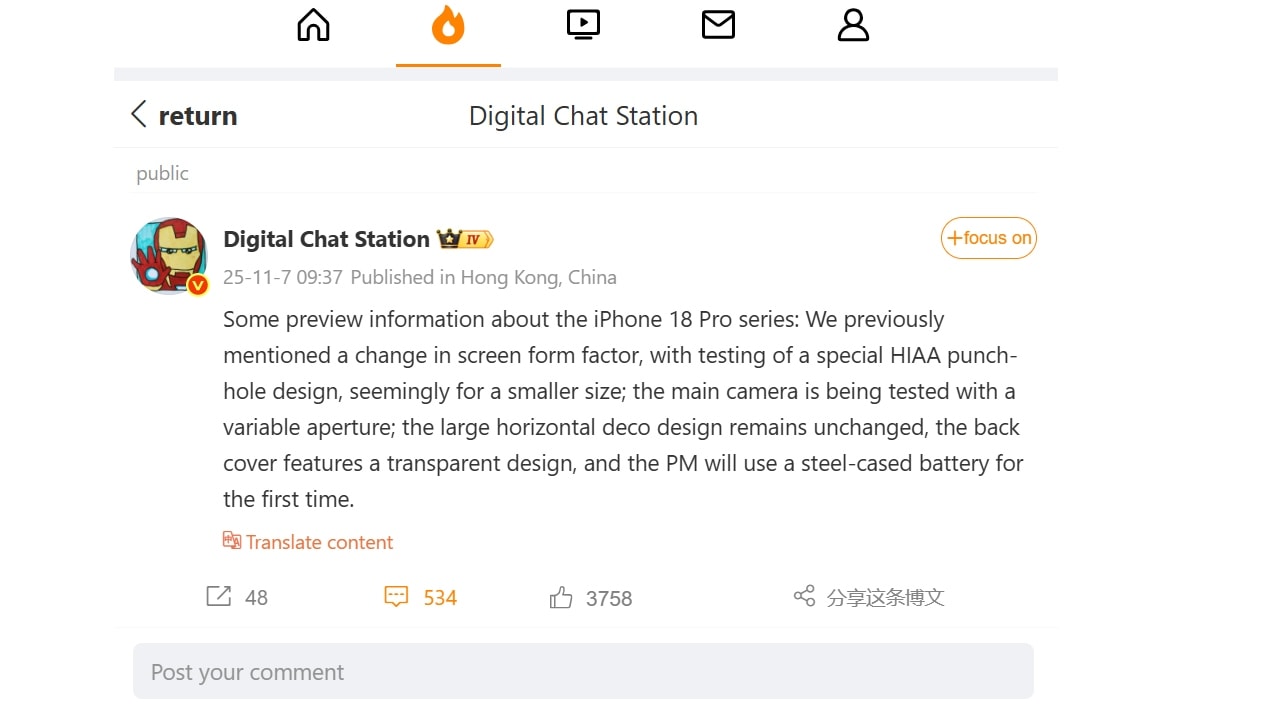
iphone 18 pro dcs weibo apple

The upcoming models are also rumored to introduce a hole-punch display for the selfie camera, replacing the long-standing notch and Dynamic Island design. Apple is reportedly testing hole-in-active-area (HIAA) technology, which would allow front-facing sensors like Face ID and the camera to be integrated beneath the OLED screen. This move would represent a major step toward achieving a truly full-screen iPhone experience — something fans have anticipated for years.

Under the hood, both iPhone 18 Pro models are expected to run on Apple’s next-generation A20 chip, promising major boosts in efficiency, graphics performance, and AI capabilities. While these details are based on early leaks and may change before launch, they hint at one of Apple’s boldest design overhauls yet — blending transparency, advanced display engineering, and raw power into a fresh new vision for the iPhone.
Microsoft Forms New Team to Develop ‘Humanist’ Superintelligence, Says AI Chief

Microsoft’s Vision for Humanist Superintelligence: A People-Centric Future for AI

Microsoft has announced its ambitious goal to build what it calls a “humanist superintelligence” — an advanced form of artificial intelligence that serves humanity’s best interests. The company envisions this next-generation AI as one that “always works for, and in service of, people and humanity more generally.” The declaration comes amid an intensifying race toward achieving artificial general intelligence (AGI), with tech giants like Google, OpenAI, and Meta all vying for leadership in the space. Yet, Microsoft stresses that while the competition for capability continues, there must also be a global discussion about the kind of AI future society truly wants.

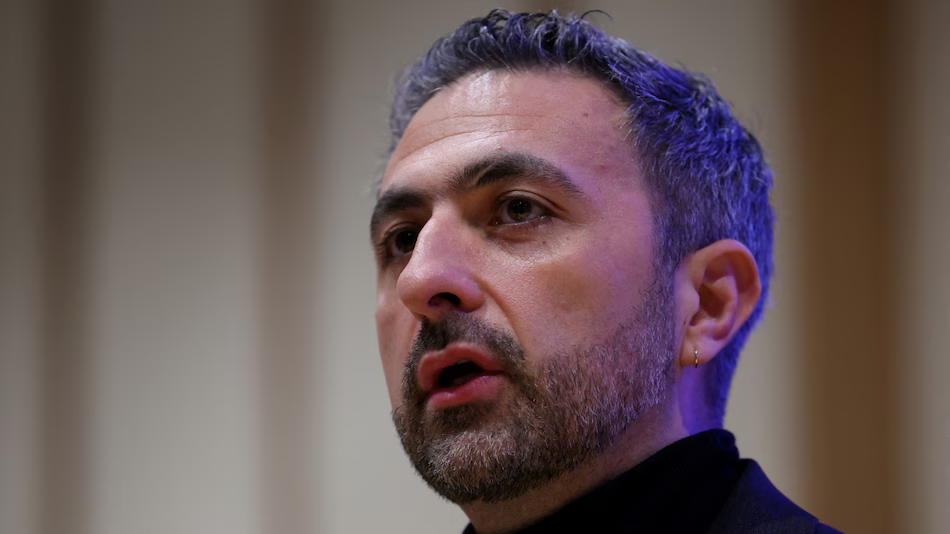
In a detailed blog post, Mustafa Suleyman, the CEO of Microsoft AI, emphasized that defining the purpose and boundaries of superintelligence should be a priority before the technology reaches maturity. He noted that the industry has already crossed an inflection point with the rise of “reasoning models” — AI systems capable of complex problem-solving and contextual understanding. According to Suleyman, this shift marks a crucial moment to set ethical and practical frameworks that ensure AI remains beneficial and controllable.

Suleyman further explained that Microsoft does not aim to create an “unbounded and unlimited entity with high degrees of autonomy.” Instead, the company seeks to develop systems that are “carefully calibrated, contextualized, and within limits.” This human-centered approach reflects Microsoft’s long-standing stance on responsible AI development, where transparency, accountability, and safety are integral to innovation.

Ultimately, the company’s vision of humanist superintelligence is rooted in empowering people rather than replacing them. Microsoft wants its AI to amplify human potential, helping address global challenges such as climate change, healthcare disparities, and education gaps. By focusing on a humanist framework, the tech giant hopes to ensure that the dawn of superintelligence strengthens — rather than disrupts — the foundations of human progress.

Singtel Sells $1.16 Billion Stake in Bharti Airtel to Fund Digital Investments

Singapore Telecommunications (Singtel) has sold a 0.8% stake worth about $1.16 billion in India’s Bharti Airtel, as part of its ongoing plan to recycle assets and boost investments in digital infrastructure, the company announced on Friday.

Singtel’s investment arm Pastel sold 51 million shares of Bharti Airtel, India’s second-largest telecom operator, at 2,030 rupees ($23.10) per share — about 3.1% below the stock’s previous close. The transaction was executed through a private placement to institutional investors.

The sale is part of Singtel’s S$9 billion (US$6.6 billion) mid-term asset recycling program, which aims to raise funds for expansion in digital services, data centers, and next-generation connectivity.

Following the divestment, Singtel now holds a 27.5% stake in Bharti Airtel, down from 31.4% in 2022, continuing a gradual reduction of its holdings since first investing in the Indian company in 2000.

Singtel said the sale will generate an estimated S$1.1 billion ($805 million) in gains, benefiting from Bharti Airtel’s surging valuation — its shares have quadrupled since 2019, driven by stronger earnings and rising average revenue per user.

Investors reacted positively to the move, sending Singtel’s shares up about 3% to S$4.65 by midday trading in Singapore. Bharti Airtel shares, however, fell around 4.5% in Mumbai, with more than 55 million shares changing hands via block deals, according to LSEG data.

The deal underscores Singtel’s strategy to strengthen its balance sheet while maintaining a long-term presence in one of the world’s fastest-growing telecom markets.