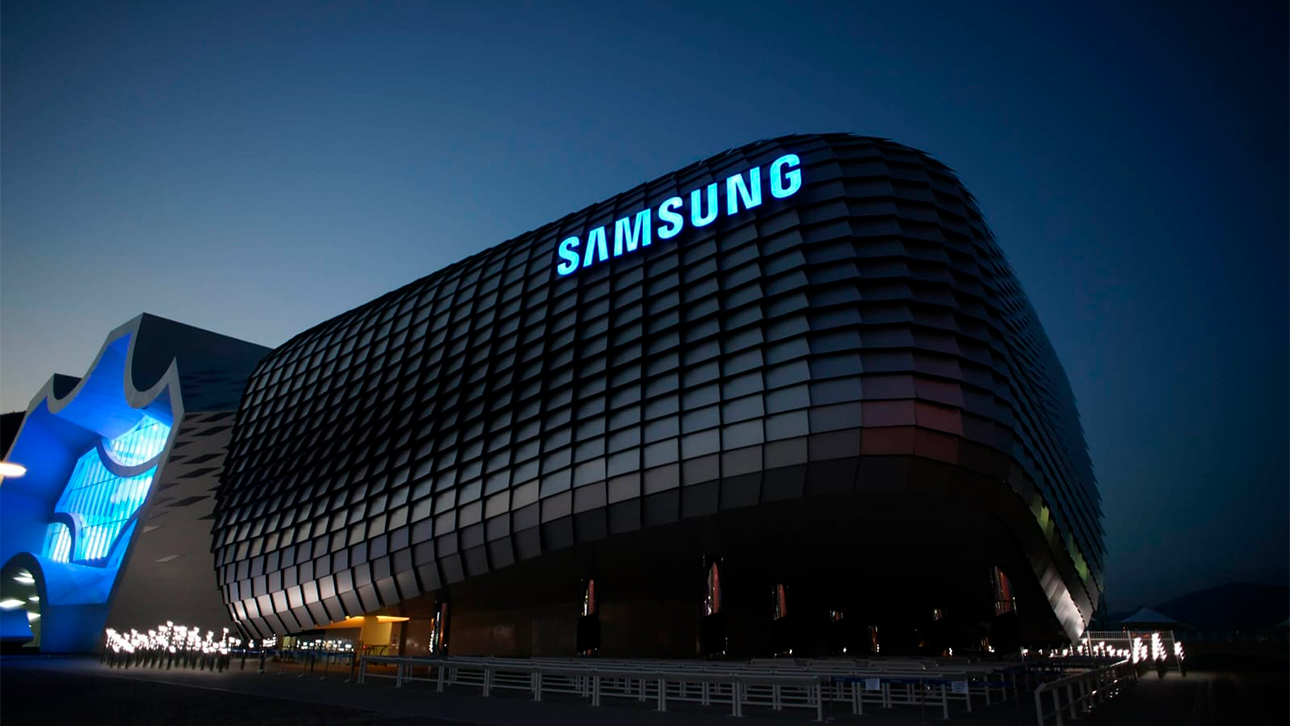
Samsung Electronics Appoints New Head of Key Business Support Office

Samsung Electronics has appointed HK Park as the new head of its Business Support Office, the company’s central decision-making body that serves as a key coordination hub for chairman Jay Y. Lee and Samsung Group’s vast network of affiliates.

The unit, recently upgraded from a task force into a full-fledged office, functions as a strategic control tower across South Korea’s largest conglomerate, whose businesses span semiconductors, smartphones, shipbuilding, and pharmaceuticals.

Park, a former chief financial officer (CFO) at Samsung Electronics, joined the Business Support Task Force a year ago before being promoted to lead it. His appointment marks the first major leadership reshuffle since the office’s formation, following Samsung’s 2017 decision to dissolve its previous corporate nerve center after it became embroiled in a high-profile graft scandal.

Park replaces Chung Hyun-ho, who will now serve as an advisor to Chairman Jay Y. Lee. According to Samsung, Vice Chairman Chung, 65, “expressed his intention to step down from management to focus on nurturing future leaders, as Samsung’s business has been back on track.”

The company also said it has no plans to expand personnel at the Business Support Office at this time.

The leadership change underscores Samsung’s efforts to streamline its internal governance while maintaining close coordination across its many divisions — from memory chips and displays to consumer electronics — at a time of intense global competition and rapid AI-driven transformation.

Nvidia CEO Jensen Huang Says No Plans to Sell Blackwell AI Chips to China

Nvidia CEO Jensen Huang said on Friday that there are “no active discussions” about selling the company’s cutting-edge Blackwell AI chips to China, pushing back on speculation that a U.S.–China deal could soon allow limited exports.

The Blackwell processor, Nvidia’s most powerful chip for artificial intelligence applications, is currently banned from sale in China under U.S. export restrictions introduced by the Trump administration. Washington fears the hardware could accelerate Beijing’s military and AI capabilities.

“There are no plans to ship anything to China right now,” Huang told reporters during a visit to Tainan, Taiwan, where he attended a TSMC company event. “It’s up to China when they would like Nvidia products to go back to serve the Chinese market,” he added, implying that Beijing’s own policies are a barrier to reentry.

Rumors of a possible diplomatic breakthrough emerged last week when U.S. President Donald Trump and Chinese President Xi Jinping met in South Korea, but no agreement has materialized.

Nvidia is still allowed to sell its H20 chips, a downgraded model tailored for the Chinese market, but Huang said China’s stance has left Nvidia’s market share for advanced AI chips at zero.

Asked about Tesla CEO Elon Musk’s plan to build a semiconductor fabrication plant, Huang noted that “building advanced manufacturing like TSMC does is extremely hard,” but added that demand for such technology remains enormous.

Huang also clarified remarks reported by the Financial Times, denying that he had said China would win the AI race. “What I said was that China has very good AI technology,” he explained. “They have many AI researchers. The United States just has to move very, very fast because the world is competitive.”

The comments underscore Nvidia’s delicate position between U.S. export controls and China’s growing AI ecosystem, even as global demand for its chips remains red-hot.

DeepSeek Researcher Voices Pessimism About AI’s Future Impact Despite Company’s Global Success

In its first major public appearance since becoming a global AI sensation, Chinese developer DeepSeek struck a surprisingly cautious tone about the technology’s long-term impact on society.

At the World Internet Conference in Wuzhen, Chen Deli, a senior researcher at DeepSeek, warned that artificial intelligence could create major social disruptions within the next two decades. “In the next 10–20 years, AI could take over the rest of work humans perform and society could face a massive challenge,” Chen said. “I’m extremely positive about the technology, but I view the impact it could have on society negatively.”

Chen shared the stage with executives from five other Chinese AI companies—Unitree, BrainCo, and others—collectively referred to as the country’s “six little dragons” of AI innovation. While praising AI’s potential in the short term, Chen stressed that companies like DeepSeek must act as “defenders” of social stability as automation accelerates.

DeepSeek rose to global prominence in January after releasing a low-cost open-source AI model that outperformed several leading U.S. systems. The company’s meteoric rise has since made it a symbol of China’s technological resilience amid intensifying competition with the United States.

Despite its success, DeepSeek has remained mostly silent publicly. Its only major appearance this year came when founder and CEO Liang Wenfeng met President Xi Jinping in February. The company has since skipped several major tech events, adding to its enigmatic reputation.

DeepSeek has continued developing its technology quietly, unveiling in September a new V3 model that it described as “experimental,” optimized for efficiency and longer text processing. Its work has also boosted China’s domestic chip ecosystem: hardware makers Cambricon and Huawei now build processors compatible with DeepSeek’s models.

In August, DeepSeek’s announcement of an upgraded model optimized for Chinese-made chips caused local semiconductor stocks to surge—underlining how the company remains both a technical pioneer and a national symbol of self-reliance in AI.