OpenAI Unveils Plan to Keep Data-Center Energy Costs in Check

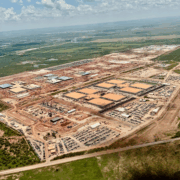
OpenAI has announced a new Stargate Community plan designed to ensure its expanding data center operations do not push up electricity costs for local communities. The initiative aims to make OpenAI’s large-scale AI infrastructure “pay its way on energy” as demand for computing power accelerates.

Stargate is a $500 billion, multi-year effort to build advanced AI data centers for training and inference, backed by investors including Oracle. The project received public support from U.S. President Donald Trump when it was first announced in early 2025.

Under the new approach, each Stargate site will have a locally tailored community plan shaped by local input and concerns. Depending on the location, OpenAI said this could involve fully funding dedicated power and storage, or paying for new energy generation and transmission capacity to support the facility.

The move reflects growing pressure on technology companies to address the strain that AI data centers place on power grids. OpenAI’s announcement follows a similar step by Microsoft, which recently outlined measures to manage water and electricity use at its U.S. data centers while working with utilities to expand local supply.
US IT Hardware Stocks Tumble as Morgan Stanley Flags Slowing Demand

U.S. IT hardware stocks fell sharply after Morgan Stanley downgraded the sector, warning that corporate demand is weakening as companies rein in spending amid economic uncertainty and rising component costs.

The brokerage cut its industry outlook to “cautious,” citing a “perfect storm” of slowing demand, input cost inflation, and elevated valuations. Analysts said technology leaders are dialing back hardware investment plans, adding pressure to a sector already grappling with supply bottlenecks.

Shares of Hewlett Packard Enterprise and Dell Technologies dropped as much as 5%, while HP Inc fell about 2.5%. U.S.-listed shares of Logitech and NetApp slid between 4% and 5.5% after Morgan Stanley cut both to “underweight.”

The sector-wide selloff dragged the U.S. IT hardware index lower, reflecting broader market weakness. Morgan Stanley’s latest survey showed hardware budgets are expected to grow just 1% year-on-year in 2026, the weakest reading outside the COVID period in roughly 15 years.

While artificial intelligence-related spending has supported some hardware demand, uncertainty linked to tariffs under U.S. President Donald Trump and rising memory costs continue to cloud the outlook. Analysts warned that higher costs and price-sensitive demand could lead to further earnings downgrades into 2026.

Tesla’s Cybercab, Optimus Output to Start ‘Agonizingly Slow,’ Ramp Up Later, Musk Says

Tesla chief executive Elon Musk said early production of the company’s Cybercab robotaxi and Optimus humanoid robot will be “agonizingly slow” before accelerating significantly as manufacturing matures.

Responding to a post on X, Musk said production speed depends heavily on complexity, noting that output is inversely proportional to the number of new parts and manufacturing steps involved. Because both Cybercab and Optimus rely on largely new designs and processes, early volumes will be limited before scaling rapidly.

Tesla has said it aims to begin volume production of the two-seat Cybercab, which lacks manual controls such as a steering wheel or pedals, in 2026. Output of the Optimus robot is expected to begin toward the end of that year. In December, Musk said Tesla was already testing robotaxis without safety monitors in the front passenger seat.

Much of Tesla’s $1.39 trillion valuation is tied to expectations for self-driving technology and robotics, even as electric vehicles remain the company’s primary source of revenue. Musk has repeatedly described humanoid robots as central to Tesla’s long-term strategy, arguing they could eventually surpass its vehicle business in economic impact.