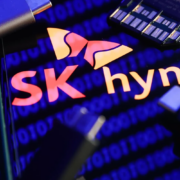
SK Hynix Soars to Record High as Big Tech AI Spending Fuels Chip Demand

SK Hynix shares surged to record levels after major U.S. technology companies signaled even stronger artificial intelligence infrastructure spending, reinforcing investor confidence that the global AI semiconductor boom — particularly for advanced memory chips — is far from slowing.

The South Korean chipmaker, a major supplier of high-bandwidth memory (HBM) used in AI servers, benefited from renewed expectations that hyperscalers including Microsoft, Meta, Alphabet, and Amazon will continue aggressively expanding data center capacity despite soaring component costs. Combined AI-related capital expenditure from major U.S. tech firms is now expected to exceed $700 billion this year, significantly increasing pressure on already constrained semiconductor supply chains.

SK Hynix’s rally also reflects its strategic advantage in memory markets critical to AI accelerators. As advanced AI workloads increasingly depend on high-performance memory, SK Hynix has emerged as one of the most direct beneficiaries of infrastructure-scale AI deployment.

The company’s outperformance relative to Samsung also highlights investor preference for firms perceived as more directly leveraged to current AI demand without comparable labor or operational uncertainty. Samsung’s labor tensions have created additional caution despite broader industry strength.

Executives and central bank officials are increasingly suggesting this semiconductor cycle may differ from previous boom-bust patterns because AI demand is more structurally embedded in cloud computing, enterprise software, defense systems, and future digital infrastructure than earlier consumer-driven chip surges.

A critical factor remains supply scarcity. Big Tech executives have openly acknowledged that memory shortages and pricing inflation are becoming defining constraints on AI expansion. This dynamic is boosting pricing power for leading memory suppliers while reinforcing investor expectations that companies like SK Hynix may sustain elevated profitability longer than traditional semiconductor cycles.

The broader market takeaway is clear: as AI infrastructure spending accelerates globally, memory chipmakers are becoming foundational to the next phase of technological competition.
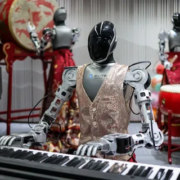

Linkerbot Eyes $6 Billion Valuation as China’s Robotic Hand Leader Accelerates

Chinese robotics startup Linkerbot is seeking to double its valuation to $6 billion following fresh investor enthusiasm around humanoid robotics, positioning itself as one of the fastest-rising players in a sector increasingly focused on precision dexterity rather than full humanoid systems alone.

The Beijing-based company dominates the global market for highly dexterous robotic hands, reportedly controlling more than 80% of the high-degree-of-freedom robotic hand segment. Its specialization reflects a strategic industry shift: rather than building entire humanoid robots immediately, many manufacturers are prioritizing advanced hands and manipulation systems as the most technically difficult and commercially valuable component.

Linkerbot’s technology is designed around replicating sophisticated human craftsmanship — from threading needles to precision assembly and industrial tooling — and its proprietary LinkerSkillNet platform aims to convert real-world human dexterity into scalable robotic capability. This focus on practical manipulation gives Linkerbot a major edge in manufacturing, research, and specialized automation markets.

The company’s growth also reflects broader momentum in China’s robotics sector, where investor interest has surged amid rising national ambitions in AI, industrial automation, and humanoid development. Backing from major institutions including Ant Group, HongShan, and state-linked capital reinforces how strategically important advanced robotics has become within China’s technology ecosystem.

A key commercial advantage is deployment flexibility: instead of requiring companies to purchase costly full humanoid robots, Linkerbot’s hands can be integrated directly into existing robotic arms, significantly lowering adoption barriers for factories seeking productivity gains.

This positions Linkerbot at a critical frontier in robotics economics. While full humanoids remain expensive and complex, dexterous robotic hands may emerge first as the practical bridge between current industrial automation and future general-purpose humanoid systems.

If successful, Linkerbot’s valuation push could signal that the next major robotics battleground may center less on humanoid appearance and more on mastering the mechanics of human-level dexterity.

Dairy Queen Halts Middle East Expansion While Betting on AI Drive-Thrus

Dairy Queen has paused its Middle East expansion strategy amid escalating regional instability and supply chain uncertainty, while simultaneously accelerating artificial intelligence adoption in U.S. drive-thrus as part of a broader operational modernization push.

The Berkshire Hathaway-owned chain said geopolitical tensions, including disruptions tied to conflict involving Iran and shipping risks through the Strait of Hormuz, have made franchisees more cautious about launching in new Middle Eastern markets such as Saudi Arabia. Supply chain reliability is especially critical for restaurant brands entering new territories, where rapid scale and stable logistics are essential for success.

Although Dairy Queen remains interested in long-term regional growth, executives have shifted into a wait-and-see posture as franchise partners prioritize risk management over expansion.

At the same time, Dairy Queen is focusing heavily on technology-led efficiency improvements. The company is testing AI-powered chatbot ordering systems in approximately 50 drive-thru locations, aiming to improve speed, labor flexibility, and customer experience. Early tests achieved about 90% order accuracy, with management targeting over 99% through human oversight and system refinement.

This reflects a wider quick-service restaurant industry trend, where major chains are increasingly integrating AI into frontline operations to reduce labor pressure, streamline service, and optimize customer engagement. Rather than fully replacing workers, Dairy Queen’s approach emphasizes using AI to shift staff attention toward hospitality and quality control.

The company also faces evolving consumer pressures in the U.S., where inflation and rising fuel costs are increasingly dividing customer behavior by income level. Value offerings are becoming more important for cost-sensitive consumers, while premium products remain resilient among higher-income diners.

Dairy Queen’s strategy illustrates how modern restaurant growth is being shaped simultaneously by geopolitical risk abroad and AI-enabled operational transformation at home.