Delta Electronics Warns AI Boom Is Driving Costs Higher

Taiwan’s Delta Electronics, a major supplier of power and cooling systems for AI data centres, has warned that surging artificial intelligence infrastructure demand is pushing operating costs higher. The company expects rising oil prices, material shortages, and broader inflation linked to AI expansion to increase pressure in the coming quarters.

Delta, whose customers include Nvidia, Google, and Meta, said production capacity remains tight as global AI datacentre construction accelerates. To meet demand, the company is expanding operations across China, Thailand, the United States, and Taiwan.

The firm previously announced capital expenditure of T$46.1 billion ($1.46 billion) in 2025 and now says spending will rise even further this year. This reflects how critical energy management, cooling systems, and infrastructure have become as hyperscale cloud providers and AI companies scale hardware deployments.

Despite cost concerns, Delta posted strong first-quarter results. Revenue climbed 34% year-over-year to T$159.35 billion ($5.02 billion), while gross profit surged 56% to T$59 billion ($1.86 billion), largely fueled by AI datacentre growth.

Delta Electronics’ stock has risen nearly 125% this year, significantly outperforming Taiwan’s broader market. The company’s outlook suggests that while AI remains a massive growth driver, supply chain constraints and inflation may increasingly shape profitability across the sector.
Foxconn Launches New LEO Satellites With SpaceX

Taiwanese electronics giant Foxconn has launched its second-generation low-Earth orbit satellites, PEARL-1A and PEARL-1B, aboard a SpaceX Falcon 9 rocket from California. The mission marks another major step in Foxconn’s growing expansion beyond electronics manufacturing into space technology.

According to the company, both satellites successfully entered their planned orbits and are expected to carry out operational missions for five years. Their primary role is to test and validate payload technologies focused on communications systems and space science applications.

This launch highlights Foxconn’s broader diversification strategy as it moves into advanced technology sectors beyond consumer electronics and semiconductor manufacturing. By investing in LEO satellite systems, Foxconn joins a rapidly expanding global race in satellite communications, an area increasingly dominated by both commercial and national players.

The PEARL-1A and PEARL-1B mission is particularly important because it positions Foxconn as a more serious contender in aerospace-adjacent innovation, potentially opening future opportunities in satellite infrastructure, communication networks, and scientific research.

As demand for satellite-based communication and data systems continues to rise, Foxconn’s latest move signals that major electronics manufacturers are seeking a role in the evolving commercial space economy.

Nvidia B300 Servers Hit $1M in China as US Curbs Tighten Supply

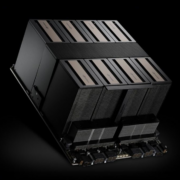
Nvidia’s advanced B300 AI servers are reportedly selling for nearly 7 million yuan, around $1 million, in China as stricter US export controls and anti-smuggling crackdowns sharply reduce supply. According to industry sources, prices have almost doubled from roughly 4 million yuan late last year, creating a major scarcity premium in the Chinese grey market.

The B300 server, equipped with eight B300 GPUs, costs around $550,000 in the United States, but Chinese demand for high-end AI computing has pushed prices far beyond that level. Chinese technology companies are aggressively seeking cost-efficient hardware to power AI inference and token generation, while many remain cautious about directly holding Nvidia systems due to sanctions concerns.

Reuters reports that pressure increased after US authorities prosecuted Supermicro co-founder Wally Liaw in March, disrupting key black-market supply channels. Nvidia emphasized that B300 systems are restricted from sale in China and warned that unauthorized diversion would receive no support or service from the company.

Some Chinese firms unable to afford direct purchases are instead turning to rentals, with short-term annual contracts reaching 190,000 yuan per month. At the same time, domestic players like Huawei are trying to capitalize on Nvidia’s restricted access, challenging Nvidia’s estimated 55% Chinese AI chip market share.

The surge highlights how geopolitical restrictions are reshaping China’s AI infrastructure market, driving up costs while accelerating local competition in advanced computing hardware.