
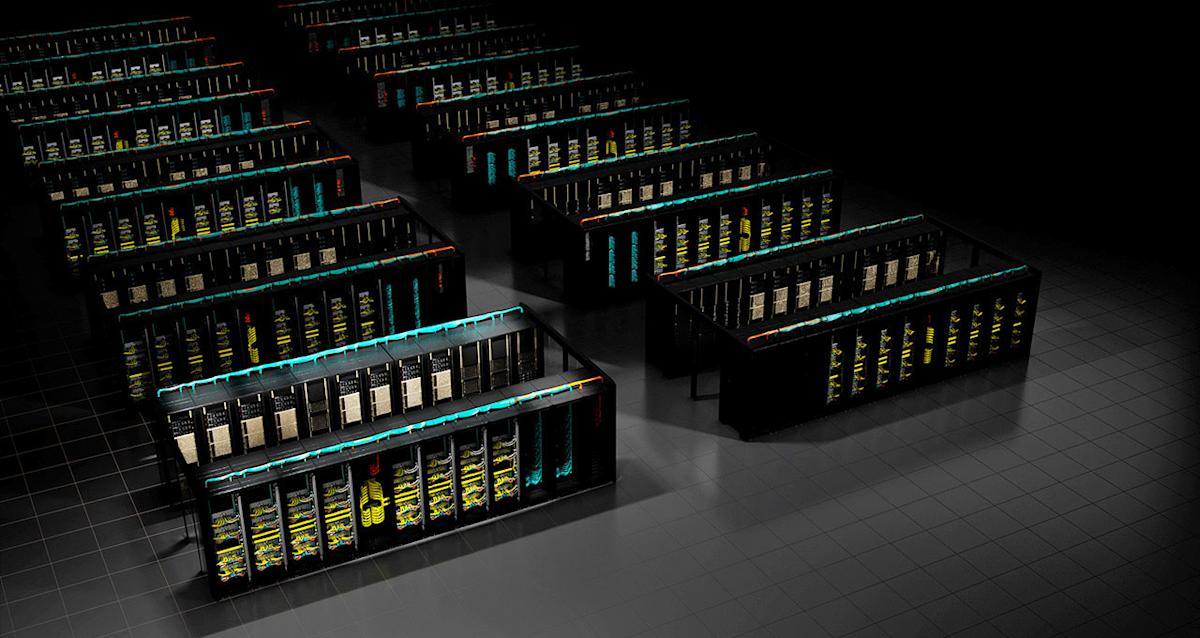
German Chancellor Friedrich Merz on Friday inaugurated Jupiter, a Nvidia-powered supercomputer that ranks as the fourth-fastest in the world and Europe’s first Exascale-class machine. Located at the Juelich Research Centre, Jupiter can perform one billion billion (10^18) calculations per second—equivalent to the power of about 10 million laptops.
Built in partnership with France’s Atos and Germany’s ParTec, Jupiter represents a landmark effort for Europe to catch up with the U.S. and China in high-performance computing and AI infrastructure. “We are today witnessing a historic European pioneering project,” Merz said, stressing that Europe has the opportunity not only to close the gap but also to remain competitive in the long run.
Beyond its symbolic importance, Jupiter is expected to advance research in biotechnology, climate modeling, and AI development, reducing Europe’s reliance on foreign digital infrastructure. Ralf Wintergerst, head of German tech association Bitkom, called for easy access to the system for startups and established firms to maximize its impact on innovation.
With Jupiter now operational, Germany positions itself at the heart of Europe’s AI and scientific research ecosystem, while aiming to balance global competition with technological sovereignty.