NASA’s Europa Clipper Could Fly Through Comet Tail, Providing Unique Look at Interstellar Material
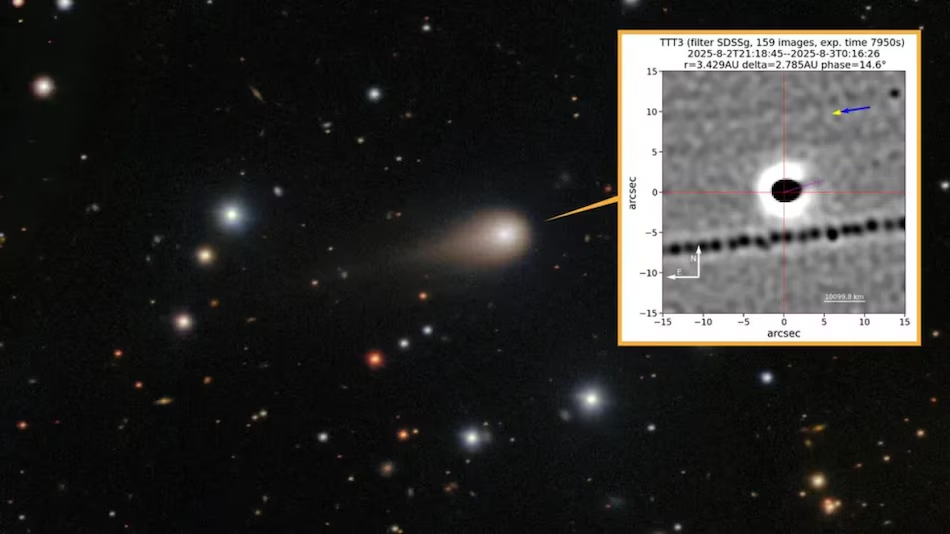
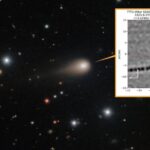
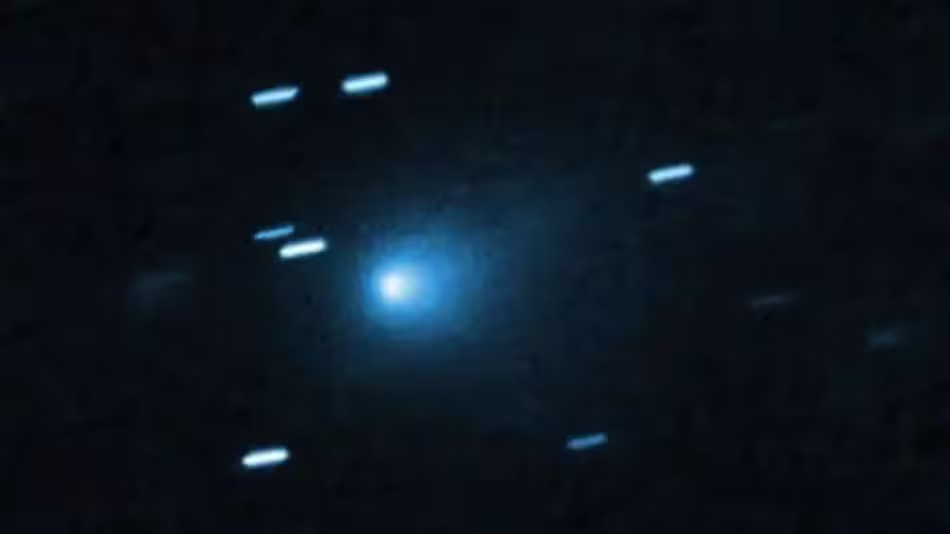
NASA’s Europa Clipper spacecraft, currently en route to study Jupiter’s icy moon Europa, may have a rare opportunity to pass through the tail of an interstellar comet. Between October 30 and November 6, the spacecraft is expected to encounter a stream of charged particles emitted by comet 3I/ATLAS, a visitor from another star system that has been traveling through the solar system for over a year. If the timing aligns, this could allow scientists to study interstellar material directly, without the need to launch a dedicated mission to chase the comet.
According to Space.com, researchers Samuel Grant from the Finnish Meteorological Institute and Geraint Jones of the European Space Agency (ESA) have described the potential flythrough as both safe and scientifically invaluable. Using a computer model called Tailcatcher, the team predicts that Europa Clipper could intersect the comet’s ion tail, a luminous stream of charged particles pushed outward by the Sun’s solar wind. Grant noted that this encounter could provide the closest opportunity yet to analyze matter originating from another star system.
While Europa Clipper’s primary mission focuses on studying Jupiter’s magnetic field and assessing the habitability of Europa’s subsurface ocean, the spacecraft’s instruments are capable of detecting ions from comet 3I/ATLAS. Scientists expect the most favorable conditions around October 29, when the comet’s activity and solar wind direction may align to maximize the number of particles passing near the spacecraft. This serendipitous encounter could yield a treasure trove of data on the composition and properties of interstellar material.
The potential passage through the comet’s tail highlights the flexibility and scientific value of space missions like Europa Clipper. Beyond its main objectives, the spacecraft may offer unprecedented insights into material from outside our solar system, helping researchers better understand the origins of interstellar objects and the broader dynamics of the galaxy. If successful, this encounter would mark a historic first in the study of interstellar matter using a planetary spacecraft.