Chang’e-6 Lunar Samples Uncover Water-Rich Material from Ancient Asteroids
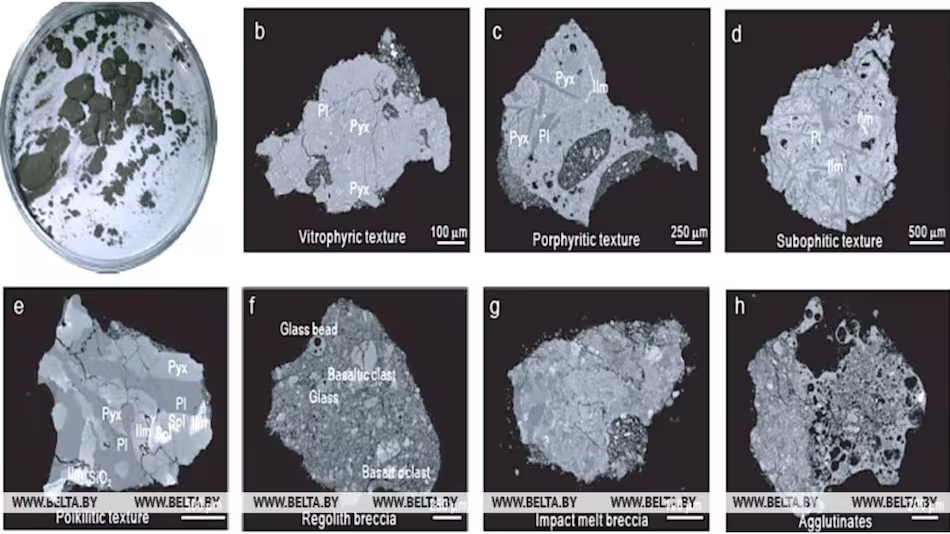
Scientists analyzing lunar soil returned by China’s Chang’e-6 mission have identified rare meteorite fragments that suggest the Earth and Moon were struck by water-rich asteroids more frequently than previously believed. The mission, which collected the first-ever samples from the Moon’s far side in June 2024, yielded two grams of dust containing microscopic olivine-bearing clasts. These fragments share the chemical signature of CI carbonaceous chondrites, a class of asteroid known for being rich in water and organic molecules. Such delicate space rocks rarely survive passage through Earth’s atmosphere, making their discovery on the Moon particularly valuable.
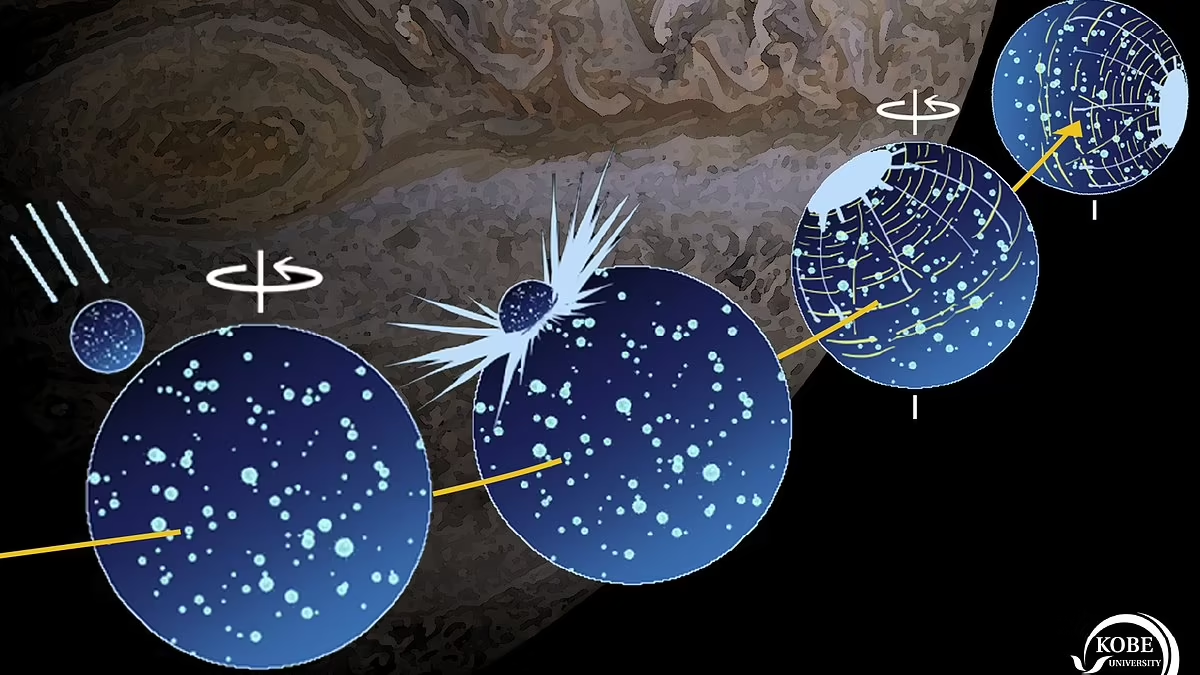
By examining the Chang’e-6 dust, researchers found seven microscopic relics of CI chondrites. Detailed mineral and isotope analyses confirmed that these grains were formed when a carbonaceous asteroid impacted the lunar surface, melting and re-crystallizing material. While similar fragments are extremely rare on Earth, representing less than 1% of meteorites, they account for roughly 30% of the exogenous material in the Chang’e-6 soil, highlighting the Moon as a better recorder of ancient asteroid impacts.
The discovery has significant implications for understanding the origin of water in the inner solar system. It shows that water-rich and organic-rich asteroids migrated inward, delivering essential volatiles to both Earth and the Moon in much higher quantities than previously estimated. Lunar samples help correct biases present in Earth-based meteorite collections, which often miss the most fragile fragments.
These findings also shed light on the sources of lunar water, as indicated by differing oxygen isotopes in the Chang’e-6 samples. The results suggest that a substantial portion of the Moon’s water—and potentially the Earth’s early water—originated from outer-solar-system bodies, reshaping our understanding of the early solar system and how key ingredients for life were distributed across planetary bodies.