
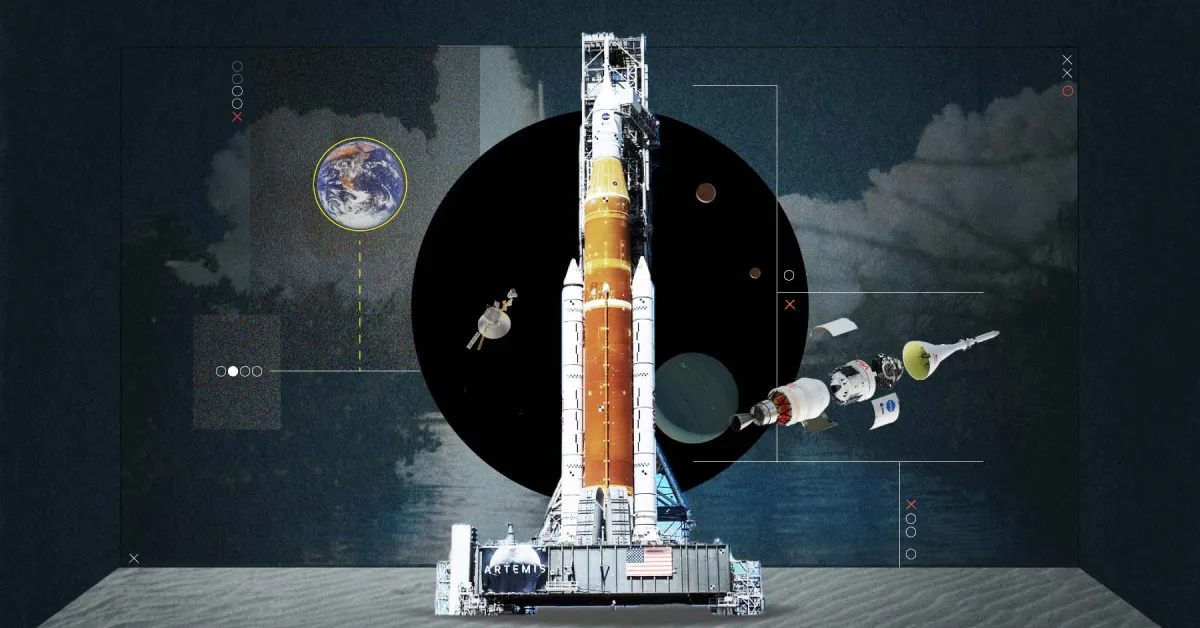
NASA’s Artemis II Orion spacecraft has received its launch abort system, a key milestone toward the historic crewed mission around the Moon.
On August 10, NASA’s Artemis II Orion spacecraft reached a critical milestone at Kennedy Space Center in Florida. After being fully fueled, Orion was carefully moved from the Multi-Payload Processing Facility (MPPF)—where it had been prepared with propellant—to the Launch Abort System Facility (LASF). At LASF, engineers from NASA’s Exploration Ground Systems Program will install the spacecraft’s launch abort system atop the crew module, a crucial step for crew safety during launch.
The launch abort system itself stands 44 feet tall and consists of two main components: the launch abort tower, housing the abort, jettison, and attitude control motors, and the fairing assembly, which includes ogive panels that provide aerodynamic support and protect the crew module during liftoff. This system is designed to safely carry the crew away from the Space Launch System (SLS) rocket in case of an emergency during ascent.
Once the abort system is integrated, the complete Orion stack will be transported to High Bay 3 of the Kennedy Space Center’s Vehicle Assembly Building. There, the spacecraft will be mated with the Moon rocket, moving Artemis II one step closer to its historic crewed mission around the Moon.
This milestone highlights NASA’s continued focus on crew safety, ensuring that all systems are fully operational and rigorously tested before the Artemis II mission, which will mark humanity’s next journey beyond low-Earth orbit.