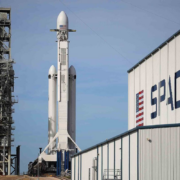
Intel joins Musk’s Terafab AI chip project

Intel has joined Elon Musk’s ambitious Terafab AI chip complex alongside Tesla and SpaceX, aiming to build next-generation processors for robotics and large-scale data center infrastructure.

The partnership focuses on producing chips to support Musk’s long-term vision across:

  • Autonomous vehicles
  • Humanoid robots
  • Space-based AI data centers

Intel stated that its manufacturing expertise will help Terafab reach a target of 1 terawatt per year of compute capacity, a scale aligned with future AI and robotics demands.

Terafab Vision and Infrastructure

The Terafab initiative includes plans for two advanced chip factories in Austin, Texas:

  • One dedicated to powering Tesla’s cars and humanoid robots
  • Another focused on AI data centers, including potential space-based computing systems

The project reflects Musk’s strategy of vertically integrating hardware, AI, and infrastructure across his companies.

Strategic Importance for Intel

For Intel, the collaboration is strategically significant. The company has struggled to keep pace with competitors like Nvidia in the AI chip market, but this deal signals renewed relevance in high-performance computing.

Key implications:

  • Validates Intel’s foundry capabilities for large-scale clients
  • Strengthens its position in AI infrastructure supply chains
  • Improves investor sentiment (shares rose after the announcement)

CEO Lip-Bu Tan described Terafab as a “step change” in semiconductor manufacturing, highlighting innovations across logic, memory, and packaging.

Turnaround Context

Intel is undergoing a major restructuring:

  • Job cuts and asset sales to stabilize finances
  • Increased investment from both government and industry partners
  • Focus on its Intel Foundry business

However, challenges remain:

  • Foundry division posted a $10.32 billion operating loss in 2025
  • Revenue growth in that segment remains limited

The company is betting on its 18A manufacturing process to attract external customers and regain competitiveness.

Broader Industry Context

The deal comes amid:

  • Explosive demand for AI compute infrastructure
  • Growing need for custom silicon tailored to specific workloads
  • Intensifying competition in advanced semiconductor manufacturing

Musk’s ecosystem—now increasingly interconnected through Tesla, SpaceX, and xAI—requires massive compute resources, making Terafab a central pillar of his long-term strategy.

Outlook

The partnership represents:

  • A validation milestone for Intel’s turnaround
  • A scaling experiment for vertically integrated AI infrastructure
  • A potential shift toward distributed and space-based computing architectures

Execution risk remains high due to:

  • Technical complexity
  • Capital intensity
  • Dependence on emerging AI and robotics adoption

Pershing Square bids $64B for Universal Music Group

Pershing Square, led by billionaire investor Bill Ackman, has proposed a $64 billion takeover of Universal Music Group (UMG), marking a renewed attempt to gain control of the world’s largest music label.

The offer, structured as a mix of cash and shares, values UMG at about 30.40 euros per share, representing a 78% premium over its recent trading price. The proposal is nonbinding, and UMG’s board has confirmed it is under review.

Strategic Objective: U.S. Listing

A central element of the proposal is relocating UMG’s listing from Amsterdam to the United States. Ackman argues that a New York listing would:

  • Increase liquidity
  • Attract index funds
  • Improve valuation multiples

This aligns with his long-standing position that UMG is undervalued relative to peers like Spotify.

Ownership and Approval Constraints

The deal faces structural hurdles. Key shareholders include:

  • Bollore Group (~18.5% stake, dominant voting control)
  • Vivendi (~13.4%)
  • Tencent (significant minority stake)

Approval would require:

  • Board consent
  • Two-thirds shareholder approval
  • Regulatory clearance

Without support from these stakeholders, the transaction is unlikely to proceed.

Industry Context and Performance Pressure

Despite global music industry growth, UMG’s share price has underperformed since its IPO, losing roughly one-third of its value. Ackman attributes this to:

  • Underutilized capital structure
  • Strategic inefficiencies
  • Missed opportunities in investments such as its stake in Spotify

At the same time, the industry faces structural challenges:

  • Slowing streaming growth
  • Increasing competition from platforms like Apple and Amazon
  • Disruption from AI-generated music

AI Disruption Factor

Artificial intelligence is emerging as a material risk. Tools capable of generating music are:

  • Blurring the distinction between human and machine-created content
  • Triggering copyright and monetization concerns

A recent survey indicated that 97% of listeners cannot distinguish AI-generated songs from human-created ones, underscoring the scale of disruption.

Deal Structure

Under the proposal:

  • Shareholders would receive €9.4 billion in cash
  • Plus 0.77 shares in a new U.S.-listed entity
  • The merged company would be incorporated in Nevada and listed on the NYSE

The transaction is targeted to close by year-end, pending approvals.

Outlook

Ackman’s approach differs from traditional activist campaigns, combining cooperative tone with structural criticism. However, execution risk remains high due to:

  • Concentrated ownership
  • Governance resistance
  • Strategic disagreements with current management

The proposal effectively tests whether UMG’s current leadership model can coexist with public-market expectations for growth, transparency, and capital efficiency.

SpaceX’s $1.75 Trillion Valuation Raises Questions Ahead of IPO

SpaceX is targeting a $1.75 trillion valuation in its anticipated IPO, a figure that would place it among the most valuable companies globally and ahead of firms like Meta Platforms and Berkshire Hathaway.

Despite the scale, investor demand appears strong. The company could raise more than $75 billion, potentially setting a record for a public offering. Interest has already spilled into secondary markets, where investors are seeking early exposure.

Valuation Drivers

The primary foundation of SpaceX’s valuation is its Starlink business, which has over 10 million users and accounts for a significant share of revenue. The company’s launch division also plays a key role, with its reusable rocket program—particularly the Falcon 9—dramatically reducing launch costs and increasing frequency.

In 2025, SpaceX generated approximately $15–16 billion in revenue and about $8 billion in EBITDA, reflecting strong growth. However, much of the valuation also depends on future projects such as the Starship program and integration with AI ventures like xAI.

Stretching Traditional Metrics

Using aggressive growth assumptions, SpaceX would trade at roughly:

  • 56× price-to-revenue
  • 109× price-to-EBITDA

These multiples significantly exceed even high-growth tech companies such as Tesla and Palantir Technologies, indicating that investors are pricing in substantial future expansion.

Risks and Uncertainty

The valuation depends heavily on continued growth in Starlink and successful execution of unproven initiatives. Delays in the Starship program or slower-than-expected adoption of satellite-based data services could pressure future performance.

Additionally, unlike publicly traded peers, SpaceX lacks transparent consensus forecasts, making valuation comparisons less precise.

Market Context

The company’s dominance in low-Earth orbit satellite deployment and launch frequency gives it a structural advantage. However, competitors such as Amazon are investing heavily in rival satellite networks.

Overall, SpaceX’s valuation reflects not only current performance but also investor confidence in founder Elon Musk and the company’s long-term role in space infrastructure, global connectivity and AI-driven services.