
Caravaggio Portrait of Future Pope Urban VIII Goes on Public Display in Rome

For the first time since its discovery over 60 years ago, a portrait by the renowned Baroque artist Caravaggio is on public display at Rome’s Palazzo Barberini. This rare artwork, depicting Monsignor Maffeo Barberini—later Pope Urban VIII—will be exhibited from November 23, 2023, to February 23, 2025.

Background on the Portrait

The painting, attributed to Michelangelo Merisi da Caravaggio in 1963, has been privately held and unseen by the general public or even most art specialists until now. It is one of the few surviving Caravaggio portraits, as many of his works have been lost or destroyed over time. The artwork portrays Barberini seated, gesturing with his right hand as though issuing commands. Experts believe it was created around the turn of the 17th century, preceding Barberini’s papacy, which began in 1623.

Curator Paola Nicita described the piece as having an “almost magnetic power,” emphasizing the significance of experiencing it in person rather than through photographs.

Significance of the Display

The portrait’s unveiling takes place at the National Gallery of Ancient Art in Palazzo Barberini—a historic venue closely tied to Urban VIII. The palace, constructed during his papacy by renowned architects Gian Lorenzo Bernini and Carlo Maderno, remained under Barberini family ownership until after World War II.

Thomas Clement Salomon, Director of the National Galleries of Ancient Art, highlighted the painting’s historical and artistic importance, noting its status as a masterpiece of the chiaroscuro technique, which Caravaggio famously used to bring his subjects to life.

Caravaggio’s Legacy

Caravaggio, who died in 1610 at just 38 years old, is celebrated for his dramatic use of light and shadow and his revolutionary approach to realism. His works have influenced generations of artists, and his portraits are particularly rare, making this exhibition a landmark event in the art world.

This exhibition offers a unique opportunity to engage with a significant piece of Caravaggio’s oeuvre while celebrating the enduring legacy of the Barberini family in the arts.

 

‘Wicked’ and ‘Gladiator II’ Dominate Domestic Box Office with $169.5 Million

The domestic box office witnessed a blockbuster weekend as Wicked and Gladiator II combined to rake in $169.5 million in ticket sales across the U.S. and Canada.

Wicked: A Magical Debut

Universal Pictures’ Wicked, the first of a two-part adaptation of the Broadway musical, captivated audiences with its tale of the misunderstood, green-skinned student who becomes the Wicked Witch of the West. The film, starring Ariana Grande and Cynthia Erivo, achieved a record-breaking debut for a movie based on a Broadway musical.

  • Domestic Earnings: $114 million
  • International Earnings: $50.2 million
  • Global Total: $164.2 million

The movie outperformed previous Broadway adaptations, including Les Misérables, making it the biggest opening weekend for the genre.

Gladiator II: A Strong Second Act

Paramount Pictures’ Gladiator II, the long-anticipated sequel to the 2000 Oscar-winning epic, earned $55.5 million domestically. The film stars Paul Mescal, Pedro Pascal, and Denzel Washington in a narrative set 16 years after the original story.

  • Domestic Earnings: $55.5 million
  • Global Weekend Total: $106 million
  • Cumulative Global Earnings: $221 million (including its earlier release in international markets)

This sword-and-sandal epic continues to draw global audiences, fueled by a stellar cast and the legacy of its predecessor.

Box Office Highlights

The weekend showcased the power of established franchises and adaptations in attracting diverse audiences.

  • Wicked appealed to musical theater enthusiasts and new fans alike, delivering a dazzling cinematic experience.
  • Gladiator II capitalized on its historical drama roots and star power, maintaining momentum in its second week.

Both films underscore the enduring appeal of adaptations and sequels, proving their ability to dominate in a competitive box office landscape.

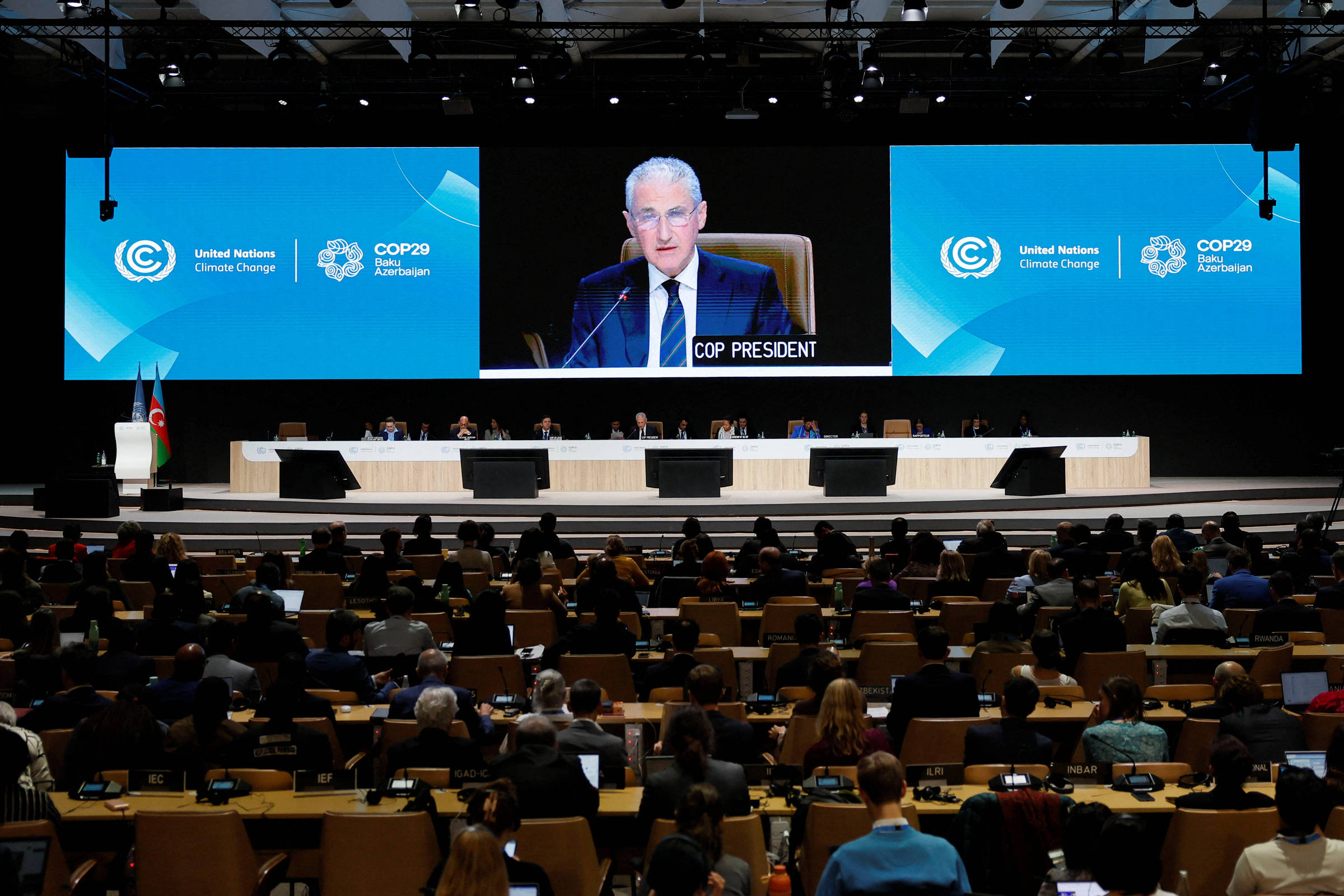
Developing Nations Criticize $300 Billion COP29 Climate Finance Deal as Inadequate

The COP29 climate summit in Baku concluded with a $300 billion annual global finance commitment to help developing nations combat the effects of climate change. However, many recipient countries criticized the deal, calling it insufficient to address the escalating climate crisis.

Negotiations, which extended past the scheduled Friday deadline, ended with mixed reactions. Some delegates welcomed the agreement as a critical step forward, while others, particularly from developing nations, voiced their dissatisfaction. Indian delegate Chandni Raina described the document as “an optical illusion” that failed to address the magnitude of the climate challenges.

The deal, set to take effect until 2035, aims to increase the financial support pledged by wealthier nations, building on the unmet $100 billion annual goal originally set for 2020. While this agreement marks progress, many representatives, including Tina Stege of the Marshall Islands, argued that the funding remains far below what vulnerable countries urgently need.

Key Points of the Agreement

  1. Financial Commitments:
    • $300 billion annually in climate finance for developing nations by 2035.
    • A broader target to mobilize $1.3 trillion per year from public and private sources.
  2. Climate Market Rules:
    • The deal introduced mechanisms for a global carbon credit market aimed at generating additional funding through projects like reforestation and clean energy deployment.
  3. Fossil Fuel Transition:
    • No concrete plans were outlined to transition away from fossil fuels or to triple renewable energy capacity, goals previously set at COP28. This omission led to criticism from several delegations, with some blaming obstructionist tactics by nations such as Saudi Arabia.
  4. Funding Responsibility:
    • Contributions are required from about two dozen industrialized countries, including the U.S., European nations, and Canada.
    • The agreement encourages but does not mandate contributions from emerging economies like China and oil-rich Gulf states, a point of contention for European governments.

Broader Context

The summit highlighted deep divides between developed and developing nations. Wealthy countries, grappling with economic and geopolitical pressures, were reluctant to increase financial commitments, while developing nations emphasized the urgent need for greater support to combat climate disasters.

The $300 billion pledge aims to advance the Paris Agreement’s goal of limiting global temperature rise to 1.5°C above pre-industrial levels. However, the 2024 U.N. Emissions Gap report shows that the world is on track for a temperature increase of up to 3.1°C by the end of the century, underscoring the urgency for bolder action.

Reactions

  • United Nations Climate Chief Simon Stiell: Hailed the agreement as “an insurance policy for humanity” but stressed the importance of timely and full financial contributions.
  • U.S. President Joe Biden: Praised the deal as a significant step forward but emphasized the need for continued efforts to meet global climate goals.
  • Donald Trump’s Influence: Skepticism about U.S. commitment resurfaced following Donald Trump’s recent election victory, given his history of climate change denial and withdrawal from international agreements during his presidency.

Climate Impacts in 2023

The urgency of climate finance was underscored by catastrophic climate events this year, including deadly floods in Africa, landslides in Asia, and droughts in South America. Even developed nations faced significant losses, such as Spain’s fatal floods and the U.S. recording 24 billion-dollar weather disasters.

The $300 billion agreement is seen as a stepping stone toward the next COP summit, set to take place in Brazil’s Amazon rainforest, where nations will aim to finalize a roadmap for the next decade of climate action. However, with the world’s warming trajectory far from its targets, the pressure for more ambitious commitments continues to mount.