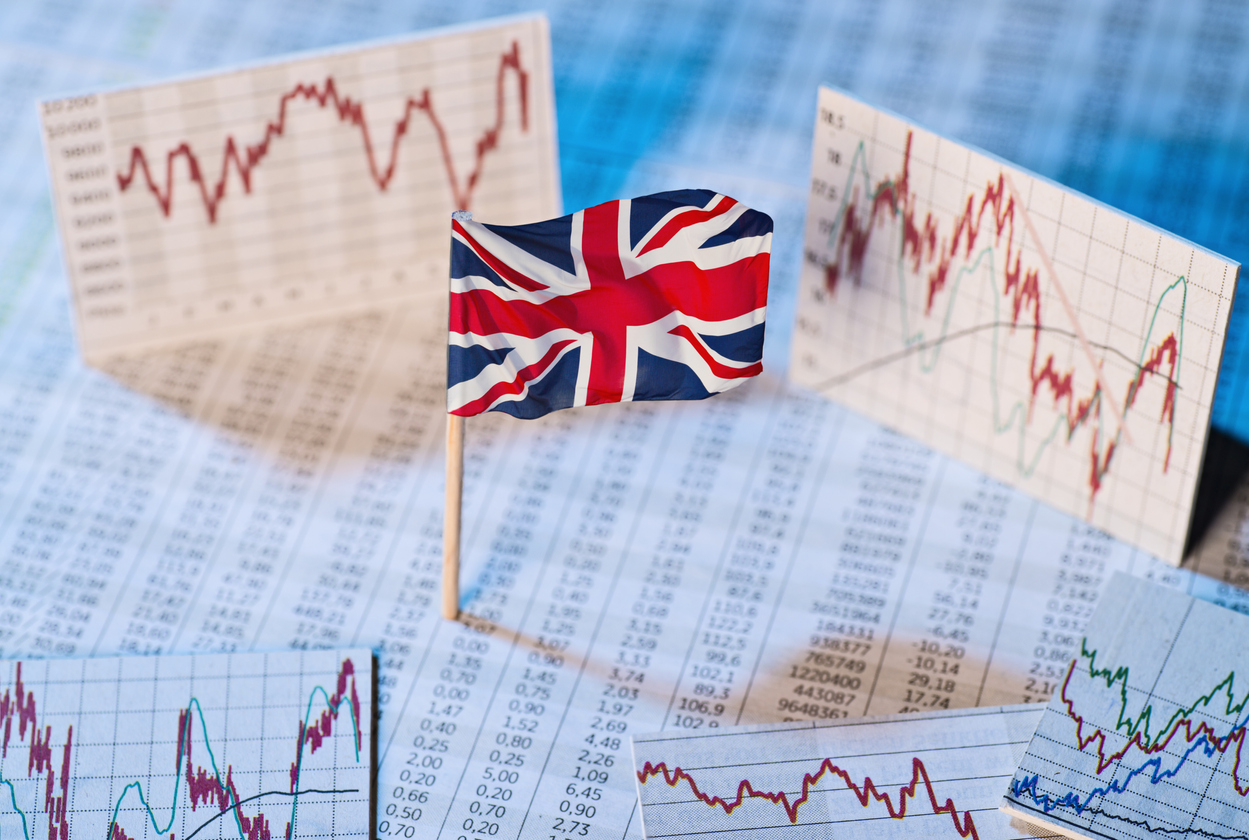
UK Economy Contracts in September Amid Challenges to Growth Ambitions

The United Kingdom’s economy shrank by 0.1% in September, marking an unexpected setback to Finance Minister Rachel Reeves’ plans for sustained economic growth. Over the third quarter, growth slowed to just 0.1%, down from 0.5% in the second quarter, according to data released by the Office for National Statistics (ONS) on Friday.

Economic Performance Below Expectations

The September contraction, attributed to stagnation in the services sector alongside declines in manufacturing and construction, underperformed forecasts from economists and the Bank of England (BoE), which had predicted 0.2% quarterly growth. The slowdown follows a stronger first half of 2024 when the economy rebounded from the effects of last year’s mild recession.

Despite the disappointing figures, there was a notable 1.2% quarterly increase in business investment, marking four consecutive quarters of growth in this area. However, broader economic challenges overshadowed this progress.

Reeves’ Growth Agenda

Finance Minister Rachel Reeves acknowledged the need for more robust economic performance. “Improving economic growth is at the heart of everything I am seeking to achieve, which is why I am not satisfied with these numbers,” she said, reiterating her commitment to stimulating growth through investment and regulatory reforms.

Reeves recently announced plans to overhaul regulations governing the UK’s financial sector, labeling it a “crown jewel” of the economy. Her big-spending budget, coupled with these reforms, is designed to drive short-term recovery and position the UK for stronger growth in the coming years.

However, critics argue that Labour’s landslide election victory in July, and subsequent rhetoric about weak economic conditions, has dampened confidence. The opposition Conservative Party accused Reeves of “talking down” the economy.

Challenges Ahead

The Bank of England revised its annual growth forecast for 2024 downward to 1% from 1.25%, though it expects a stronger performance in 2025. Britain’s economic output has been sluggish since the COVID-19 pandemic, with growth of just 3% since late 2019. Among major advanced economies, only Germany has fared worse, heavily impacted by rising energy costs following Russia’s invasion of Ukraine.

Sanjay Raja, chief UK economist at Deutsche Bank, warned of potential risks on the horizon, including increased taxes on businesses, which could dampen private sector investment and hiring. “We still see positive momentum into 2025, but downside risks are brewing,” he said, citing geopolitical tensions and the potential for a trade war.

Long-Term Growth Ambitions

Prime Minister Keir Starmer and Reeves have set ambitious economic targets, including achieving annual growth of 2.5%, a level not consistently reached since before the 2008 financial crisis. Reeves has also pledged to position the UK as the fastest-growing economy per capita among the G7 nations for two consecutive years.

However, Friday’s data highlights the challenges in reaching these goals. GDP per capita fell by 0.1% in the third quarter and remained flat compared to the previous year, with no annual growth recorded since 2022.

Outlook

The latest figures underscore the complexity of the UK’s economic recovery. While targeted investments and reforms aim to provide a pathway to growth, global uncertainties, domestic policy risks, and stagnant GDP per capita present significant obstacles. Analysts agree that the coming quarters will be crucial in determining the success of Reeves’ growth push.
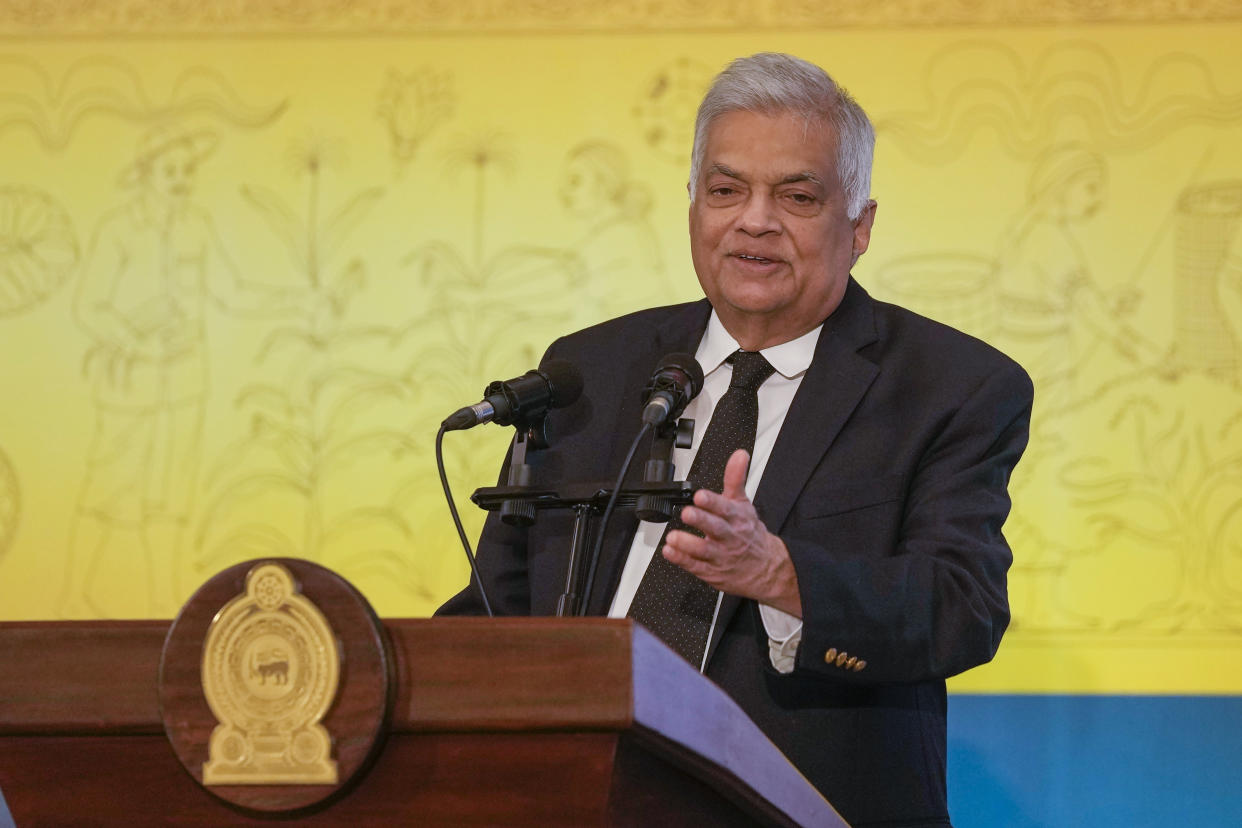

 

Sri Lankan President’s Coalition Secures Historic Majority in General Election

Sri Lankan President Anura Kumara Dissanayake’s leftist National People’s Power (NPP) coalition has won a commanding two-thirds majority in the country’s snap general election. This landslide victory grants the president the authority to pursue his ambitious reforms targeting poverty alleviation, anti-corruption measures, and economic recovery in the wake of a severe financial crisis.

Unprecedented Mandate and Widespread Support

The NPP coalition secured 159 out of 225 parliamentary seats, representing approximately 62% of the vote—an increase from the 42% support Dissanayake received in the September presidential election. This remarkable result includes unexpected backing from Sri Lanka’s northern and eastern regions, home to the minority Tamil population, signaling a unifying call for change across the country.

Analysts describe this as one of the most decisive election victories in Sri Lanka’s history, eclipsing the once-dominant Rajapaksa family’s Sri Lanka Podujana Peramuna party, which was reduced to just three seats. The opposition Samagi Jana Balawegaya party, led by Sajith Premadasa, secured 40 seats, while the New Democratic Front, associated with former President Ranil Wickremesinghe, won five seats.

“This marks a critical turning point for Sri Lanka,” Dissanayake declared, emphasizing the electorate’s support for a shift in political culture initiated during his presidential campaign.

Challenges Ahead: Governance, Policy, and Economic Recovery

Despite the political stability brought by this sweeping majority, the Dissanayake administration faces significant challenges. The coalition’s limited experience in governance raises concerns about its ability to implement complex policies effectively. The new government’s priority will be addressing the high cost of living, reducing taxes, supporting local businesses, and expanding welfare programs.

Dissanayake’s intention to renegotiate aspects of the $2.9 billion International Monetary Fund (IMF) bailout, which has been pivotal in Sri Lanka’s economic recovery, adds to the uncertainty. The president aims to soften stringent tax targets to redirect resources toward welfare programs, a move welcomed by struggling citizens but viewed cautiously by investors.

Economists warn that altering the bailout terms could delay future disbursements, jeopardizing Sri Lanka’s ability to achieve key fiscal targets, including a 2.3% GDP primary surplus by 2025. However, early reactions from the bond market have been modestly positive, with international bonds reaching their strongest levels since late 2021.

Reforming the Executive Presidency

The coalition’s two-thirds majority also grants Dissanayake the power to initiate constitutional reforms, including abolishing the executive presidency—a move he advocated as an opposition leader to curb abuses of power. However, analysts predict that immediate economic challenges will take precedence over constitutional amendments.

Looking Forward

Sri Lanka, still grappling with the aftermath of a historic economic crisis, is at a crossroads. While the electorate has delivered a decisive mandate for change, the path forward requires balancing bold reforms with economic stability.

As Bhavani Fonseka of the Centre for Policy Alternatives aptly noted, “The president has a huge mandate now to carry through the reforms but also huge expectations from the people. Sri Lankans are looking for tangible improvements in their daily lives.”


Historic Diamond Necklace Linked to Marie Antoinette’s Scandal Sells for $4.8 Million

An 18th-century diamond necklace, believed to contain diamonds linked to Marie Antoinette’s infamous “Affair of the Diamond Necklace,” fetched over 4.2 million Swiss francs ($4.8 million) at a Sotheby’s auction in Geneva on Wednesday. Weighing around 300 carats, this antique piece likely originated a decade before the French Revolution and was showcased publicly for the first time in 50 years during a pre-auction tour.

While the necklace’s precise origins remain unrecorded, Sotheby’s asserts it was most likely crafted for royalty or an aristocrat. The piece was once owned by the British Marquesses of Anglesey and has a storied history; it was worn by Marjorie Paget, the Marchioness of Anglesey, at King George VI’s 1937 coronation and by her daughter-in-law at Queen Elizabeth II’s 1953 coronation. In the 1960s, the necklace left the family’s possession, later exhibited in New York’s American Museum of Natural History before ending up with a private collector.

The opulent necklace boasts three rows of old mine brilliant-cut diamonds, weighing between one and one-and-a-half carats each. The diamonds are thought to have originated from the legendary Golconda mines of India, known for producing some of the world’s finest gems, including the Hope Diamond. Sotheby’s chair Andres White Correal praised the necklace as a rare artifact of Georgian-era luxury and craftsmanship, showcasing both technical sophistication and historical importance.

This dazzling piece may also carry a notorious history. Some diamonds in the necklace are believed to be from the piece central to the “Affair of the Diamond Necklace” scandal of 1785, which rocked the court of King Louis XVI. In the scandal, a cardinal was deceived into buying an elaborate diamond necklace on behalf of a woman impersonating Queen Marie Antoinette. When jewelers demanded payment, the Queen denied knowledge of the necklace, revealing the scheme. The scandal, which falsely implicated Marie Antoinette in a supposed immoral relationship, damaged her reputation and heightened public disdain for the monarchy, further fueling the tensions that led to the French Revolution.