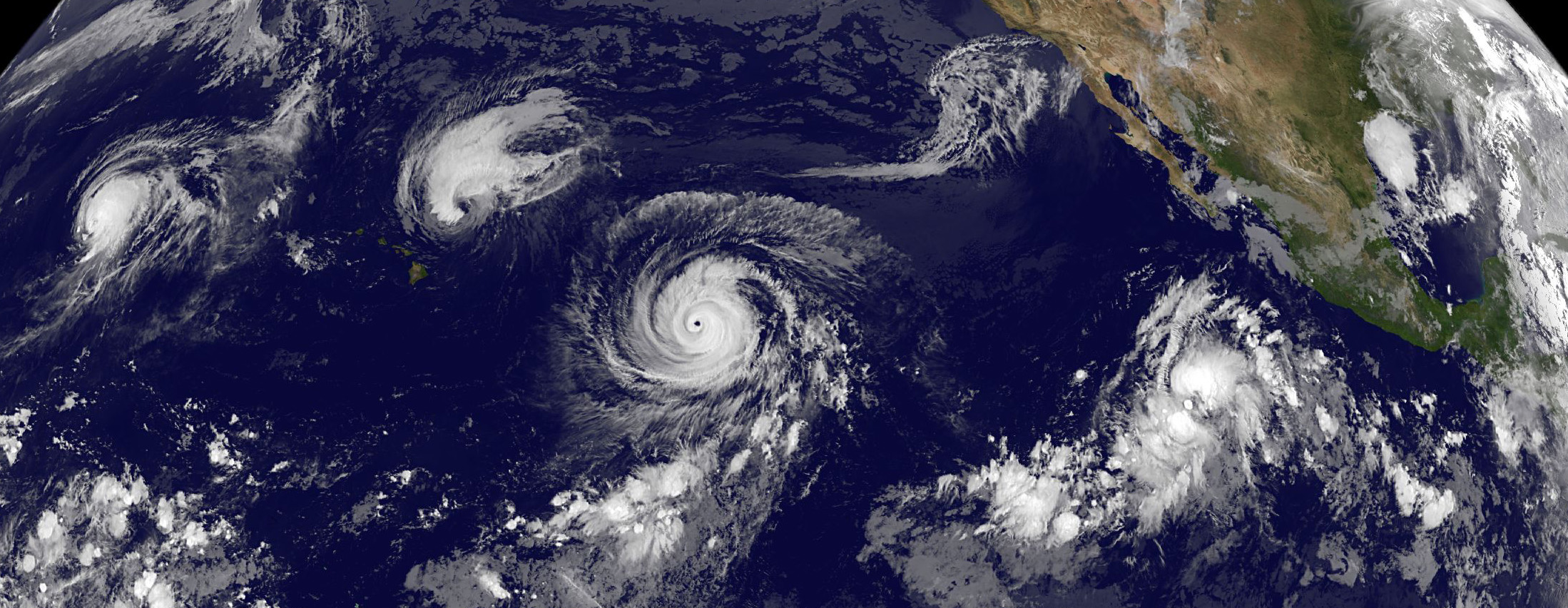
Four Storms Swirling in West Pacific Threaten Philippines with More Devastation

The West Pacific is currently contending with a rare phenomenon: four storms active at the same time, a situation last seen in November since record-keeping began in 1951, according to Japan’s Meteorological Agency. These storms—Typhoon Yinxing, Typhoon Toraji, Tropical Storm Usagi, and Tropical Storm Man-Yi—are spread across the vast basin, from Vietnam to Guam, and are raising alarm across Southeast Asia, particularly in the Philippines.

The Philippines, already prone to annual storms, faces even greater hardship as a succession of typhoons in recent weeks has complicated ongoing recovery efforts. Thousands remain in evacuation shelters as communities brace for more potentially destructive weather.

Typhoon Yinxing Impact On Thursday, Typhoon Yinxing swept over the northeastern Philippines with winds equivalent to a Category 4 Atlantic hurricane. While no casualties were reported, the storm brought severe rainfall, storm surges, and landslides, leaving behind damaged homes, schools, and livelihoods. Philippine President Ferdinand Marcos Jr. visited affected communities in Cagayan and Ilocos Norte, distributing food and relief packages. “While we’re truly grateful that no lives were lost, the damage it left behind has affected homes, schools, and livelihoods,” Marcos stated. He emphasized the government’s focus on recovery and preparation for more storms in the coming days.

After exiting the Philippines, Yinxing drifted into the South China Sea, moving towards Vietnam, where it is currently causing heavy rains.

Typhoon Toraji Strikes The day after Yinxing’s impact, Typhoon Toraji struck Luzon’s eastern coast in Aurora province with winds reaching Category 1 hurricane strength, leading to further evacuations. Toraji has since weakened to a tropical storm, but it is anticipated to bring significant rainfall to parts of southeastern China.

Storms Usagi and Man-Yi Approach The Philippines now braces for another imminent threat, with Tropical Storm Usagi, currently around 720 kilometers off its northeastern coast, expected to strengthen into a typhoon. Local weather agencies have issued warnings about strong winds and storm surges within the next 48 hours.

Following Usagi is Tropical Storm Man-Yi, located about 255 kilometers southwest of Guam. Man-Yi is predicted to reach typhoon strength by Friday and may approach the Philippines by Sunday with potential Category 3 hurricane winds. Though it’s uncertain if these storms will make direct landfall, their proximity increases the likelihood of heavy rainfall, high winds, and storm surges.

Cumulative Impact and “Typhoon Fatigue” The Philippines has already endured six named storms this year. In late October, Tropical Storm Trami and Typhoon Kong-Rey triggered severe flooding and landslides in northern Luzon, displacing nearly 300,000 people and affecting over nine million. Amid ongoing relief operations, health officials are warning of “typhoon fatigue,” as residents, relief workers, and volunteers face exhaustion, burnout, and psychological strain from repeated evacuations and continuous disaster response.

Southeast Asia’s vulnerability to extreme weather makes it particularly susceptible to the impacts of climate change. Warmer ocean temperatures—attributed to human-induced climate change—are driving storms to grow stronger and form later in the season. Experts caution that as ocean temperatures continue to rise, Southeast Asia, particularly countries like the Philippines, may face increasingly severe and frequent storms in the years ahead.

As the storms approach, the Philippines braces once again for potential devastation, with hopes that emergency preparedness and support can mitigate the impact on already hard-hit communities.

 

Oil Prices Could Plunge to $40 in 2025 if OPEC Unwinds Production Cuts, Analysts Predict

Oil prices could drop significantly, possibly reaching as low as $40 per barrel in 2025, if OPEC+ reverses its current output cuts, according to market analysts who foresee a challenging period ahead for crude. Tom Kloza, OPIS’ global head of energy analysis, notes that concerns over 2025 oil prices are more pronounced than in recent years. A complete unwinding of OPEC+ cuts could result in a steep price drop due to rising supply without matching demand, Kloza stated.

Currently, global oil prices remain stable, with Brent crude trading at around $72 per barrel and U.S. West Texas Intermediate at approximately $68. However, Henning Gloystein from Eurasia Group anticipates that if OPEC+ fully reverts to pre-cut production levels, crude prices could indeed fall sharply, especially given expectations of only modest demand growth of about 1 million barrels per day next year. Saul Kavonic, senior energy analyst at MST Marquee, echoed this, suggesting that a sudden lift of cuts might trigger a price war over market share, pushing prices down to levels seen during the COVID-19 pandemic.

OPEC+ has been maintaining voluntary production cuts to stabilize prices, with a recent extension of these cuts. In September, the group delayed its plan to reduce the 2.2 million barrels per day voluntary cuts until December, aiming to prevent further price declines amid tepid demand from China, the world’s second-largest oil consumer. Additionally, OPEC lowered its 2025 demand growth forecast to 1.5 million barrels per day, acknowledging slower-than-expected economic recovery and oversupply risks due to increased output from non-OPEC producers like the U.S., Canada, Guyana, and Brazil.

Despite this, market analysts predict an overall bearish trend for oil next year, with a potential build-up in oil inventories. Citibank’s Martoccia Francesco highlighted that the oil surplus could reach 1.6 million barrels per day if OPEC+ adheres to its current plan. Citi’s forecast suggests Brent crude prices may average $60 per barrel in 2024.

Adding to the uncertainty, U.S. President-elect Donald Trump’s administration could influence global oil markets. Trump’s “drill baby drill” energy policy, aimed at boosting U.S. oil production and reducing energy prices, may further pressure global oil prices. Analysts suggest that if Trump pushes for lower retail gasoline prices, oil prices would need to drop to $40 or below to meet that goal. Current gasoline prices, however, remain favorable for both consumers and producers, with the national average around $3 per gallon, noted Matt Smith, lead oil analyst at Kpler.


Megan Fox and Machine Gun Kelly Announce Pregnancy Following Past Challenges

Actress Megan Fox has announced she is expecting her first child with musician Machine Gun Kelly, marking a new chapter for the couple who have been together since 2020. Fox revealed the pregnancy in an Instagram post, where she shared a photo of herself kneeling and cradling a baby bump. In a touching caption, she wrote, “Nothing is ever really lost. Welcome back,” accompanied by a positive pregnancy test.

Fox has previously been open about the emotional challenges she has faced in her journey to motherhood. In an interview on Good Morning America, she spoke about a previous miscarriage, describing it as a uniquely difficult experience for both her and Kelly. “I’ve never been through anything like that before in my life,” she said. “It sent us on a very wild journey together and separately—trying to navigate what this meant and why it happened.”

In her book Pretty Boys are Poisonous, Fox further explored these experiences through poetry, expressing the complexity and pain of pregnancy loss. She also revealed in a Women’s Wear Daily interview that she had experienced an ectopic pregnancy, a condition where a fertilized egg implants outside the womb, typically in the fallopian tubes. This condition can be life-threatening and often requires urgent medical intervention.

Fox has three children from a previous relationship, while Kelly has a daughter of his own. This new pregnancy signifies a meaningful step forward for the couple, who have openly shared the highs and lows of their relationship with fans.