Trump’s Return Could Boost Asian Markets, Particularly in China and Japan

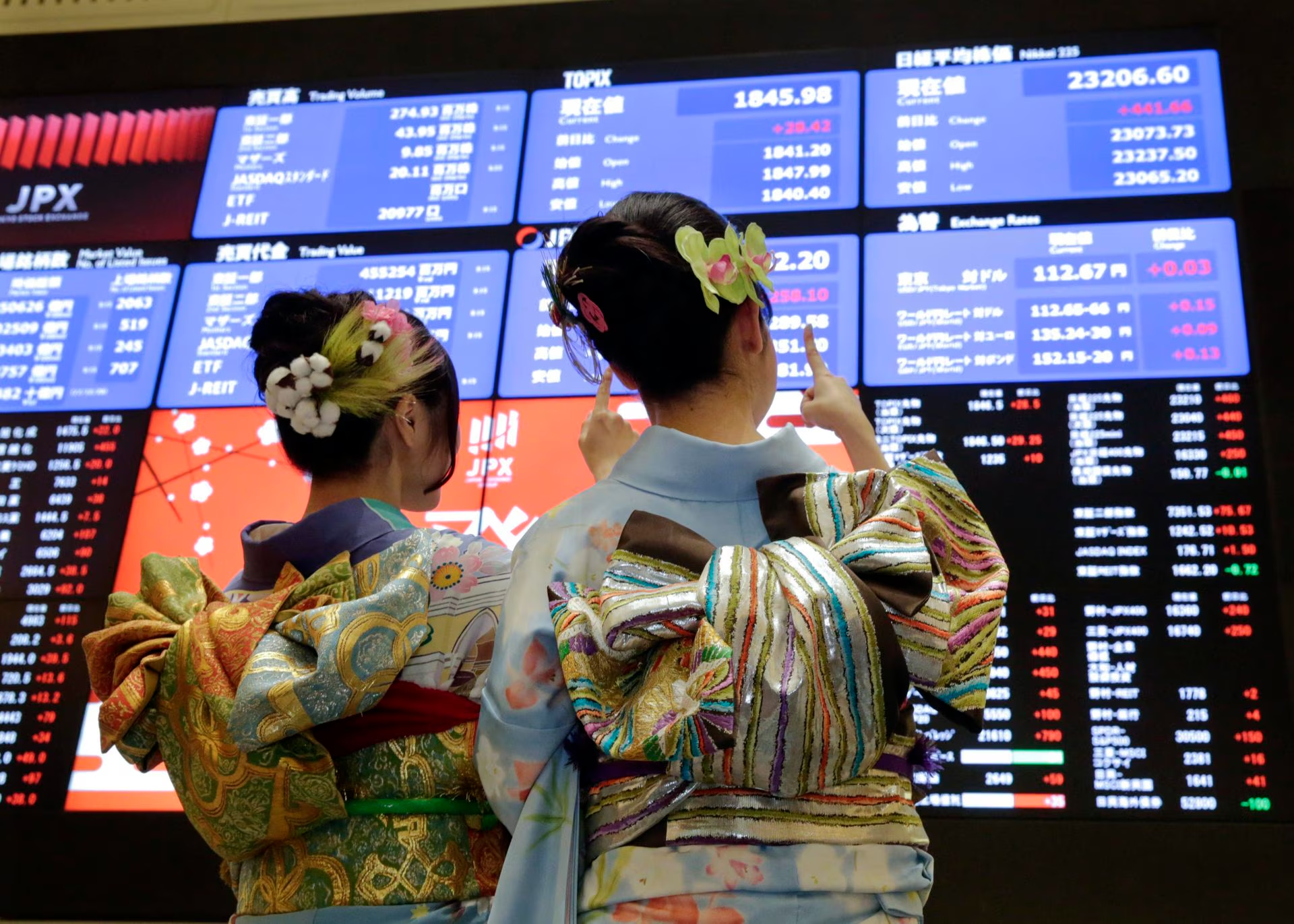
As President Donald Trump returns to office, Asian markets, including China, appear poised for resilience, with investors optimistic that the region’s economy can withstand potential tariffs and trade tensions better than Europe. While European sectors like automotive and renewables experienced declines, Asia’s financial markets displayed steadiness, underscoring confidence in the region’s ability to adapt to Trump’s trade policies.

Analysts note that Asia’s supply chains and export markets are structurally better equipped to navigate protectionist policies. China, in particular, is expected to counterbalance any potential external pressures by bolstering domestic demand, while India’s robust growth continues to attract investment. Japan’s financial markets also showed steady activity, with significant buying in industrial and financial sectors. Shinji Ogawa, co-head of Japan cash equities sales at J.P. Morgan in Tokyo, highlighted this investor confidence, attributing it to Japan’s anticipated interest rate hikes and economic measures expected from an upcoming policy meeting in China.

Historically, Trump’s trade policies led investors to favor U.S. equities, drawing funds from Asian markets, especially Hong Kong. However, those with diversified portfolios are now retaining their Asia investments. Ken Peng, head of Asia investment strategy at Citi Wealth in Hong Kong, believes that current economic conditions will likely sustain growth-focused investments in Asia, particularly in India, where economic momentum remains strong.

In Japan, stocks for automakers, banks, and capital expenditure-sensitive heavy machinery companies surged, indicating investor preference for industries set to benefit from renewed investment. In Vietnam, anticipation of expanded manufacturing boosted shares in companies such as Becamex, a key industrial park operator, while Kinh Bac City, which has a business relationship with Trump’s private conglomerate, also saw gains.

China’s Better Preparedness for Trade Tensions

During Trump’s first term, China faced significant economic strain from trade tensions, which impacted both growth and the yuan. This time, however, investors believe China is more prepared for Trump’s policies. Charles Wang, chairman of Shenzhen Dragon Pacific Capital Management, pointed out that China is now better equipped both economically and technologically to handle trade challenges.

Wang has taken a cautious approach, divesting from Chinese auto parts companies due to anticipated tariff impacts, but he remains invested in China’s property sector, expecting that the government will support it regardless of trade conditions. Further, China’s strategic pivot toward domestic demand has reduced the U.S.’s share in China’s export market, minimizing direct trade risks and potentially encouraging more supportive domestic policies. According to Dong Baozhen, chairman of Beijing-based asset manager Lingtong Shengtai, heightened tariffs may reinforce China’s focus on internal demand, fostering policies that encourage local economic growth.

Capital Flows and Potential Opportunities

Despite recent fluctuations in the yuan, foreign long-only funds purchased $11.1 billion in Chinese equities through October, according to Morgan Stanley, with outflows remaining limited. Investors anticipate that Beijing will soon unveil a stimulus package, providing further stability.

Trump’s proposed domestic tax cuts may also benefit Asian markets indirectly, potentially boosting demand for Chinese goods. Some analysts see Trump’s isolationist policies as an opportunity for China to strengthen relations with other global markets, including Europe. Robert St Clair, head of investment strategy at Fullerton Fund Management, noted that Trump’s pragmatic approach as a businessman might lead him to manage tariff levels carefully, recognizing China’s significant role in high-value industries.

Ultimately, while challenges from U.S.-China trade dynamics remain, many investors are confident that China and broader Asian markets are better equipped to manage them, with Trump’s policies potentially opening new avenues for growth across the region.

 

Republicans Expand Senate Majority and Move Closer to Controlling House

The Republican Party, led by former President Donald Trump, appears on track to secure control of both the U.S. Senate and House of Representatives next year. On Thursday, multiple media sources projected that Republican candidate Dave McCormick had defeated Democratic Senator Bob Casey in Pennsylvania, bringing the GOP’s Senate seats to 53. With tight races in Arizona and Nevada still undecided, Republicans could expand their Senate majority to as many as 55 seats.

In the House of Representatives, Republicans are also inching closer to maintaining control. They have increased their current majority to 220-212 by adding one more seat, with 25 races remaining uncalled. At present, Republicans hold 211 confirmed seats, needing just seven more to achieve a majority in the 435-seat House. Meanwhile, Democrats would need to secure 19 of the remaining races to retain a slim grip on House power.

The final results for the House may not be known for several days, particularly because 11 of the uncalled races are in California, a state that traditionally takes longer to tally votes.

If Republicans do gain control of both chambers, they would be positioned to advance Trump’s legislative agenda, which includes tax cuts and significant immigration restrictions. However, in the Senate, their majority would still fall short of the 60 votes required to bypass potential filibusters for most legislation, though they would have the numbers to confirm Trump’s judicial and executive branch nominees.

The Senate races in Nevada and Arizona remain crucial. In Nevada, incumbent Democrat Jacky Rosen holds a narrow lead over Republican challenger Sam Brown, with Rosen ahead by less than 1 percentage point and 94% of votes counted. Meanwhile, in Arizona, Democrat Ruben Gallego leads Republican Kari Lake by 1.7 percentage points, with 74% of the votes counted.


Super Micro Shares Drop 22% After Financial Report Raises Investor Doubts

Super Micro shares fell sharply by 22% on Wednesday, hitting their lowest level since May of last year after releasing an underwhelming financial update. The company, a prominent server manufacturer, has been struggling with internal and regulatory challenges, causing its stock price to drop to $21.55—down by 82% from its peak in March, effectively erasing approximately $57 billion from its market capitalization.

The decline in share value follows the resignation of Super Micro’s auditor, Ernst & Young, making it the second auditing firm to part ways with the company within two years. Super Micro has not submitted audited financial statements since May and faces the threat of being delisted from Nasdaq if it does not file its annual results with the SEC by mid-November. Despite issuing preliminary quarterly financial results, the company failed to offer a timeline for when it might file its annual financials.

During a recent call with analysts, CEO Charles Liang confirmed the search for a new auditor but declined to discuss Ernst & Young’s resignation or governance issues. Liang did, however, emphasize Super Micro’s commitment to resolving its overdue financial reporting. Analysts at Mizuho suspended their coverage of Super Micro due to the lack of comprehensive financial data, while Wedbush analysts noted that the latest update from Super Micro left “more questions than answers.”

For the quarter ending on September 30, Super Micro reported net sales between $5.9 billion and $6 billion, missing analysts’ expectations of $6.45 billion but marking a year-over-year increase of 181%. The company’s business has experienced significant growth due to demand for servers equipped with Nvidia’s processors designed for artificial intelligence applications. Nevertheless, analysts expressed concern about the December quarter’s forecast, which fell below estimates with anticipated revenue between $5.5 billion and $6.1 billion—lower than the projected $6.86 billion—and earnings per share of 56 to 65 cents, below the expected 83 cents.

Amid these financial challenges, Super Micro’s stock had previously soared due to high demand for its AI-driven servers, specifically those utilizing Nvidia’s latest GPU, Blackwell. CEO Liang indicated that Super Micro is ready to deliver Blackwell-based servers, but Nvidia’s limited chip supply has impacted shipments. CFO David Weigand reassured investors that Super Micro maintains a robust relationship with Nvidia, which has confirmed no changes in its GPU allocations to the company.

Additionally, Super Micro’s board has appointed a special committee to investigate Ernst & Young’s concerns regarding the company’s financial practices. Following a three-month review, the committee reported no evidence of fraud or misconduct but recommended several improvements in internal governance. Super Micro affirmed its commitment to implementing these recommendations and taking all necessary actions to maintain its Nasdaq listing.