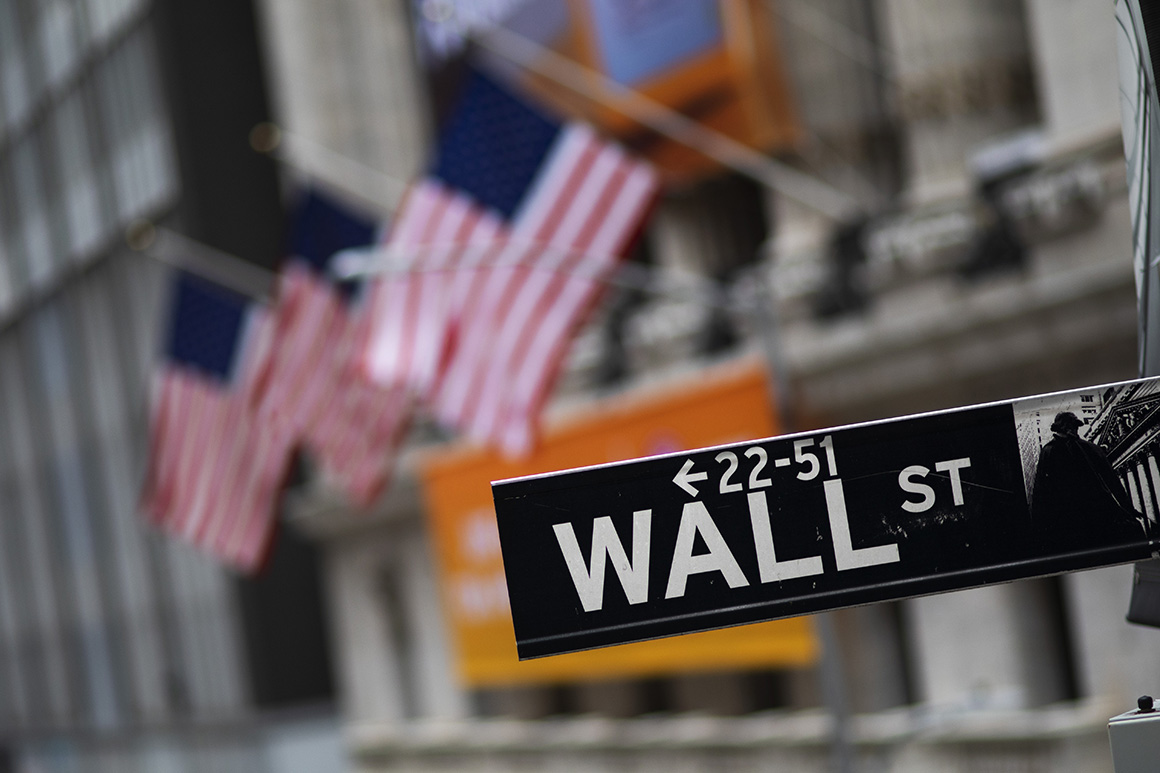
Wall Street Reaches Record Highs Following Trump’s Presidential Election Win

Wall Street surged to record levels on Wednesday as Donald Trump’s election victory propelled key U.S. market indexes higher. In a comeback that restores him to the White House four years after his first term ended, Trump’s win sparked optimism for tax cuts and deregulation, although market watchers noted potential challenges from possible tariff hikes, which could drive up inflation and the federal deficit.

Trump’s victory spurred a rally in “Trump trades,” with U.S. Treasury yields rising, the dollar strengthening, and Bitcoin hitting a record high. “The market response indicates that a Trump victory was not fully priced in, reflecting an extension of the ‘Trump trade’ that assumes Republicans will control both the House and Senate,” noted Candice Bangsund, a portfolio manager at Fiera Capital.

Domestic-focused stocks surged on the news, especially in the small-cap Russell 2000 index, which jumped 4.7% to a nearly three-year high. Small-cap stocks are expected to benefit from lower regulatory burdens, favorable tax policies, and minimal exposure to potential import tariffs. “Small caps are poised for a strong catch-up trade over the next 6-12 months,” said Sean Gallagher, Lazard’s global head of Small Cap Equity.

The market volatility index (VIX) dropped nearly five points, reaching its lowest level since September, as investors embraced the likelihood of a stable policy environment.

In individual market performance, the Dow Jones Industrial Average rose 1,345 points (3.19%) to reach 43,566.98, the S&P 500 climbed by 120.78 points (2.1%) to 5,903.45, and the Nasdaq Composite rose 436.48 points (2.37%) to 18,875.65. Financials led the S&P 500’s gains with a 5.5% surge, while the KBW Bank Index recorded its best day in four years. Energy, Industrials, and Consumer Discretionary sectors each gained around 3%, while rate-sensitive sectors like Real Estate and Utilities saw declines due to concerns that Trump’s policies might increase inflation, reducing the likelihood of future rate cuts—a significant driver of recent rallies.

The Federal Reserve is anticipated to reduce interest rates by 25 basis points on Thursday. However, with Trump’s policies expected to increase inflationary pressure, traders have begun lowering their expectations for additional rate cuts next year. Bangsund commented, “The sharp rise in Treasury yields may weigh on stock valuations.”

Stocks projected to benefit under Trump’s second term posted strong gains, including Trump Media & Technology Group, which rose 9.3%. Tesla also jumped 14%, likely influenced by Elon Musk’s vocal support for Trump’s campaign. Gains extended to cryptocurrency companies, energy stocks, and prison operators, while renewable energy stocks experienced declines.

Attention has now turned to whether Republicans will retain their newly gained majority in the Senate and potentially secure the House of Representatives, an outcome that could further shape the market’s trajectory over the next four years.
 

Trump Victory Set to Test U.S. Democratic Institutions and Global Relations

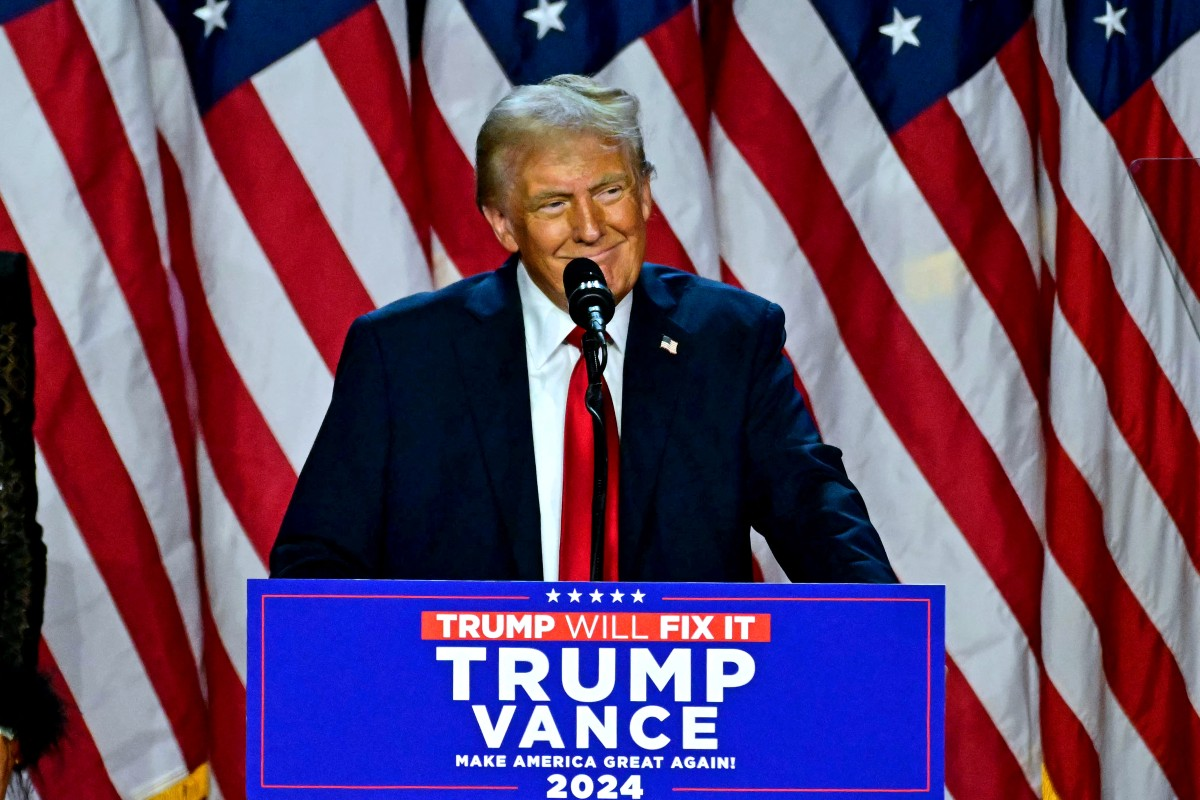
In a historic return to the presidency, Donald Trump, 78, has regained the White House after his defeat four years prior, stirring anticipation of changes in U.S. governance and international relations. Trump’s comeback, secured with a comfortable Electoral College win and significant popular vote margin, marks a shift after a campaign marked by polarizing rhetoric and two attempts on his life. Vice President Kamala Harris, who stepped in after President Joe Biden withdrew from the race in July, will officially concede later in the day.

Trump’s electoral win hinged on pivotal swing states, with Wisconsin delivering the deciding electoral votes. By mid-morning, Trump led Harris with 279 electoral votes to her 223, while some states continued to tally ballots. His popular vote count also reflected a five-million-vote lead, marking a rare occurrence of a Republican winning both the Electoral College and popular vote since George W. Bush in 2004. At a victory celebration in Florida, Trump described his mandate as “unprecedented and powerful.”

The campaign underscored issues like inflation, immigration, and public safety, key areas that Trump emphasized as urgent concerns for American voters. Economic hardship, particularly among Hispanic and low-income communities, as well as rural and non-college-educated voters, contributed to Trump’s broad support. Many Americans voiced frustration with persistent inflation despite low unemployment and record stock market performance, with a majority indicating a preference for Trump’s economic policies over those of Harris.

On the global front, Trump’s victory is expected to impact trade, climate policy, and immigration, as well as the ongoing conflict in Ukraine. Ukrainian President Volodymyr Zelenskiy expressed optimism about Trump’s “peace through strength” stance, while Russian officials cautiously hoped his leadership might expedite conflict resolution. Israeli Prime Minister Benjamin Netanyahu congratulated Trump, discussing shared security concerns, including the Iranian threat. In contrast, the Palestinian group Hamas urged the U.S. to reconsider its “blind support” for Israel.

Beyond foreign policy, Trump’s second term promises to test U.S. democratic institutions, with his proposals to reduce corporate taxes, potentially rekindle trade tensions, and accelerate deportation of undocumented immigrants. He has also expressed intentions to reform civil service policies to address what he perceives as disloyalty, raising concerns among critics about political influence over federal agencies.

The Republican Party gained a Senate majority, though control of the House remains narrowly divided. Markets globally reacted positively to the election, with major stock indices and the dollar experiencing significant gains.

For Harris, her unexpected 15-week campaign fell short against Trump’s robust support base. Throughout her campaign, she warned voters of Trump’s authoritarian ambitions and posed the election as critical for safeguarding democracy. Nearly three-quarters of exit poll respondents viewed American democracy as under threat, reflecting the polarized state of the electorate. Harris’s appeals were amplified by former Trump officials, including General John Kelly, who called Trump a “fascist” in an effort to sway undecided voters.

The campaign’s heated rhetoric saw moments of violence, including two assassination attempts against Trump, which heightened concerns about political volatility. Following Biden’s departure from the race after a July debate, Harris mounted a swift campaign and rallied significant funding, but ultimately could not overcome Trump’s entrenched base and financial backing from figures like Elon Musk, who invested heavily in Trump-supporting initiatives.

With Inauguration Day set for January 20, Trump will take office alongside Vice President JD Vance. His administration is expected to include roles for prominent supporters like Elon Musk and former presidential candidate Robert F. Kennedy Jr., setting a tone for a highly scrutinized presidency that will likely further intensify political divides across the nation.


Why It Costs India So Little to Reach the Moon and Mars

India has recently allocated a record 227 billion rupees ($2.7 billion; £2.1 billion) for an array of ambitious space projects, which include advancing its Moon mission, sending an orbiter to Venus, establishing the first phase of a space station, and developing a new reusable heavy-lifting rocket. Despite this being the largest funding for space endeavors in India’s history, the costs of these projects remain remarkably low compared to international counterparts, raising questions about the efficiency of India’s space program.

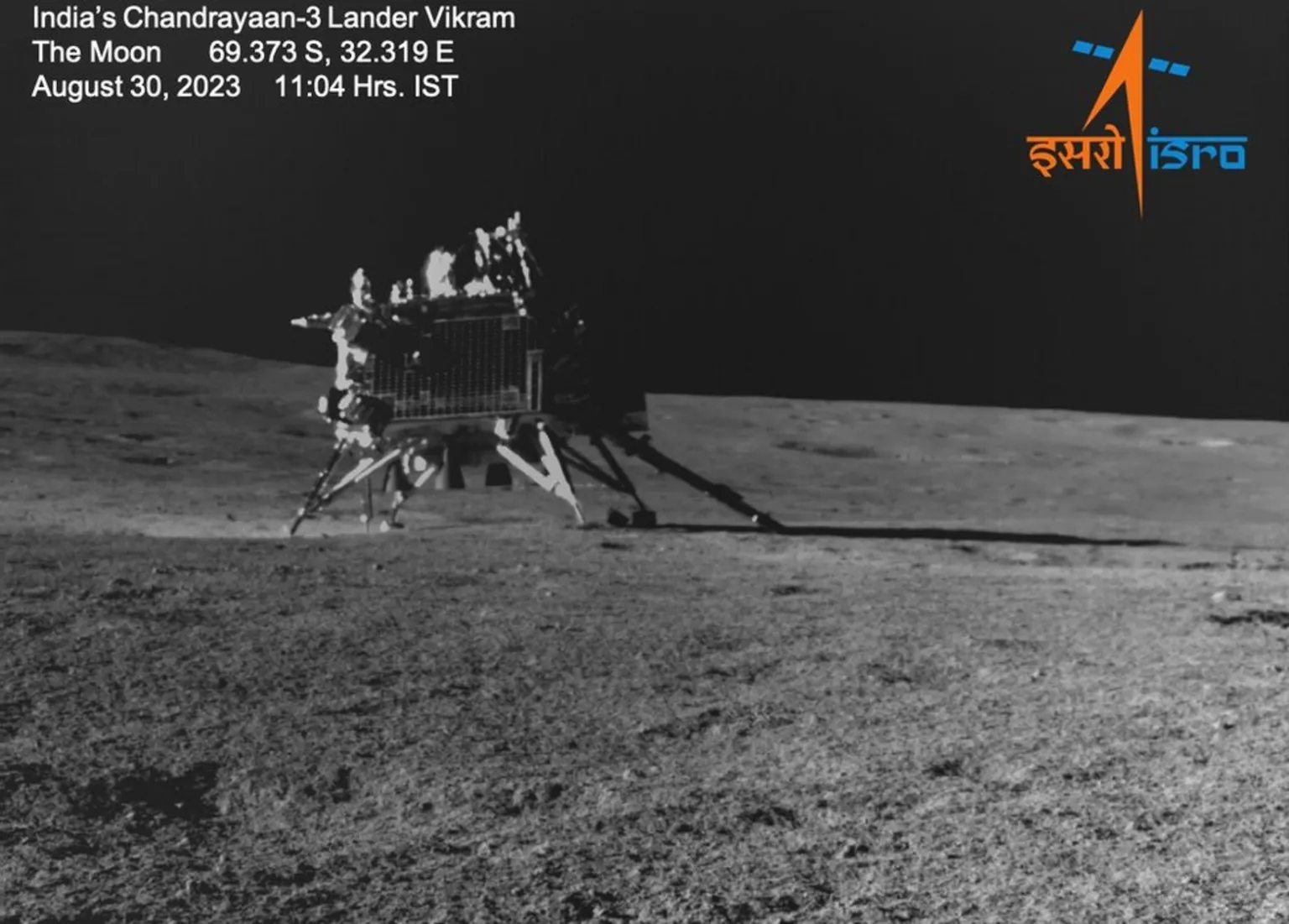
Experts globally have noted the cost-effectiveness of the Indian Space Research Organisation’s (ISRO) missions. For instance, India spent $74 million on the Mars orbiter, Mangalyaan, and $75 million on last year’s Chandrayaan-3 mission, significantly lower than the $100 million budget for the Hollywood film Gravity. In comparison, NASA’s MAVEN orbiter cost $582 million, and Russia’s Luna-25 mission, which unfortunately crashed before Chandrayaan-3’s landing, had a budget of 12.6 billion roubles ($133 million).

Despite operating on a modest budget, Indian scientists are making substantial contributions to space research. Chandrayaan-1 was the first mission to confirm water presence on the Moon, while Mangalyaan provided critical data on methane in Mars’ atmosphere. The images and data sent back by Chandrayaan-3 have garnered worldwide interest among space enthusiasts.

So, what allows India to maintain such low costs?

According to Sisir Kumar Das, a retired civil servant who managed ISRO’s finances for over two decades, the frugality of India’s space program dates back to its inception in the 1960s. At that time, ISRO’s founder, Vikram Sarabhai, had to convince the government that a space program could serve practical purposes in a newly independent and resource-strapped country. Sarabhai emphasized that satellites could help improve the lives of citizens, justifying the investment in space exploration.

ISRO has consistently operated under tight budgets, shaped by the country’s competing priorities. Historical photographs depict scientists transporting rockets and satellites using bicycles or bullock carts, reflecting their resourcefulness. Currently, ISRO’s budget is approximately 130 billion rupees ($1.55 billion), in stark contrast to NASA’s annual budget of $25 billion.

A critical factor in ISRO’s low-cost operations is its commitment to developing homegrown technology. Following India’s first nuclear test in 1974, which prompted Western nations to impose technology transfer restrictions, ISRO saw this as an opportunity to foster domestic technological advancements. Consequently, all required equipment is manufactured in India, benefiting from significantly lower labor costs compared to the U.S. or Europe.

Science writer Pallava Bagla explains that while ISRO handles satellite manufacturing internally, NASA outsources much of this work to private companies and incurs additional costs through insurance. Furthermore, ISRO typically forgoes extensive engineering models used for testing before launches, opting instead to create a single model meant for flight. This approach carries inherent risks but allows for cost savings due to the nature of government funding.

Mylswamy Annadurai, who led India’s first two Moon missions and the Mars mission, notes that ISRO operates with smaller teams and lower salaries, making projects more competitive. Often, team members work extended hours out of passion for their work without additional compensation. The tight budget constraints often push scientists to innovate and find efficient solutions.

For instance, during Chandrayaan-1, budget constraints prompted scientists to reduce the spacecraft’s thrusters from 16 to 8 and streamline other components, which resulted in maintaining a strict launch schedule to avoid solar eclipses that could affect power supply.

The low cost of Mangalyaan was partly due to using hardware designed for Chandrayaan-2, which faced delays. This reuse of components is indicative of ISRO’s resourcefulness.

Despite ISRO’s impressive achievements at minimal costs, Bagla warns that as India expands its space ambitions, expenses are likely to rise. The current reliance on smaller rocket launchers means longer travel times for spacecraft. For example, Chandrayaan-3 orbited Earth multiple times before reaching the Moon, while Russia’s Luna-25 utilized a powerful Soyuz rocket for a quicker trajectory.

Looking forward, India has announced plans for a manned Moon mission by 2040, necessitating a more powerful rocket for faster travel. The government has already approved work on a new Next Generation Launch Vehicle (NGLV), expected to be ready by 2032, which will enhance payload capacity but also increase costs. Additionally, the opening of the space sector to private players is likely to drive expenses higher, potentially altering the cost-effectiveness that has characterized India’s space program.