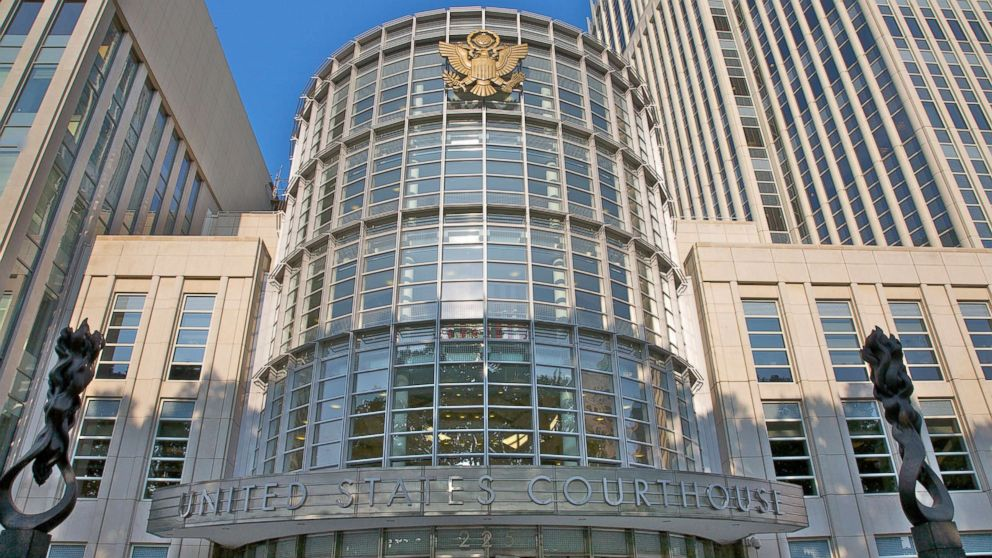
US Federal Judiciary Reports Sophisticated Cyberattacks on IT Systems

The Administrative Office of the U.S. Courts announced on Thursday that federal judiciary IT systems have been targeted by “recent escalated cyberattacks of a sophisticated and persistent nature.” The disclosure follows a Politico report claiming that the judiciary’s electronic case filing system was compromised in a sweeping hack, potentially exposing sensitive court data across several states.

According to Politico’s sources, the breach affected the federal case management system, including the Case Management/Electronic Case Files (CM/ECF) platform used by legal professionals to upload and manage documents, and the Public Access to Court Electronic Records (PACER) system, which provides public, paid access to certain case data.

While the Administrative Office’s statement did not confirm the full extent of Politico’s findings, it stressed that the judiciary is focusing on enhancing security measures and collaborating with courts to reduce the impact on litigants. The nature of the attacks and the actors behind them have not yet been disclosed.

Paxos Trust Settles New York Charges Over Binance-Related Compliance Failures for $48.5 Million

Paxos Trust agreed to pay $48.5 million to resolve charges brought by New York’s Department of Financial Services (DFS) over its inadequate oversight of illegal activity tied to cryptocurrency exchange Binance. The settlement includes a $26.5 million civil fine and a $22 million commitment to improve Paxos’s compliance program.

The DFS investigation found that Paxos, which partnered with Binance to market and distribute the Binance USD stablecoin, failed to effectively monitor wrongdoing on Binance’s platform. It did not escalate red flags to senior management and had systemic lapses in its anti-money laundering (AML) controls. A review ordered by New York revealed that between July 2017 and November 2022, about $1.6 billion of transactions on Binance’s platform involved illicit actors such as Ponzi schemers and sanctioned darknet marketplace participants. Transactions also involved entities sanctioned by the U.S. Office of Foreign Assets Control.

Following the regulator’s February 2023 order, Paxos ceased issuing Binance’s stablecoin and ended its partnership with the exchange. Paxos stated it had fully addressed the compliance issues, with no harm to customer accounts or consumers.

Binance itself was not a defendant in this New York case but pleaded guilty in November 2023 and agreed to a $4.32 billion criminal penalty for federal anti-money laundering and sanctions violations. Meanwhile, the U.S. Securities and Exchange Commission dropped its civil case against Binance in May 2025, signaling a shift in cryptocurrency regulation during President Donald Trump’s current term.

ESPN-NFL Deal Faces U.S. Justice Department Antitrust Review Amid Competition Concerns

The National Football League’s deal with Walt Disney’s ESPN, involving Disney acquiring the NFL Network and other media assets in exchange for the NFL receiving a 10% equity stake in ESPN, is expected to face a thorough antitrust review by the U.S. Department of Justice (DOJ).

Legal experts warn the transaction could raise significant competition concerns by potentially giving Disney greater control over sports broadcasting, which might reduce competition and increase costs for consumers. Andre P. Barlow, a partner at Doyle, Barlow & Mazard, noted the deal might lead to higher prices for streaming services or game access due to Disney’s dominance in sports media.

The DOJ’s Antitrust Division is anticipated to take up to 12 months to review the deal amid ongoing scrutiny of Disney’s recent acquisition attempts, including a controlling stake in Fubo TV, a sports streaming service.

This regulatory attention coincides with concerns raised in the U.S. Senate about rising costs for sports fans as more games move to streaming platforms. Senate Commerce Committee Chair Ted Cruz highlighted the cultural importance of sports and questioned why it is becoming increasingly difficult and expensive to watch games.

The NFL has reportedly engaged with about 30 congressional offices to discuss the deal’s potential to increase consumer choice. Under the agreement, ESPN would incorporate the NFL Network into its sports programming and streaming service, and merge fantasy football offerings with the NFL’s. The NFL would retain streaming rights to NFL RedZone, while ESPN would distribute it to cable and satellite providers.

Disney’s previous large-scale acquisition of 21st Century Fox assets in 2018 received rapid approval, although it required divestment of regional sports networks. Experts expect the current NFL-ESPN deal to undergo more detailed scrutiny.

Political factors may further complicate the process, including former President Trump’s past interventions related to NFL team naming controversies and lawsuits affecting media mergers.

Currently, ESPN is 80% owned by ABC Inc., a Disney subsidiary, and 20% by Hearst. The deal would reduce ABC’s stake to 72% and Hearst’s to 18% to accommodate the NFL’s 10% ownership.