Dominion Energy Explores Small Nuclear Reactors Following Amazon Agreement

Dominion Energy is engaging in discussions with various technology companies about the development of small modular nuclear reactors, following a recent agreement with Amazon aimed at advancing this next-generation technology.

During the company’s third-quarter earnings call on Friday, Dominion CEO Robert Blue expressed optimism about the collaboration, stating, “It’s very encouraging to see large power users, including technology companies, express a willingness to invest, partner and collaborate to bring this exciting base load carbon-free technology into fruition.”

Dominion and Amazon have established a memorandum of understanding to investigate the feasibility of developing a small modular reactor at the utility’s North Anna nuclear station in Louisa County, Virginia. This reactor is expected to generate 300 megawatts of power, contributing significantly to the state’s energy supply.

Virginia is recognized as one of the most supportive states for nuclear energy, enjoying robust bipartisan backing for initiatives focused on next-generation nuclear technologies. Blue noted that the utility’s reputation as a reliable nuclear operator makes it an attractive partner for large customers interested in collaborating on these innovations.

In addition to Amazon, Dominion is in talks with other tech firms, reflecting a growing trend among technology companies to invest in nuclear power. These companies are seeking carbon-free, dependable electricity to meet the rising energy demands of their AI-driven data centers. Notably, Dominion serves the largest data center market in the world, located in northern Virginia.

Earlier this year, Amazon made headlines by acquiring a data center campus from Talen Energy, which will be powered by the Susquehanna nuclear plant in Pennsylvania. Additionally, Microsoft has secured a power purchase agreement from Three Mile Island, as Constellation Energy plans to restart the plant by 2028. In a similar vein, Alphabet’s Google recently agreed to purchase power from Kairos Power, a startup focused on small modular reactor development.

Small modular reactors are touted for their potential to lower capital costs and expedite the construction of nuclear facilities. Their compact design allows for easier site selection, and they promise a streamlined manufacturing process. However, the technology has faced challenges in reaching commercial viability, with no operational small modular reactor currently in the United States.
 

Elon Musk’s $1 Million Voter Lottery Lawsuit Returned to State Court

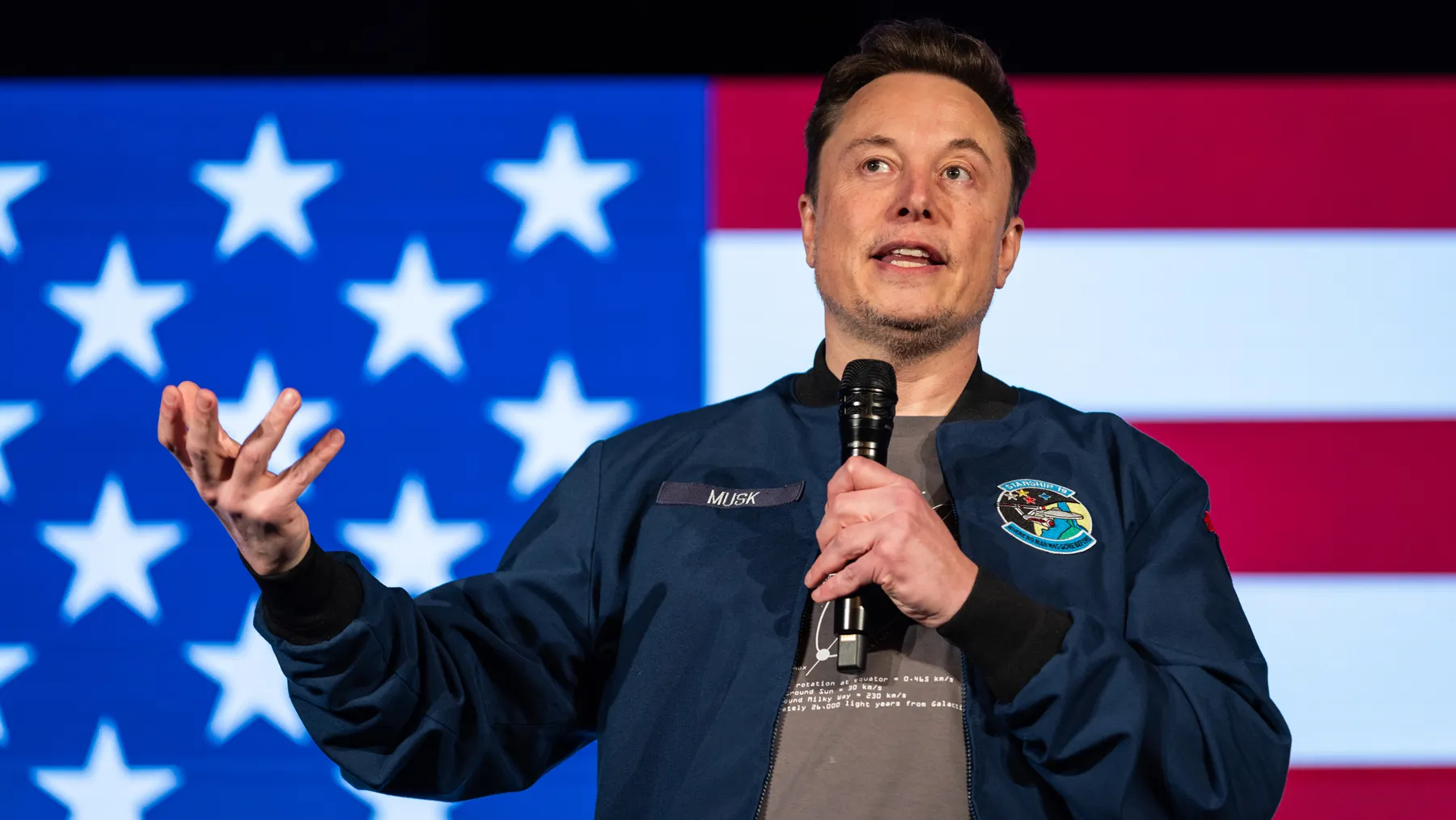
A federal judge in Pennsylvania has sent back to state court a lawsuit against Elon Musk and his political action committee (PAC) regarding a controversial $1 million daily lottery for registered voters. The ruling came on Friday, following Philadelphia District Attorney Larry Krasner’s request to halt the prize giveaways ahead of the upcoming presidential election.

Krasner’s office claims that Musk and his America PAC are running an illegal lottery designed to sway voters in the election between Donald Trump and Kamala Harris. They allege that the lottery violates state consumer protection laws and is aimed at influencing the electoral process.

The case was initially filed in the Philadelphia County Court of Common Pleas, but Musk’s team moved it to federal court, claiming jurisdiction due to its connection with the presidential election. However, U.S. District Judge Gerald Pappert ruled that the lawsuit should be handled in state court, stating that the legal issues raised are rooted in state law, not federal law. “Federal question jurisdiction does not turn on a plaintiff’s motivations in filing suit; it turns on whether the legal issues arising from the claims originate in federal or state law,” Pappert wrote.

In response to the ruling, Krasner’s office noted that the judge’s decision reaffirmed their position that Musk’s attempt to shift the case to federal court was unlawful. The District Attorney is seeking a hearing on Monday to address his request for an injunction against the lottery.

Musk announced the lottery on October 19, stating that the America PAC would randomly award $1 million daily until Election Day to registered voters in seven swing states, including Pennsylvania, who signed a petition supporting the U.S. Constitution. The first winners of the lottery were reportedly from Pennsylvania.

Following Krasner’s lawsuit, Musk was ordered to appear for an emergency hearing in the state court, but his legal team had already filed to move the case to federal jurisdiction. After Musk did not attend the scheduled hearing, Judge Angelo Foglietta indicated that the case could not proceed in state court due to its removal to federal jurisdiction.

Musk’s attorney, Matthew Haverstick, subsequently filed a motion to quash the order requiring Musk’s appearance, arguing that the request was intended to “harass and oppress” Musk during a critical election period. Haverstick contended that the District Attorney’s actions were an unconstitutional attempt to limit Musk’s First Amendment rights.


Trump and Harris Compete for Latino Voters Ahead of Presidential Election

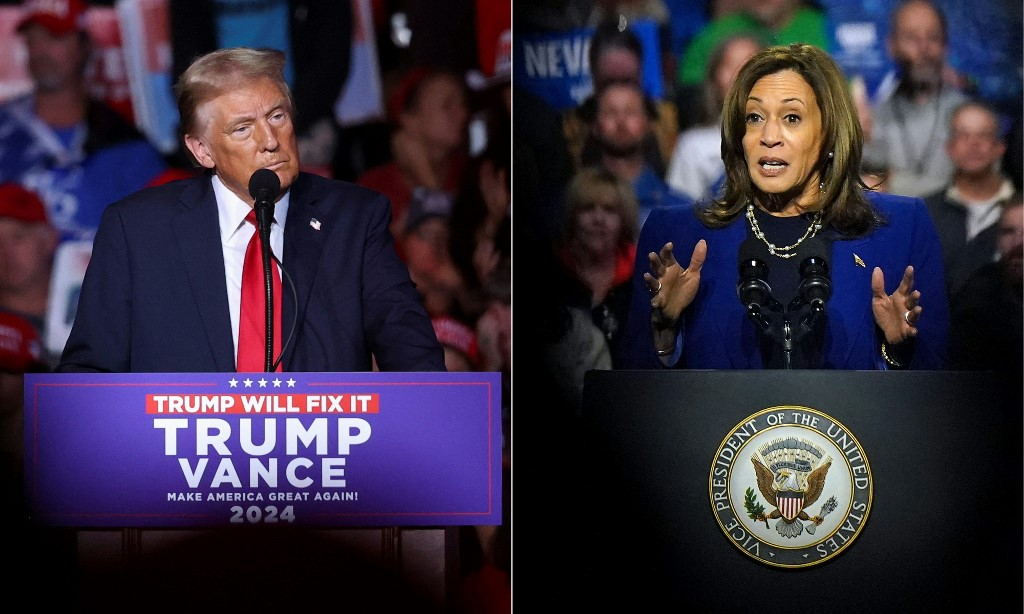
With Election Day just around the corner, former President Donald Trump and Vice President Kamala Harris have intensified their efforts to court the Latino vote, campaigning across southwestern states where Latino voters hold considerable sway. Latino voters represent 14.7% of all eligible voters in the U.S. for this election, with New Mexico leading with a Latino population share of about 45%, followed by California, Texas, Arizona, and Nevada. While California and Texas are predictably blue and red respectively, Arizona and Nevada, where Harris held her rallies, are crucial swing states.

Democrats have historically led with Latino voters, but recent polling shows that this advantage has waned over the last four election cycles, especially among Latino men, some of whom favor Trump on issues such as inflation and cost of living. Addressing a crowd in Albuquerque, New Mexico, Trump said, “I like you very much, and it’s good for my credentials with the Hispanic or Latino community,” though he jokingly asked the audience not to make him “waste a whole damn half a day here.” Despite New Mexico’s blue tilt—President Joe Biden won the state by 10.8 points in 2020—Trump believes he can win it, claiming, “We almost won it twice, and let me tell you, I believe we won it twice,” while suggesting that prior election results in New Mexico were manipulated.

Trump’s campaign, however, faced backlash last week after comedian Tony Hinchcliffe made offensive comments about Latinos during a Trump rally at Madison Square Garden, calling Puerto Rico “a floating island of garbage” and joking that Latinos “love making babies.” Campaign officials quickly distanced Trump from these remarks, though the former president has yet to apologize directly.

In New Mexico, Trump’s message focused heavily on immigration and border security, emphasizing the state’s border issues and asserting, “I am the only one that knows how to fix it.” However, a recent CNBC poll revealed that Latino voters ranked immigration as their fourth most pressing concern, with inflation, jobs, and threats to democracy taking higher priority. Furthermore, more Latino voters view immigration as beneficial to the U.S., though the gap has narrowed in recent years.

In contrast, Vice President Harris campaigned in Phoenix, Arizona, and in Reno and Las Vegas, Nevada, with a focus on the economy while contrasting her approach to Trump’s stance on immigration. “With five days left in this campaign, my opponent is making his closing argument to America—a message filled with hate and division,” Harris told the Phoenix crowd. “He insults Latinos, scapegoats immigrants, and it’s not just what he says; it’s what he will do if elected.”

At a Las Vegas rally, Harris was introduced by singer Jennifer Lopez, who emphasized her Puerto Rican heritage and addressed the significance of Latino unity, saying, “[Trump] has consistently worked to divide us. It wasn’t just Puerto Ricans that were offended that day; it was every Latino in this country.”

Both campaigns are ramping up efforts to reach Latino voters as November 5 approaches. Recently, Trump convened a roundtable with Latino business leaders in Florida, while Harris appeared in a pre-recorded interview aired by Telemundo, demonstrating the critical role that Latino voters are expected to play in this year’s election.