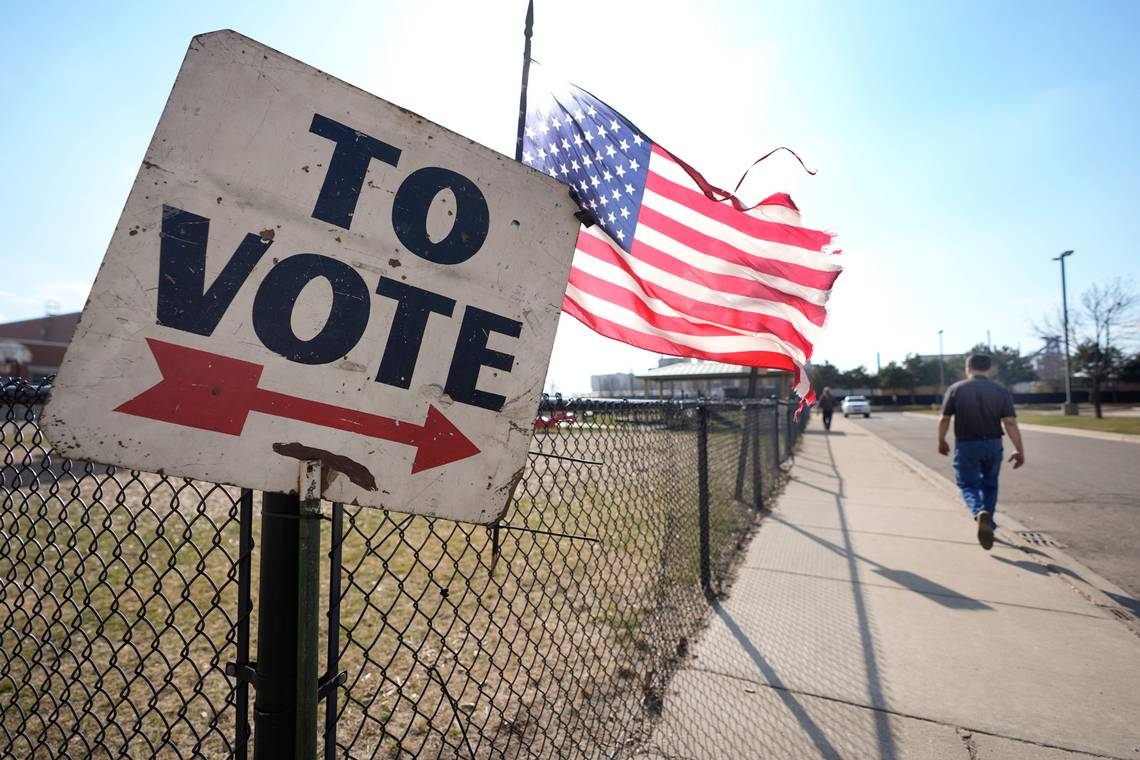
Economic Concerns Drive US Voters, Some Blame Democrats

For many Americans, the economy is a defining factor in the 2024 presidential election, with many feeling financial strain despite broader economic stability. Voters like Tiesha Blackwell, a former Biden supporter, say rising costs of essentials like food and rent have pushed them towards Donald Trump. Blackwell, a Michigan resident, noted significant price hikes over the past four years, from doubling rent to costly groceries, despite her income improvements.

Economic Recovery and Persistent Cost Concerns

Though the U.S. economy has rebounded strongly post-COVID-19, with high employment, robust consumer spending, and reduced inflation, the cost of living remains a pressure point for many. Prices on everyday items like rent and groceries are considerably higher than in 2019 due to complex issues beyond direct government control, such as supply chain disruptions, labor expenses, and limited market competition. These rising costs resonate especially with voters in swing states, where a recent Reuters/Ipsos poll revealed that 61% feel the economy is on the “wrong track” and 68% believe the cost of living is still too high.

Divergent Economic Policies: Harris and Trump

Democratic nominee Kamala Harris has proposed measures to counter rising costs, including anti-price gouging policies and expanding the child tax credit, aiming to relieve financial pressures. Trump’s proposals center around tariffs on imports, tax cuts on overtime, and mass deportations. Economists warn that Trump’s tariff and immigration policies could further drive up consumer prices. However, Trump holds an edge on economic issues, with 46% of voters favoring his approach over Harris’s 38% in this month’s Reuters poll.

Michael Strain, an economist at the American Enterprise Institute, sympathized with voters’ frustration over inflation, acknowledging that price hikes feel deeply personal. “I feel like somebody punched me in the face and stole a $20 bill out of my wallet,” he noted, describing the palpable impact of restaurant prices on his budget, even though he is critical of Trump’s tariff strategy.

Blackwell supports Trump’s stance on tariffs, believing they may temporarily increase prices but could ultimately benefit American manufacturing and job security.

Michigan’s Critical Role

Harris has devoted significant campaign resources to Michigan, where Democrats face ongoing concerns about rising costs and local industries. Michigan’s economy is growing, with recent federal investments creating job growth and lowering unemployment to a 20-year low. Yet, concerns linger about electric vehicle transitions impacting the auto industry. Democratic strategist Ameshia Cross emphasized that while the Biden administration has created jobs, high costs are hitting voters hard, particularly on basics like housing and food. “All politics is personal,” she said, highlighting the way voters perceive the economy through their daily expenses rather than job statistics.

Young Michigan residents, like Devin Jones, echo these sentiments, recounting how rising costs forced his family to relocate to Indiana to find affordable housing. In Flint, another Michigander, United Auto Workers member Stu Billey, has seen benefits from his union job, which increased his wage significantly. Despite these gains, he notes that while he will support Harris, enthusiasm for her candidacy does not match that for past Democratic figures like Obama or Biden.

As November 5 approaches, economic concerns remain at the forefront of voters’ minds, making affordability and financial security central themes in a highly polarized election.


Google Shopping Revamped with Infinite Scroll and Enhanced Video Features

Alphabet Inc.’s Google has unveiled a significant redesign of its shopping website, aiming to enhance the connection between consumers and merchant storefronts while differentiating itself from major e-commerce players like Amazon.com Inc. The revamped shopping experience emphasizes a more engaging and visually appealing layout, featuring scrollable feeds similar to those found in social media apps. The new homepage will showcase a personalized selection of products, user reviews, and auto-playing video shorts sourced from Google’s YouTube, making the shopping experience more dynamic and interactive.

In addition to the personalized feeds, Google Shopping will introduce a dedicated Deals page that curates discounted items for users, further enhancing the platform’s appeal to bargain hunters. This strategic focus on personalized content is designed to encourage users to spend more time exploring options within the Google ecosystem, rather than redirecting them to external e-commerce sites. The company has indicated that these features will initially roll out in the United States, allowing them to gauge user engagement and preferences before expanding globally.

One of the standout features of the redesign is the integration of artificial intelligence to enhance search functionality. When users search for products on Google Shopping, they will receive AI-generated blurbs that highlight key considerations for specific items, such as the suitability of jacket materials for wet climates. This added layer of information aims to empower consumers by providing them with valuable insights, thereby streamlining their decision-making process while shopping online.

The redesign reflects Google’s ongoing strategy to retain users on its platform for longer periods, particularly when researching various products, services, or even recipes. This shift is part of a broader trend in which Google seeks to provide more comprehensive information directly within its interface, minimizing the need for users to click through to external websites. Earlier this year, Google introduced AI Overviews, a feature that summarizes search results and provides users with quick insights, although some critics argue that such features could potentially reduce traffic to sites that rely on ad revenue from user visits.

Georgia PM Dismisses Vote-Rigging Claims Amid Mass Rally Call

Georgia’s Prime Minister, Irakli Kobakhidze, has hailed his party’s recent electoral victory as a “landslide,” vehemently rejecting allegations of vote-rigging and violence that have emerged in the wake of the elections. Speaking to the BBC, he acknowledged that “irregularities happen everywhere,” but maintained that the elections were conducted fairly.

Election Results and Allegations

Preliminary results from the Georgian election commission show the ruling Georgian Dream party secured an outright majority of 54%. This is despite exit polls from opposition media indicating victories for four opposition parties. In contrast, President Salome Zourabichvili, a pro-Western leader, condemned what she described as “total falsification” of the electoral process and has called for a rally by opposition supporters outside parliament on Monday.

Election observers have suggested that various voting violations could have influenced the results. However, Kobakhidze asserted that incidents were limited to a “couple of precincts” out of 3,111 polling stations.

Concerns Over Authoritarianism

Georgia’s political climate has grown increasingly authoritarian under Georgian Dream, which has enacted laws reminiscent of those in Russia, targeting media, NGOs receiving foreign funding, and the LGBT community. As a result, the European Union has frozen Georgia’s bid for membership, citing “democratic backsliding.”

In a notable reaction, Hungarian Prime Minister Viktor Orban congratulated Georgian Dream on its fourth term and plans to visit Georgia soon, a move that may raise eyebrows in Brussels.

Calls for Investigation

In a statement following the elections, Charles Michel, President of the European Council, emphasized the need to address the “alleged irregularities” and called for an independent investigation. Kobakhidze responded, acknowledging that election irregularities should be investigated but maintained that the overall conduct of the elections adhered to legal principles.

The opposition, which secured 61 seats in the 150-seat parliament, has refused to recognize the results, accusing Georgian Dream of stealing the election. Two major opposition parties, the Coalition for Change and United National Movement, have declared they will boycott parliament.

Claims of Foreign Interference

President Zourabichvili has stated that the election cannot be recognized and has accused Russia of meddling in the process. Kobakhidze, however, refuted claims that his government is pro-Russian, insisting that the opposition’s narrative is a tactic to undermine the government’s reputation among Georgia’s largely pro-European populace.

Despite Russian commentators welcoming Georgian Dream’s win as a potential shift towards Moscow, Kobakhidze emphasized that Georgia remains the only country in its region without diplomatic ties to Russia, a situation rooted in the ongoing occupation of 20% of its territory since the 2008 war.

Election Monitoring Reports

The introduction of an electronic vote-counting system during these elections was touted by Kobakhidze as a safeguard against manipulation. However, monitoring groups reported a range of violations, including bribery, intimidation, and ballot-stuffing, suggesting that the election results do not accurately reflect the will of the Georgian electorate. Per Eklund, a former EU ambassador and member of the National Democratic Institute delegation, noted that the pre-election environment severely undermined the democratic process, with voter intimidation reported both leading up to and on election day.

As the situation unfolds, the political landscape in Georgia remains tense, with the ruling party and opposition locked in a battle over the legitimacy of the electoral process.