Nvidia briefly hits $4 trillion market value, cementing AI leadership

Nvidia (NVDA.O) briefly reached a market capitalization of $4 trillion on Wednesday, becoming the first company ever to hit this milestone and reaffirming its dominance in the artificial intelligence (AI) sector. Shares surged as much as 2.8% to an all-time high of $164.42 before closing up 1.8%, giving Nvidia a market value of approximately $3.97 trillion.

This milestone reflects Wall Street’s strong confidence in Nvidia’s leading role in powering AI innovation, with its high-performance chips crucial to advancements in the technology. Robert Pavlik, senior portfolio manager at Dakota Wealth, remarked that the rally “highlights the fact that companies are shifting their asset spend in the direction of AI,” which he sees as the future of technology.

Nvidia’s stock has seen a remarkable recovery after a slow start in 2025, which was rattled by competition from Chinese AI models like DeepSeek. The company reached a $1 trillion valuation in June 2023 and has since nearly quadrupled in value within about a year—outpacing other tech giants like Apple and Microsoft, the only other U.S. firms with market caps above $3 trillion.

Microsoft, the second most valuable U.S. company, closed Wednesday at $503.51 per share with a $3.74 trillion market cap. Nvidia’s rally has lifted it by approximately 74% from its April lows, coinciding with renewed optimism about U.S. trade relations.

Currently, Nvidia represents 7.3% of the S&P 500 index, slightly more than Apple’s 7% and Microsoft’s 6%. Its valuation now surpasses the combined stock market value of Canada and Mexico, as well as all publicly listed companies in the UK.

Despite its high valuation, Nvidia’s 12-month forward price-to-earnings ratio stands at 32, below its three-year average of 37.

While Nvidia’s GPUs dominate AI workloads, rivals such as Advanced Micro Devices (AMD) and others are seeking to chip away at its market share by offering more affordable alternatives. Meanwhile, major customers like Amazon, Microsoft, and Alphabet face investor pressure to moderate their AI spending.

Nvidia posted $44.1 billion in revenue for the first quarter of 2025, a 69% increase year-on-year. For the second quarter, the company projects revenue around $45 billion, plus or minus 2%, with earnings due on August 27.

Year-to-date, Nvidia’s stock is up about 22%, outperforming the Philadelphia Semiconductor Index’s roughly 15% gain.

Bitcoin surges to record near $112,000 amid rising institutional interest

Bitcoin soared to a new all-time high late Wednesday, nearly touching $112,000, driven by growing risk appetite and sustained demand from institutional investors embracing the world’s largest cryptocurrency. The digital asset reached an intraday peak of $111,988.90 and was last trading around $111,259, marking an 18% gain since the start of the year.

Anthony Pompliano, founder and CEO of Professional Capital Management, highlighted bitcoin’s increasing appeal to large investors in a letter to clients:
“Bitcoin is the only asset I am aware of where it becomes less risky as it grows in size… With its market cap now measured in trillions, almost every capital allocator on the planet can put exposure on.”

The rally has been supported by crypto-friendly policies from the Trump administration, which have unlocked more capital for digital assets. For example, Trump Media & Technology Group recently filed to launch an exchange-traded fund investing in multiple cryptocurrencies, including bitcoin, ether, solana, and ripple.

Bitcoin’s surge also boosted the broader cryptocurrency market. Ether, the second-largest token, climbed to a one-month high of $2,794.95, last up 5.4% at $2,740.99. Shares in crypto-related companies also gained, with MicroStrategy rising 4.7% to $415.41 and Coinbase Global up 5.4% to $373.85.

Linda Yaccarino resigns as CEO of X amid AI controversies and advertiser backlash

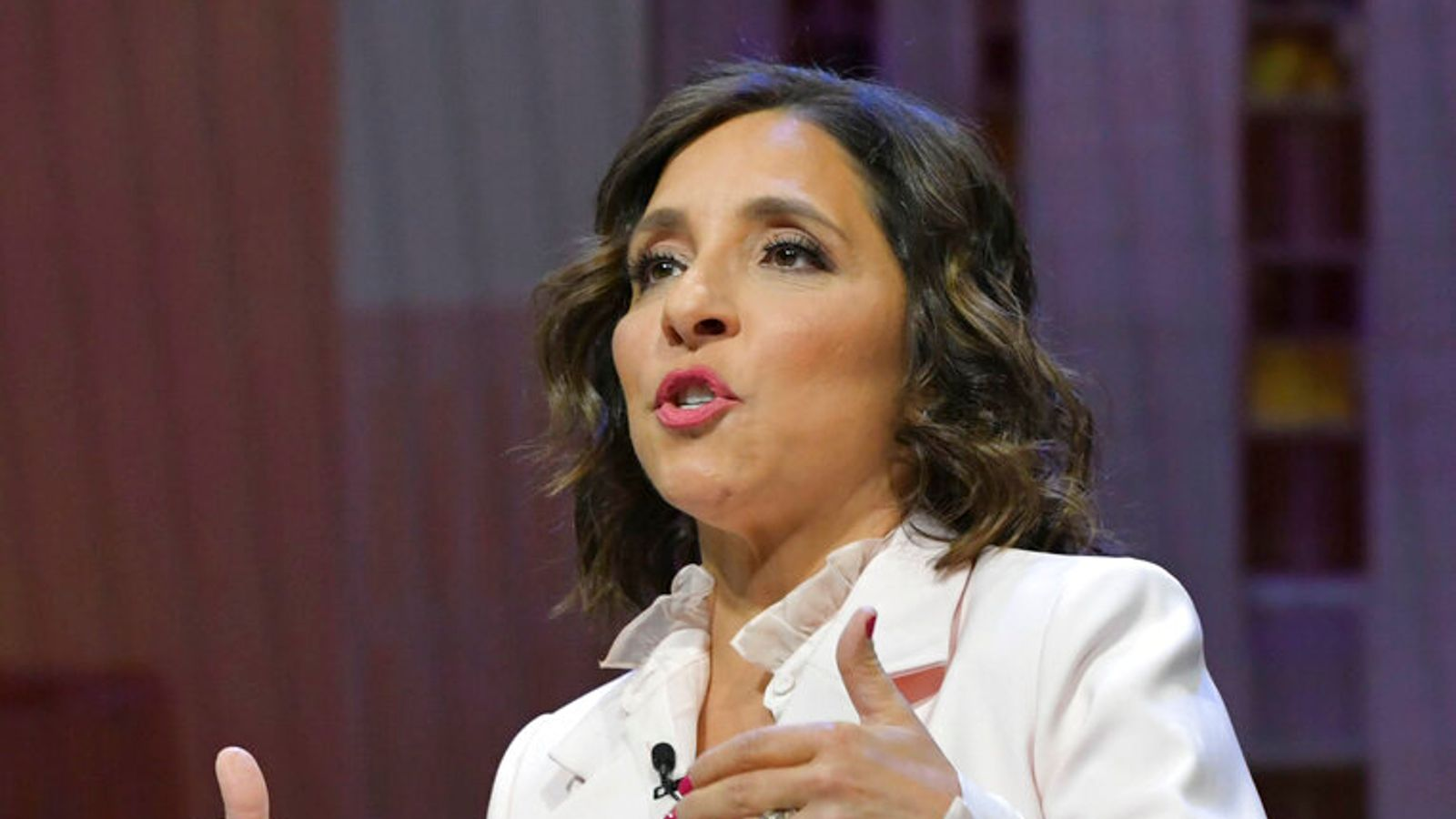
In a surprise move, Linda Yaccarino announced her resignation as CEO of X, the social media platform formerly known as Twitter, just months after the company was absorbed by Elon Musk’s AI startup, xAI. Yaccarino shared the news via a post on X, stating, “I’ve decided to step down as CEO of X,” though no specific reason was provided for her exit.

The abrupt departure deepens the turmoil surrounding Musk’s tech empire, which includes Tesla, SpaceX, and xAI. Musk responded briefly, writing, “Thank you for your contributions,” in a reply to her resignation post. No successor has been named.

Turmoil at the top

Yaccarino, 61, was appointed in 2023 after a high-profile career at NBCUniversal, where she was chair of global advertising and partnerships. Her mission at X was to repair the platform’s relationship with advertisers, many of whom had pulled back due to a surge in extremist and toxic content under Musk’s leadership.

Her resignation follows closely on the heels of a Grok-related controversy, in which xAI’s chatbot posted content containing antisemitic tropes and praise for Adolf Hitler. The posts, which were removed after a wave of criticism, may have heightened internal tensions. Analysts suggest the Grok incident could have been a breaking point, with some citing a clash of leadership styles between Yaccarino and Musk.

“This may have come to a head when the embedded AI chat Grok started responding to AI posts in an increasingly offensive manner,” said Gil Luria, analyst at D.A. Davidson.

Struggles with advertiser trust

While at X, Yaccarino worked to rebuild advertiser confidence, even launching lawsuits against certain advertisers and industry bodies like the World Federation of Advertisers, alleging collusion and boycotts aimed at hurting the platform’s revenue.

Despite the headwinds, some analysts argue that Yaccarino achieved what she was brought in to do. “She accomplished what she was hired to do,” said Jasmine Enberg of Emarketer, pointing to projected ad growth in 2025.

Still, her efforts were under constant strain due to Musk’s provocative statements and unpredictable governance. Yaccarino often found herself putting out fires, navigating PR crises and internal upheaval while attempting to launch new business features, such as:

  • Partnerships with Visa to develop direct payments,

  • A smart TV app for X content,

  • Preliminary discussions around X-branded debit or credit cards, as reported by the Financial Times.

Wider Musk empire faces instability

Yaccarino’s resignation is the latest in a string of executive departures linked to Musk. At Tesla, the CEO’s longtime associate Omead Afshar and North America HR director Jenna Ferrua left last month. Tesla shares dipped 1% following the Yaccarino news.

Musk, who briefly held a government post earlier this year under the Trump administration, is now juggling several companies while facing mounting scrutiny over content moderation, AI safety, and business ethics.

X is also burdened by heavy debt and remains under pressure from both advertisers and regulators over its content policies and AI integrations.