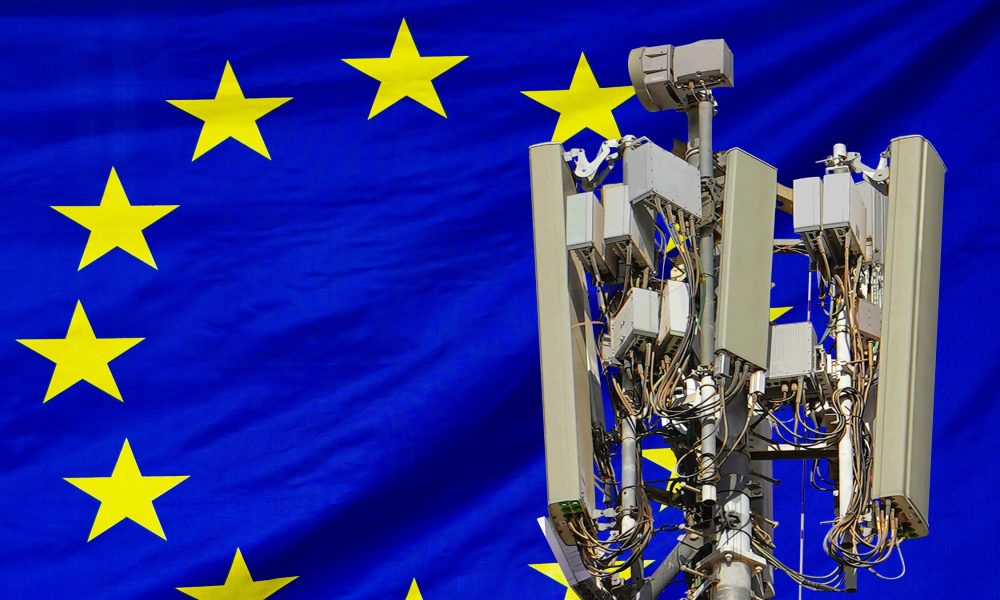
European telecom firms warn against EU deregulation push, fear market ‘re-monopolisation’

A group of European telecom companies, including Vodafone, Iliad, and 1&1, have jointly criticized the European Commission’s proposal to relax regulations on fixed broadband networks, arguing that such a move could reverse progress on market competition and fiber optic rollout.

In an open letter published Thursday, the companies expressed concerns that loosening regulations for dominant operators—typically former monopolists such as Deutsche Telekom in Germany—would lead to a “re-monopolisation” of national markets and undermine the EU’s digital goals.

Pushback against deregulation

The European Commission is reviewing rules that currently require dominant network owners to allow competitors access to their infrastructure under regulated terms. The proposal under consideration would ease those obligations, particularly in markets deemed to have improved competition.

However, the signatories of the letter argue that such deregulation would be a “step backwards” for Europe. They warn it would:

  • Contradict the EU’s own pro-competition policies,

  • Stifle the deployment of fiber optic networks,

  • Reinforce the dominance of historical operators in national markets.

“This would undo years of progress and hurt consumer choice,” the letter states.

Fiber optic rollout remains contentious

The development and expansion of fiber-to-the-home (FTTH) networks remains a divisive issue across Europe. Smaller telecoms argue that the incumbent operators—who control much of the legacy infrastructure—already enjoy significant advantages, and further deregulation would only deepen their dominance.

National developments reflect broader tension

Earlier in July, Germany’s Bundestag passed new legislation aimed at accelerating the rollout of fiber and mobile networks. However, critics say that without firm regulatory oversight, smaller providers risk being squeezed out of lucrative markets, undermining investment diversity.

With the EU pushing for widespread gigabit connectivity by 2030, the tension between market liberalization and infrastructure control is emerging as a key regulatory battleground.


Australia advances testing of wholesale central bank digital currency

Australia’s central bank, the Reserve Bank of Australia (RBA), announced on Thursday it is advancing its exploration of a wholesale central bank digital currency (CBDC) through “Project Acacia,” which involves real money and assets for the first time. The project will test 19 pilot cases across multiple asset classes and five proof-of-concept trials with simulated transactions.

The pilots cover fixed income, private markets, trade receivables, and carbon credits. Settlement assets tested will include CBDCs, stablecoins, bank deposit tokens, and innovative uses of commercial banks’ existing deposits at the RBA. The trials will use platforms like Hedera, Redbelly, R3 Corda, and Canvas Connect over the next six months, with findings expected by mid-2026.

Brad Jones, RBA assistant governor overseeing the financial system, said the initiative aims to evaluate how innovations in central bank and private digital money, alongside payments infrastructure, can enhance the functioning of wholesale financial markets in Australia.

The RBA is focusing solely on wholesale applications, having determined there is no significant economic benefit for a retail CBDC at this stage. Expected advantages include reduced counterparty and operational risks, improved collateral efficiency, greater transparency and auditability, and lower costs for institutions and customers.

Qantas reveals cyber breach exposed personal data of over 5 million customers

Australia’s Qantas Airways confirmed on Wednesday that a major cyberattack compromised the personal data of approximately 5.7 million customers, marking one of the country’s largest data breaches in recent years. Initially, Qantas reported 6 million records affected but later removed duplicates.

More than one million customers had sensitive details like phone numbers, birth dates, or home addresses accessed. An additional four million customers’ data was limited to names and email addresses.

The airline said there is currently no evidence that the stolen data has been publicly released, and it is actively monitoring the situation to protect affected customers.

“Since the incident, we have implemented several new cybersecurity measures to better safeguard our customers’ data and are thoroughly reviewing the breach,” Qantas Group CEO Vanessa Hudson stated.

This breach follows a wave of high-profile cyberattacks in Australia, including those against telecom giant Optus and health insurer Medibank in 2022, which spurred the introduction of mandatory cyber resilience regulations.