ReserveOne to Raise Over $1 Billion in Nasdaq Debut via Blank-Check Merger

ReserveOne, a new cryptocurrency investment firm backed by major industry players and led by seasoned financial and regulatory figures, is set to go public through a merger with M3-Brigade Acquisition V Corp, a blank-check company. The deal, expected to close in Q4 2025, will raise more than $1 billion, according to the announcement on Tuesday.

The company plans to manage a diversified portfolio of cryptocurrencies, including bitcoin, ethereum, and Solana, while aligning part of its holdings with the U.S. strategic crypto reserve — a concept hinting at a more structured and government-compliant crypto strategy.

The merger adds to a growing trend of integrating crypto with traditional equity markets. Inspired by the explosive valuation growth of MicroStrategy, which pivoted to a bitcoin-centric strategy in 2020, ReserveOne aims to attract institutional investors by offering equity exposure to digital assets without direct crypto ownership.

Leadership from Wall Street to Washington

Jaime Leverton, formerly CEO of crypto mining company Hut 8, will serve as ReserveOne’s CEO. She emphasized that the team’s “unique pedigree” — blending Wall Street, regulatory, and crypto expertise — sets the venture apart in a crowded space.

Sebastian Bea, who has held roles at BlackRock and Coinbase Asset Management, will act as President and Head of Investment. The board of directors will feature some of the biggest names in finance and crypto:

  • Reeve Collins, co-founder of Tether, will chair the board

  • Chinh Chu, ex-Blackstone dealmaker

  • Wilbur Ross, former U.S. Commerce Secretary under Donald Trump

Leverton noted that Ross, once skeptical of the crypto sector, has grown increasingly supportive over recent months.

Revenue Beyond Holding Crypto

ReserveOne aims to generate returns through institutional staking and crypto lending, providing periodic yields on locked-up digital assets. This diversified approach could help offset volatility in crypto markets.

Key backers of the deal include Blockchain.com and Kraken, which are contributing up to $750 million via a mix of equity and convertible debt.

The transaction leverages a SPAC structure, where M3-Brigade — a publicly traded shell company — raises capital to merge with a private firm like ReserveOne, which then becomes publicly listed without a traditional IPO.

The deal is seen as another step in mainstreaming crypto investment vehicles amid growing interest from institutional investors and traditional financial markets.
AI Impersonator Posed as Marco Rubio, Contacted Foreign Ministers in Sophisticated Deception

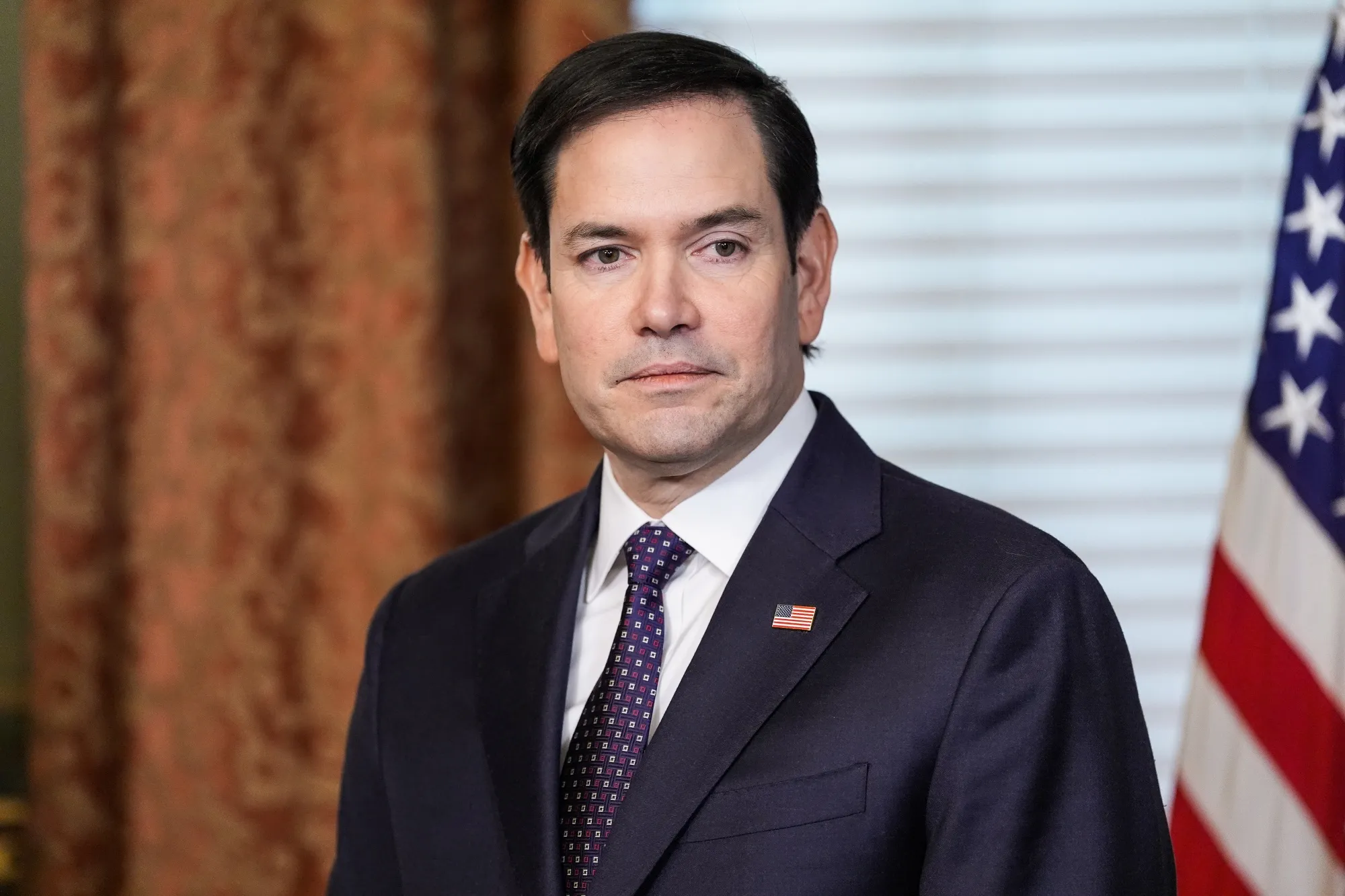
An individual using AI-generated voice technology impersonated U.S. Secretary of State Marco Rubio in June, contacting at least three foreign ministers, two U.S. officials, a governor, and a member of Congress, according to a classified State Department cable seen by Reuters.

The impersonator reached out through the Signal messaging app, sending voice messages and at least one text inviting recipients to connect further. The AI-driven impersonation is suspected to be part of a broader attempt to extract information or access government accounts, the July 3 cable warned.

“The actor likely aimed to manipulate targeted individuals using AI-generated text and voice messages,” it stated.

The State Department has launched an investigation into the incident. A senior official, speaking anonymously, confirmed the government is taking steps to improve cybersecurity protocols and mitigate future threats. While no immediate cyber breach was reported, the department noted that if individuals engaged with the impersonator, sensitive information could have been compromised.

This follows a string of recent digital security incidents. In a separate situation, President Donald Trump’s former National Security Adviser Mike Waltz accidentally added a journalist to a Signal group chat, where classified discussions on military operations in Yemen were exposed.

The State Department is now instructing diplomatic and consular staff to warn external partners about impersonation tactics and fake accounts. While the cable didn’t disclose which foreign ministers were contacted, it linked this attempt to earlier AI-related phishing campaigns.

Russia Connection Suspected in Prior Campaign

The cable also referenced a April impersonation campaign attributed to a Russia-linked hacker, who mimicked a @state.gov email address and replicated branding from the Bureau of Diplomatic Technology. That campaign targeted think tanks, Eastern European activists, and former State Department officials, showing “extensive knowledge of internal naming conventions and documentation.”

That operation was publicly tied to the Russian Foreign Intelligence Service by cybersecurity experts.

FBI Confirms Broader AI Threat

In May, the FBI issued a warning about malicious actors using AI-generated voice and text messages to impersonate senior U.S. officials. These schemes aim to gain access to personal or professional accounts, and potentially to manipulate additional targets once access is gained.

While the FBI declined to comment on the Rubio impersonation, it has previously said such tactics can be used to elicit sensitive information or financial transfers under false pretenses.

The impersonation episode also follows recent reporting from the Wall Street Journal that White House Chief of Staff Susie Wiles was also the subject of a similar impersonation attempt, now under federal investigation.

As AI-generated content becomes more convincing and accessible, national security experts warn that the threat of deepfake diplomacy and synthetic political manipulation is rapidly escalating.

M&S Urges Mandatory Reporting of Major Cyberattacks by UK Firms

Marks & Spencer (M&S) chairman Archie Norman has called for new legislation requiring large UK companies to report material cyberattacks to national authorities. Speaking before Parliament’s Business and Trade Committee on Tuesday, Norman said the current voluntary system leads to significant underreporting of serious breaches.

Citing the April 17 cyberattack that forced M&S to suspend its online operations for 46 days, Norman said the company had since learned of two major cyberattacks on large British firms within the past four months that were never reported to the National Cyber Security Centre (NCSC).

“We believe there’s a big deficit in knowledge,” Norman said. “So I don’t think it would be regulatory overkill to require companies of a certain size to report material cyber incidents to the NCSC within a fixed timeframe.”

While Norman declined to say whether M&S paid a ransom, he noted that the matter was “fully shared” with the National Crime Agency and other authorities. He also revealed that the attack likely involved multiple parties, including the ransomware group DragonForce, believed to be operating from Asia. Media reports have linked the Scattered Spider hacking collective to the breach.

Describing the cyberattack’s mechanics, Norman said it began with a “social engineering” operation. M&S reportedly had no contact from the threat actors for about a week following the breach. The attack is expected to result in an estimated £300 million ($409 million) in lost operating profit.

Norman added that M&S had been “fortunate” to have doubled its cyber insurance coverage last year, though the company expects the claims process to take up to 18 months. The online clothing store reopened on June 10, but click-and-collect services remain offline.

Nick Folland, General Counsel at M&S, told lawmakers that a key takeaway for other businesses was to maintain the ability to operate offline using pen and paper: “That’s what you need to be able to do for a period of time whilst all of your systems are down.”

CEO Stuart Machin previously said that the company expected to be past the worst of the incident’s impact by August.

Norman’s remarks underline the growing push for stronger cybersecurity regulation in the UK, amid rising concerns about corporate transparency and resilience in the face of increasingly sophisticated cyber threats.