U.S. Indicts Chinese Hackers and Sanctions Tech Company Over Spy Campaign

The U.S. government has announced new legal actions targeting alleged Chinese hackers, including multiple indictments and sanctions, in connection with a years-long espionage campaign. Federal authorities have charged 10 individuals in total, including eight employees from a Chinese tech company, i-Soon (also known as Anxun Information Technology), and two members of the Chinese Ministry of Public Security.

The indictment, made public on Wednesday, describes i-Soon as a key component in China’s “hacker-for-hire” ecosystem, claiming the company played a significant role in targeting global and U.S. entities. Among the alleged victims were the U.S. Defense Intelligence Agency, the Department of Commerce, Taiwan’s and South Korea’s foreign ministries, and several organizations critical of China, including news agencies. Additionally, the hackers infiltrated various religious groups, including a major U.S.-based religious organization.

The indictment outlines that i-Soon charged Chinese intelligence agencies between $10,000 and $75,000 for each email inbox they successfully breached, with added fees for data analysis. The charges against the individuals range from stealing sensitive personal and government data to orchestrating cyber-attacks on foreign governments.

In response, the Chinese embassy in Washington condemned the U.S. sanctions, emphasizing China’s opposition to what it called “long-arm jurisdiction” and vowed to take action to protect the rights of its citizens and companies.

Alongside the indictments, the U.S. Treasury Department announced sanctions against Shanghai-based Heiying Information Technology and its founder, Zhou Shuai, for allegedly selling stolen data and access to compromised U.S. infrastructure networks. Some of the stolen data was reportedly sold to a previously sanctioned Chinese hacker, Yin Kecheng, who was also indicted. Yin is linked to a prior breach of U.S. Treasury data.
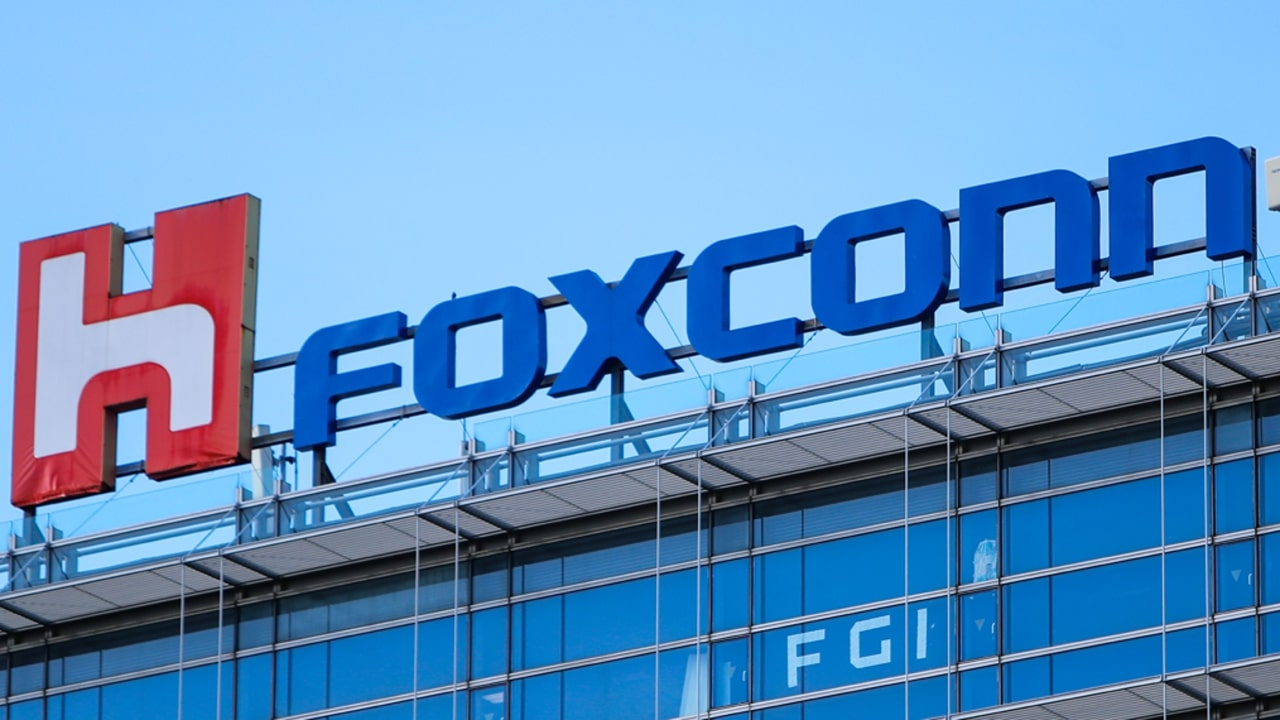

Foxconn Open to Buying Stake in Nissan for Potential Cooperation

Foxconn (2317.TW), Taiwan’s leading electronics manufacturer, has expressed interest in purchasing a stake in Nissan (7201.T), but emphasized that its primary goal is to collaborate rather than invest in the automaker. Chairman Young Liu stated on Wednesday that Foxconn would consider buying shares if cooperation with Nissan required it, but reiterated that acquiring shares was not their main focus.

Foxconn is in discussions with Renault (RENA.PA), Nissan’s largest shareholder, about potential collaboration. These comments come amid uncertainty surrounding Nissan’s future after it stepped away from merger talks with rival Honda (7267.T), which would have created the world’s fourth-largest automaker.

Sources have indicated that Nissan and Honda, who had been exploring a merger, are expected to announce the end of their talks on Thursday due to growing differences between the two companies. This deal would have been a significant shift in an automotive industry facing mounting pressure from electric vehicle (EV) manufacturers, particularly China’s BYD (002594.SZ).

In light of the changing landscape, Nissan is reportedly open to partnerships with new players, including Foxconn, which is best known for its role as Apple’s primary iPhone manufacturer. While Foxconn seeks to diversify its business, it is not looking to establish itself as an automotive brand. Instead, it intends to offer commissioned design and manufacturing services for electric vehicles.

Neither Nissan nor Renault has commented on Foxconn’s chairman’s statements regarding potential collaboration.

Cuts to USAID Halt U.S. Farm Research at Universities, Sources Say

The Trump administration’s dismantling of the U.S. Agency for International Development (USAID) has caused farm research laboratories at land-grant universities in 13 states to cease operations, according to six lab directors. The closures mark another blow to U.S. agriculture, following efforts by President Donald Trump to overhaul the federal government. The halted research was designed to improve seed and equipment technology and develop international markets for U.S. agricultural products.

The shutdowns have compounded difficulties already faced by farmers, who have experienced disruptions to government food aid programs, agricultural grants, and loans. Land-grant universities, which were established on land granted by the federal government, have been particularly affected.

“For U.S. farmers, this is not good,” said Peter Goldsmith, head of the University of Illinois’ Soybean Innovation Lab, one of the affected facilities. The State Department did not provide a response to inquiries about the closures.

The 17 laboratories that received stop-work orders were part of USAID’s Feed the Future Innovation Labs program, which partnered with countries such as Malawi, Tanzania, Bangladesh, and Rwanda to conduct agricultural research. This research benefited U.S. farmers by developing production practices that could be applied domestically or providing early warnings about potential pest threats.

David Hughes, director of the USAID Innovation Lab on Current and Emerging Threats to Crops at Penn State University, said the shutdown limits their ability to help farmers fight pests and diseases. One halted project focused on controlling a virus harming banana crops in Tanzania.

David Tschirley, who chairs the Feed the Future Innovation Lab Council and runs a USAID-funded lab at Michigan State University, said the lab network employs about 300 people and collaborates with up to 4,000 partners abroad. “It presents an American face to the world that is a very appreciated face,” Tschirley said, emphasizing the research’s role in promoting national security.

Stop-work orders were issued to all 17 labs at the end of January after Trump froze most foreign aid. Since then, the labs have received no further guidance from the State Department. Some universities have attempted to cover costs temporarily, with mixed success.

At Michigan State, Tschirley’s lab has been allowed to retain employees under the assumption that USAID will eventually approve funding. However, Goldsmith laid off all 30 staff members at his lab last week and plans to close it entirely by April 15. His lab had previously assisted African farmers with soy planting and helped companies establish soy-processing plants.

Some agribusiness partners of the labs include Bayer, Corteva, BASF, and Archer-Daniels-Midland. Bayer stated it is assessing the funding halt, while other companies did not comment.

The funding freeze is part of broader actions by Trump to reshape the federal government. For example, U.S. commodity purchases were temporarily suspended following Trump’s January 24 order halting most foreign aid. Additionally, federal farm program payments have been delayed due to Trump’s directive freezing loans and grants, though this order has been blocked in court.