Super Micro to File Delayed Annual Report by February Deadline, Shares Rise

Super Micro Computer (SMCI.O) announced on Tuesday that it expects to file its delayed annual and quarterly reports with the U.S. Securities and Exchange Commission (SEC) by the February 25 deadline, leading to an 8% surge in its shares after hours. The server maker had previously missed the deadline for its 10-K report after receiving subpoenas from the U.S. Department of Justice and the SEC, following short-seller Hindenburg Research’s allegations of “accounting manipulation” in August. Super Micro confirmed that it is cooperating with the authorities’ requests for documents.

The company, based in San Jose, California, also reduced its revenue forecast for fiscal 2025 due to delays in the availability of Nvidia’s (NVDA.O) Blackwell processors, a key component for its AI server systems. While the delay in filing the report was a “distraction,” Super Micro’s financial chief, David Weigand, explained that the primary issue was the delay in technology availability. Despite the challenges, Super Micro announced the full production availability of its AI server systems powered by Nvidia’s Blackwell chips last week.

Super Micro, a beneficiary of the growing demand for advanced data center infrastructure to support generative AI, now faces increasing competition from rivals like Dell (DELL.N) and HP Enterprise (HPE.N). The company has revised its fiscal 2025 net sales forecast to a range of $23.5 billion to $25 billion, down from its previous projection of $26 billion to $30 billion. The midpoint of this forecast, $24.25 billion, falls below analysts’ expectation of $24.92 billion.

For the third quarter, Super Micro is projecting net sales of $5 billion to $6 billion, lower than analysts’ estimate of $6.09 billion. In December, the company was removed from the Nasdaq-100 Index after missing its initial deadline for filing the 10-K report, though it received an extension until February 25.
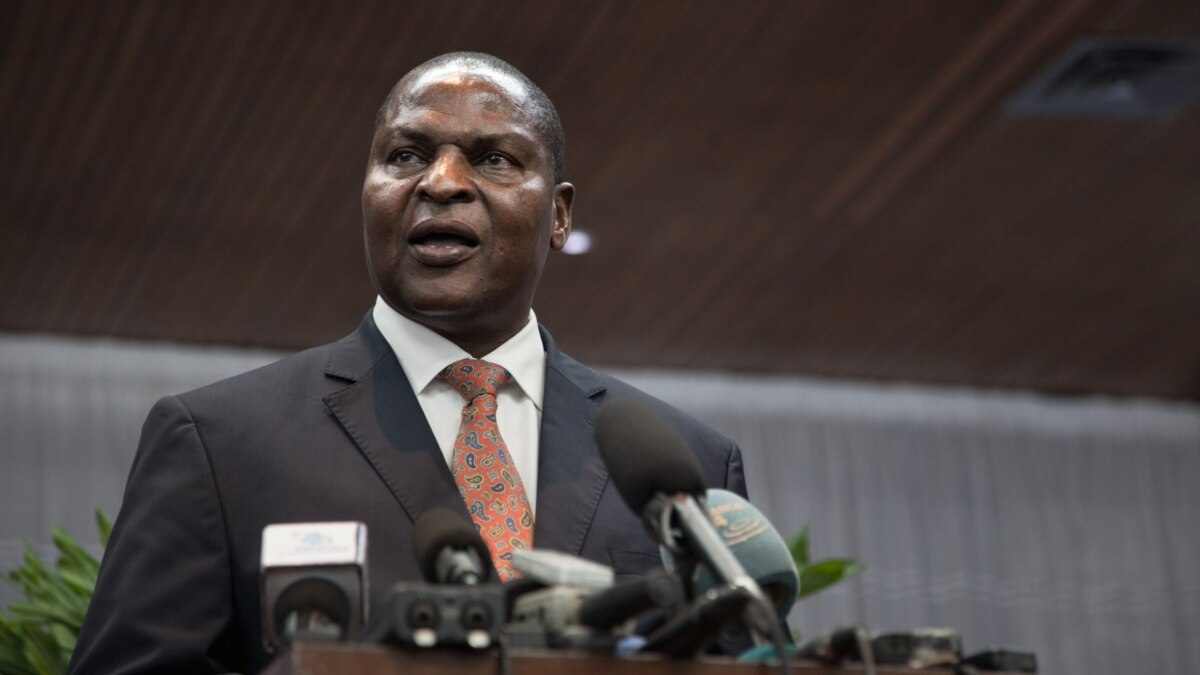

Central African Republic Launches Meme Coin ‘Experiment

The Central African Republic (CAR) has unveiled its own meme coin, a move President Faustin-Archange Touadera described as an effort to raise the country’s profile globally. The announcement was made on X (formerly Twitter) late on Sunday, almost three years after CAR became the first African country, and only the second in the world after El Salvador, to adopt bitcoin as legal tender.

Meme coins, which are typically crypto tokens inspired by internet trends or memes, are known for their high volatility and limited practical use. Last month, U.S. President Donald Trump launched a meme coin, $Trump, which briefly surged in value to over $14.5 billion before seeing a significant decline.

Despite its rich reserves of gold and diamonds, CAR remains one of the world’s poorest countries, plagued by ongoing rebel violence and underdevelopment. President Touadera emphasized that the $CAR meme coin is an “experiment” aimed at demonstrating how something as simple as a meme can unite people, promote national development, and enhance CAR’s visibility on the global stage.

The $CAR token was valued at $0.22 on Monday morning, according to CoinGecko. However, a separate account dedicated to updates on $CAR was suspended by X as of Monday, with the government working to restore it.

Google Plans to Appeal App Store Ruling to US Appeals Court

Lawyers representing Alphabet’s Google and Epic Games are preparing to face off before the 9th US Circuit Court of Appeals in California on Monday. The legal battle comes as Google seeks to overturn a 2023 jury verdict and an order from US District Judge James Donato that mandates the company to overhaul its app store practices. Google has argued that the judge’s decision in favor of Epic Games was based on legal errors, which it claims unfairly benefited the Fortnite maker.

The case stems from a 2020 lawsuit filed by Epic Games, in which the company accused Google of monopolizing the Android app ecosystem. Epic alleged that Google restricted how consumers could access apps and make in-app transactions, stifling competition in the process. A jury in San Francisco sided with Epic in 2023, finding that Google had engaged in anti-competitive behavior, and Judge Donato subsequently ordered the company to implement changes to restore market competition.

As part of the court’s ruling, Google was directed to allow users to download alternative app stores through its Play Store and make its app catalog accessible to competing app stores. These reforms were intended to open up the Android ecosystem to more competition. However, the enforcement of this order has been put on hold while the 9th Circuit considers Google’s appeal.

Google contends that its Play Store is already in competition with Apple’s App Store, and the company claims that Judge Donato allowed Epic Games to present a biased argument in court. Specifically, Google argues that the trial judge allowed Epic to mislead the jury by asserting that Google and Apple do not compete in app distribution and in-app payments, which Google believes was a key point in the case’s outcome. As the appeal progresses, the legal battle could have significant implications for how app stores operate on both Android and iOS platforms.