Death Toll Reaches 155 in Spain’s Devastating Valencia Floods, Eight Bodies Found in Garage

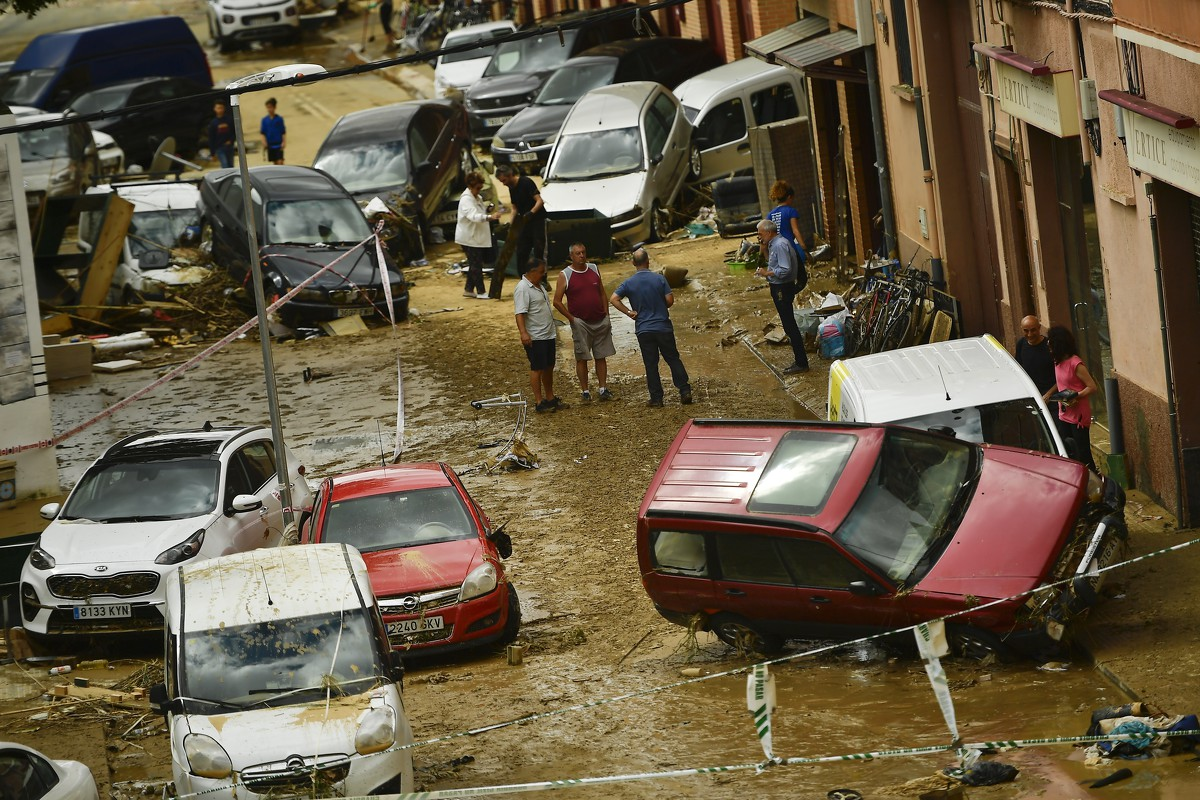
Rescue teams have recovered eight bodies from a flooded garage in Valencia, bringing the death toll from catastrophic floods in Spain’s eastern region to at least 155. Valencia’s Mayor Maria Jose Catala confirmed that one of the victims was a local police officer, and additional casualties include a 45-year-old woman who was found in her nearby home in La Torre. Defense Minister Margarita Robles warned that the national death toll could increase as the search for missing persons continues.

Meteorologists report that Valencia was inundated with a year’s worth of rain in just eight hours on Tuesday, triggering severe flash floods that damaged the region’s infrastructure and cut off roads. Bridges, railway tracks, and large sections of farmland were submerged. In La Torre, supermarket manager Laura Villaescusa expressed frustration, suggesting that timely warnings could have saved lives.

As thousands of residents attempt to secure essential supplies, Transport Minister Oscar Puente reported extensive road damage in the region, with about 50 miles of impassable roads and abandoned vehicles – some with deceased victims still inside. The high-speed rail link between Valencia and Madrid could take weeks to repair, he added. Prime Minister Pedro Sanchez urged residents to remain indoors, stressing the priority to save lives as further storm activity is expected.

In the nearby town of Godelleta, resident Antonio Molina recounted surviving the flood by clinging to a pillar with water reaching up to his neck, while his wife and son sought refuge on the upper floor. Molina’s home, which had been flooded twice in recent years, has made him wary, and he expressed frustration over continued residential construction in flood-prone areas.

Utiel, a rural town roughly 85 km inland, also experienced tragedy as the Magro river overflowed, sending floodwaters as high as three meters into homes. Utiel’s mayor, Ricardo Gabaldon, confirmed at least six fatalities among the elderly and disabled residents who were unable to escape.

Residents, assisted by tractors equipped with water pumps, began cleanup efforts on Thursday, with streets covered in mud and debris. Pope Francis shared his condolences, stating his solidarity with the affected families. Hydrologist Hannah Cloke emphasized the need for heightened awareness of extreme weather risks, linking the floods to climate change and noting the potential for increased occurrences of such events.
 

Cuba Faces Second Nationwide Blackout Amid Worsening Energy Crisis

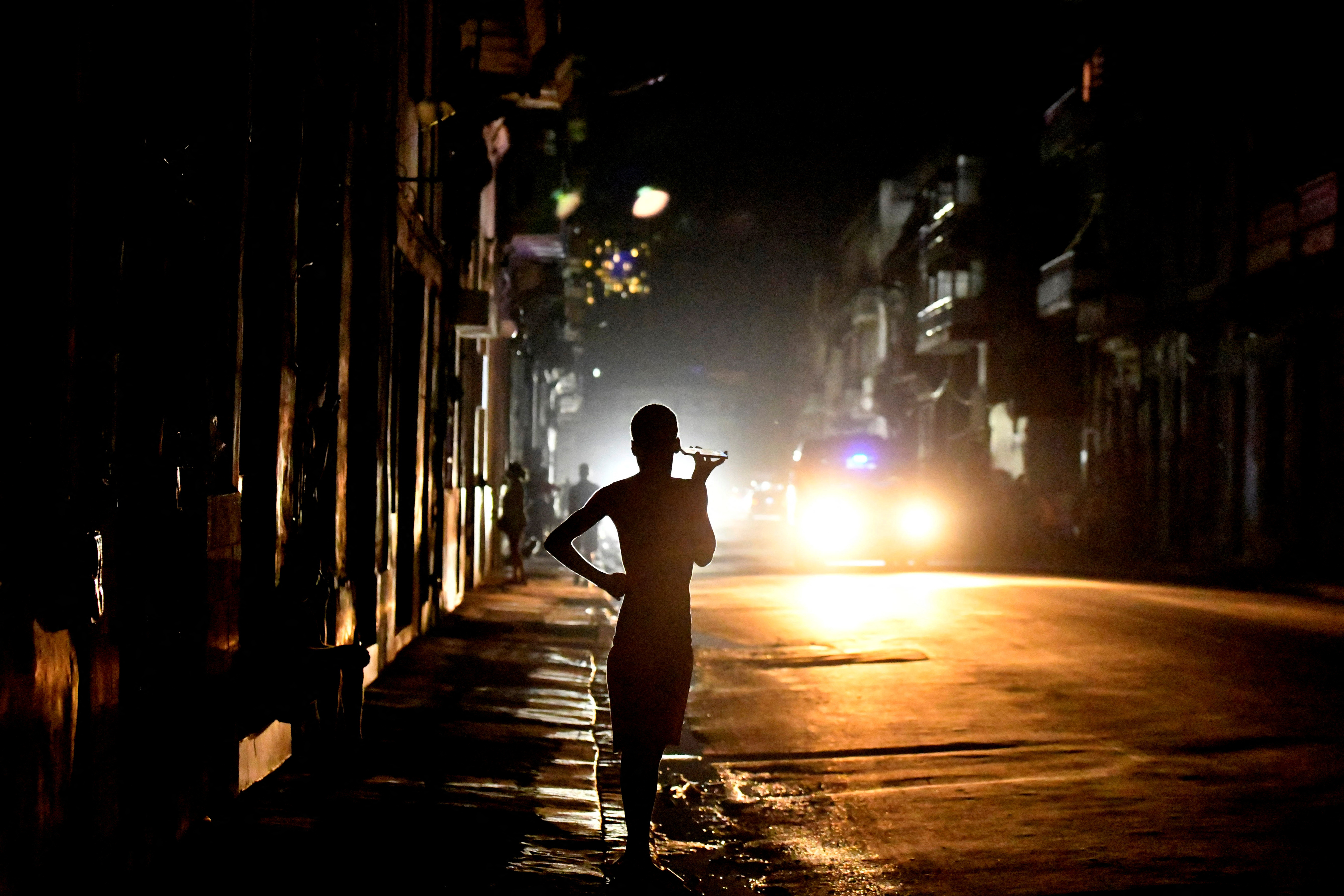
Cuba was plunged into a second nationwide blackout on Saturday morning, exacerbating the country’s growing energy crisis. The Cuba Electrical Union announced the outage at 6:15 a.m., stating on its official Telegram channel that efforts were underway to restore power. This followed initial reports that power was being gradually reconnected across the island, though there were no specific numbers provided on how many homes or areas had regained electricity.

Many Cubans reported brief moments of restored power before being plunged back into darkness. The blackouts have created a deeper strain on the nation, leaving millions without essential services such as running water and refrigeration, causing perishable goods to spoil.

Cuba’s aging electrical grid has suffered repeated collapses in recent days, triggering a nationwide blackout earlier in the week. Cuban officials have pointed to a combination of factors, including intensified U.S. sanctions, recent hurricanes, and the deteriorating infrastructure, as contributing causes to the crisis.

On Thursday, Prime Minister Manuel Marrero Cruz addressed the nation in a televised broadcast that was delayed due to technical problems. He acknowledged the gravity of the situation, explaining that the government had halted much of the country’s limited production to divert energy to the population. “We have been paralyzing economic activity to generate [power] for the population,” Marrero Cruz stated.

Health Minister José Angel Portal Miranda assured citizens that health facilities were running on backup generators, and that healthcare workers were continuing to provide vital services despite the outages.

In Havana, the blackout has left the streets without traffic lights, forcing motorists to navigate in the absence of proper signals. Police officers have taken up the task of directing traffic at key intersections. While some homes and businesses rely on generators to cope with the power outages, the majority of Cubans cannot afford such a luxury.

To further conserve energy, the government has canceled school classes through the weekend, shut down nightclubs and recreational facilities, and limited work attendance to essential personnel. These measures were detailed on the state-run news website Cubadebate as part of an effort to manage the ongoing energy crisis.


Floridians Rush to Evacuate as Category 5 Hurricane Milton Approaches

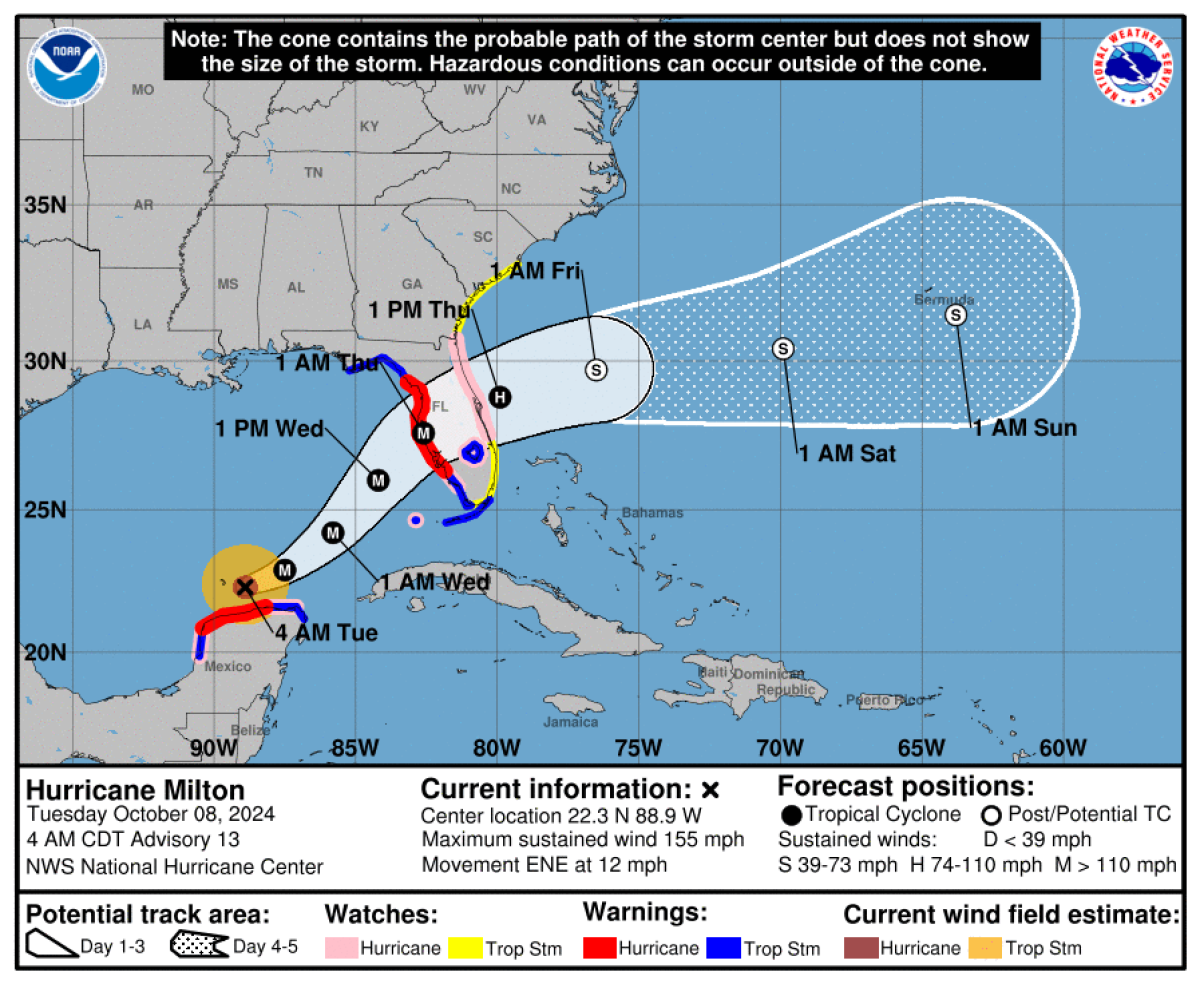
Floridians are scrambling to escape the Gulf Coast as Hurricane Milton, a Category 5 storm, barrels towards the state, threatening catastrophic damage. More than one million people in coastal areas have been ordered to evacuate, with residents clogging highways and gas stations running dry as the storm’s landfall approaches late Wednesday night or early Thursday morning. The storm is targeting the Tampa Bay region, home to over 3 million people, but forecasters caution that its path could shift slightly.

Hurricane Milton, with maximum sustained winds of 160 mph (260 kph), is one of the most powerful storms ever to threaten the Gulf Coast. The National Hurricane Center warned of a deadly storm surge of over 10 feet along much of the coast, posing grave risks to the region already battered by Hurricane Helene less than two weeks ago.

Officials, including President Joe Biden and Tampa Mayor Jane Castor, have urged residents in evacuation zones to flee immediately. Michael Tylenda, visiting his son in Tampa, echoed their concern. “When you don’t evacuate when you’re ordered to, you can pretty much die,” Tylenda said, recalling the deadly aftermath of past hurricanes. “The house can be replaced. The stuff can be replaced. So it’s just better to get out of town.”

Milton has intensified rapidly, becoming the third-fastest storm to grow from a Category 1 to a Category 5 in the Atlantic within 24 hours. Climate experts, like Daniel Gilford of Climate Central, attribute the rapid intensification to unusually warm sea temperatures fueled by climate change, warning that storms like Milton could become more frequent and destructive in the future.

At 10 p.m. CDT, the storm’s eye was located 405 miles southwest of Tampa, moving northeast at 12 mph. While Milton’s winds may weaken as it approaches land, its massive size poses a continued threat not only to Florida’s Gulf Coast but also to the state’s Atlantic side.

In response to the storm, Florida’s economy, which represents about 2.8% of the U.S. GDP, faces disruptions. Airlines, energy companies, and major attractions like Universal Studios have begun halting operations, bracing for the storm’s impact.

With mandatory evacuations issued for more than a dozen coastal counties, including Hillsborough and Pinellas, over 500,000 residents in St. Petersburg alone have been ordered to evacuate. Mobile homes, nursing facilities, and assisted living centers are also under mandatory evacuation.

Fort Myers resident Jamie Watts, who lost his mobile home during Hurricane Ian in 2022, has taken shelter in a hotel with his wife this time. “We stayed during Ian and literally watched my roof tear off my house,” Watts said. “This time I’m going to be a little safer.”

As of Tuesday, traffic snarls and fuel shortages worsened the evacuation efforts. Around 17% of Florida’s nearly 8,000 gas stations had run out of fuel, according to GasBuddy.

The nation watches nervously as Hurricane Milton approaches, with hopes that Floridians in its path will find safety before the storm strikes.