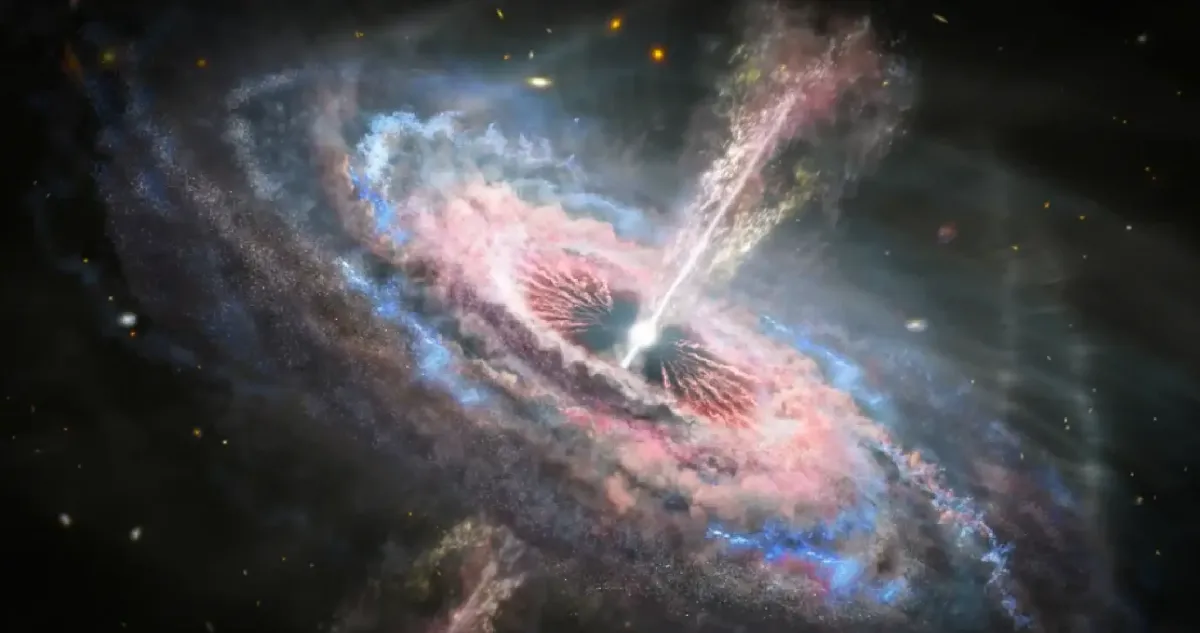
Hubble Reveals Stunning Close-Up of Quasar 3C 273, Unveiling Mysterious Structures

The Hubble Space Telescope has captured its closest-ever image of a quasar, offering an extraordinary view of its mysterious surroundings. The quasar in question, 3C 273, is located billions of light-years away from Earth and is one of the brightest known objects in the universe. This breakthrough was made possible through Hubble’s imaging spectrograph, which allows astronomers to minimize the overwhelming brightness of the supermassive black hole at the quasar’s center. This technology enables scientists to study the intricate structures around the black hole with unprecedented clarity.

Researchers, including Bin Ren from the Côte d’Azur Observatory in France, have been fascinated by the unusual features discovered around 3C 273. According to NASA, these findings include several blobs of varying sizes and a mysterious L-shaped filamentary structure located approximately 16,000 light-years from the quasar’s black hole. These structures could be remnants of small galaxies that are feeding gas and dust into the black hole, contributing to the quasar’s extraordinary luminosity. This discovery may help scientists better understand the processes fueling quasars and the dynamics of supermassive black holes.

Quasars are known for their unique properties, primarily their ability to shine with incredible brightness. Powered by supermassive black holes at the centers of active galaxies, quasars are a result of matter falling into the black hole, forming a hot, glowing accretion disk. The immense gravitational forces at play cause the material in this disk to heat up, producing intense light. Additionally, magnetic fields near the black hole’s poles accelerate particles to nearly the speed of light, creating massive jets of plasma that can extend vast distances, sometimes reaching hundreds of thousands of light-years into space.

The new findings surrounding 3C 273 could offer further insight into the behavior and formation of quasars. As scientists continue to analyze the data from Hubble, these unusual structures may provide crucial information on how black holes grow and interact with their environments, helping to deepen our understanding of the universe’s most powerful objects.
Ancient Cave Pearls and Pottery Unearthed in Jerusalem’s Joweizeh Tunnel

Rare Cave Pearls and Ancient Pottery Discovered in Jerusalem’s Joweizeh Tunnel

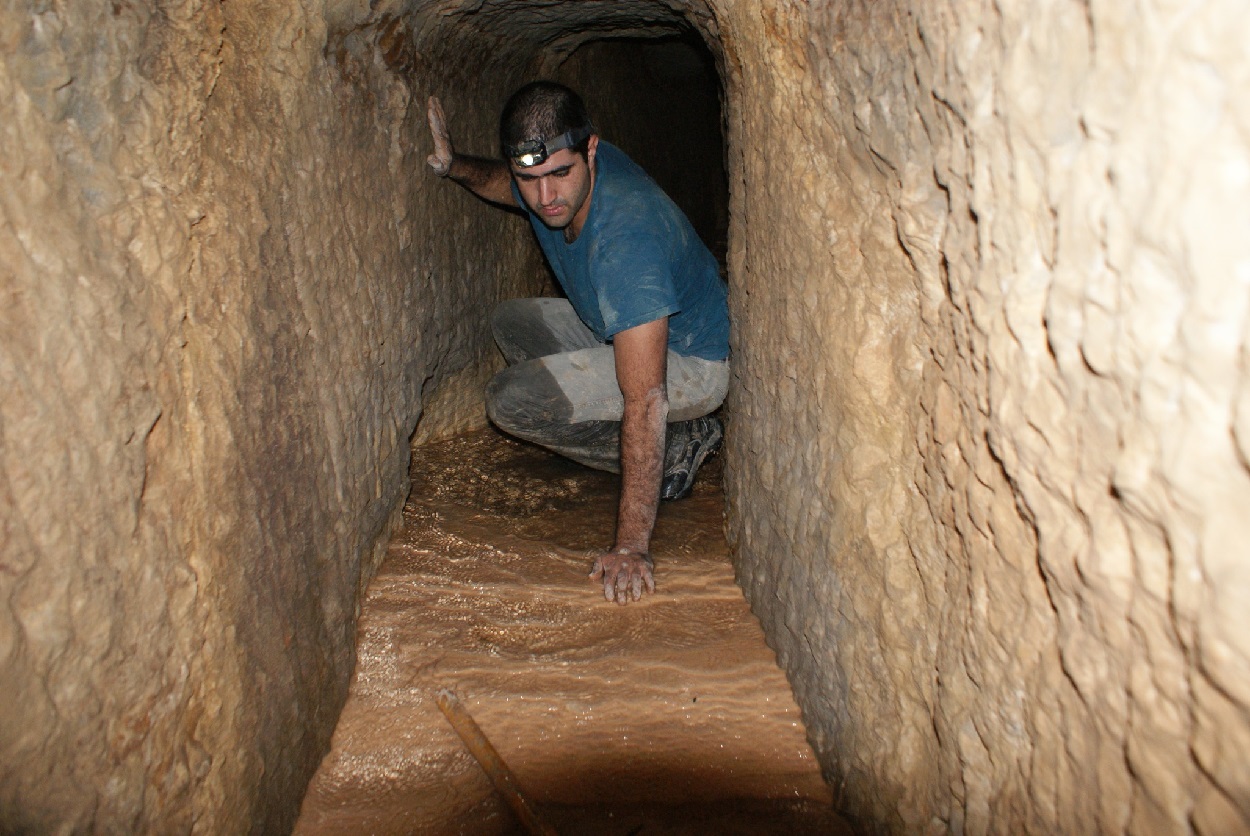
A remarkable archaeological discovery has been made in Jerusalem’s Joweizeh Spring Tunnel by a team of researchers led by Dr. Azriel Yechezkel from the Hebrew University of Jerusalem. The team uncovered 50 cave pearls, small mineral formations that are rare and form under very specific environmental conditions. What makes this discovery particularly unique is that 14 of these pearls contained pottery fragments, and two even included plaster remains, marking the first instance where man-made objects have been found embedded in such natural formations. The findings were published in the journal Archaeometry, shedding light on the historical significance of the site.

The Formation and Significance of Cave Pearls

Cave pearls are small, rounded speleothems that form over time within caves, typically in environments where minerals precipitate around a nucleus. These pearls are rare and develop under very specific conditions, making their discovery in the Joweizeh Spring Tunnel particularly intriguing. The tunnel, which was constructed to channel water from an aquifer near Jerusalem’s Old City, provided the ideal environment for these natural formations to develop. Unlike other geological formations that take thousands of years to form, cave pearls can emerge within just a few hundred years, depending on the environmental conditions.

Analysis of the Pottery Fragments

The discovery of pottery fragments within the cave pearls adds another layer of intrigue to the find. Most of the pottery shards found were linked to significant historical periods, including the Hellenistic, Roman, and Byzantine eras, with a few dating back to the Iron Age and Middle Bronze Age. The presence of these shards within the cave pearls suggests a connection to the historical use of the tunnel, which may have been in operation during these periods. Some of the pottery shards were found to have a cobalt-rich coating, a technique known to be associated with imported pottery from areas such as Cyprus and Ephesus, suggesting trade connections and cultural exchanges during these ancient times.

Historical Implications and Future Research

The discovery of man-made objects embedded in cave pearls opens up new avenues for understanding the history of the Joweizeh Tunnel and its use throughout the centuries. Researchers plan to continue studying the composition of both the pearls and the pottery to gain further insights into the tunnel’s role in ancient Jerusalem. This find not only sheds light on the historical significance of the tunnel but also highlights the potential for more discoveries in similar sites around Jerusalem, offering valuable clues about the region’s ancient history and the people who once inhabited it.

Eli Lilly’s Alzheimer’s Treatment Approved in China

China’s medical regulator has approved Eli Lilly’s Kisunla, an Alzheimer’s treatment for early-stage disease, offering patients an additional therapeutic option after the approval of Leqembi, developed by Eisai and Biogen, earlier this year. This marks China’s entry into a select group of major markets—including the United States, Japan, and the UK—where Kisunla is approved, Eli Lilly announced on Tuesday.

Kisunla, like Leqembi, targets the clearance of beta-amyloid, a protein linked to Alzheimer’s disease, from the brain. In a late-stage clinical trial, Kisunla demonstrated a 29% reduction in the progression of memory and cognitive decline compared to a placebo. However, the treatment carries safety concerns, with reports of brain swelling in nearly 25% of patients and brain bleeding in approximately 33%, though most cases were deemed mild.

In response to these risks, Kisunla’s U.S. prescribing label includes the FDA’s strongest “boxed” safety warning, similar to Leqembi’s label. Lilly has addressed concerns by introducing a gradual dosing schedule, which has been shown to reduce the likelihood of severe brain swelling.

A key distinction between Kisunla and Leqembi lies in their dosing approach. Kisunla offers finite dosing, allowing patients to discontinue the treatment once brain scans confirm the absence of amyloid plaques, whereas Leqembi does not.

Kisunla is currently under review by the European Union’s drug regulator. In contrast, Leqembi was rejected by the EU earlier this year due to concerns that the risks of brain swelling outweighed its modest benefits in slowing cognitive decline.

According to the World Health Organization, Alzheimer’s is the leading cause of dementia, accounting for 60%-70% of cases globally.