AI-Powered Laser Test Detects Breast Cancer at Earliest Stage

A groundbreaking test developed by researchers at the University of Edinburgh can detect breast cancer at its earliest stage, known as stage 1a, using laser screening and artificial intelligence (AI). The new test looks for subtle changes in the blood plasma that occur during the very early phases of cancer development—changes that current methods are unable to detect.

Published in the Journal of Biophotonics, the study reveals that the test offers high accuracy, particularly in identifying breast cancer in its nascent form. According to Dr. Andy Downes, who led the research, early diagnosis is crucial for improving survival rates. “Most deaths from cancer occur following a late-stage diagnosis after symptoms become apparent,” he said, emphasizing the importance of early detection for better long-term outcomes.

While current breast cancer detection methods include physical exams, X-rays, ultrasounds, and biopsies, these approaches primarily identify cancer at more advanced stages. The new test could change this by offering a fast, non-invasive way to spot cancer much earlier.


HOW THE TEST WORKS

The process begins by shining a laser beam into the blood plasma of the patient. This reveals tiny changes in the chemical makeup of cells and tissues that signal the presence of disease. The results are then interpreted using AI algorithms that analyze these subtle alterations.

In a pilot study involving 12 samples from breast cancer patients and 12 healthy controls, the AI-driven test achieved 98% accuracy in identifying stage 1a breast cancer. Additionally, the test was able to distinguish between the four main subtypes of breast cancer with an accuracy rate exceeding 90%, which could help tailor more effective, personalized treatment for patients.


POTENTIAL IMPACT AND FUTURE USES

This method, although initially focused on breast cancer, has the potential to be expanded into a multi-cancer screening test. Dr. Downes noted the next steps involve applying the technology to other cancer types and building a comprehensive database to refine its effectiveness.

The success of this test could represent a major leap forward in the fight against cancer, with the possibility of offering a routine screening tool that detects multiple types of cancer at their earliest and most treatable stages.
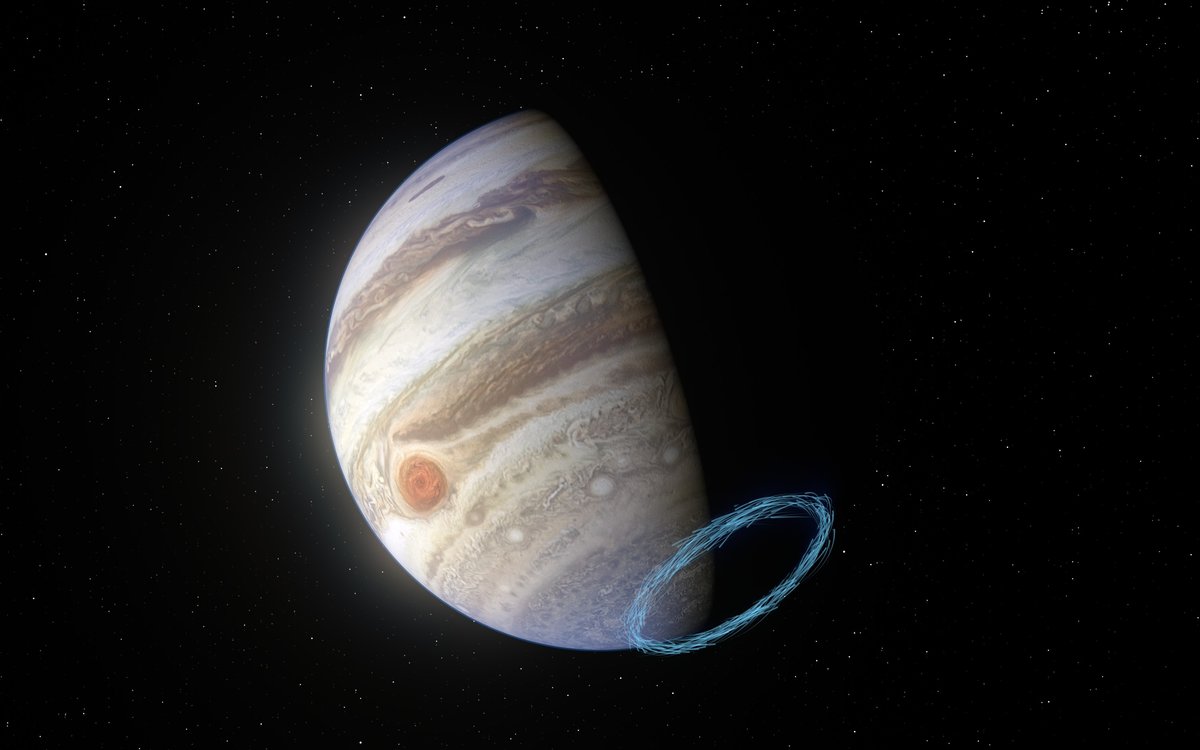
Study Suggests Jupiter’s Earth-Sized Storms May Be Driven by Magnetic Tornadoes

A recent study published in Nature Astronomy on November 26 proposes that magnetic vortices descending from Jupiter’s ionosphere into its deep atmosphere may be the driving force behind the planet’s Earth-sized ultraviolet-absorbing storms. These dark, anticyclonic storms, which appear as dark ovals, are observed primarily in Jupiter’s polar regions. Spanning the size of Earth, the storms were first detected in the 1990s through ultraviolet (UV) light by the Hubble Space Telescope and were later confirmed by NASA’s Cassini spacecraft in 2000, sparking interest in understanding their origin.

The research, led by undergraduate researcher Troy Tsubota from the University of California, Berkeley, in collaboration with Michael Wong of UC Berkeley and Amy Simon from NASA’s Goddard Space Flight Center, investigates the mysterious dynamics behind these massive storms. According to their findings, the formation of these dark ovals is closely linked to magnetic tornadoes on Jupiter. These tornadoes arise due to friction between Jupiter’s powerful magnetic field lines and those in the planet’s ionosphere, generating swirling vortexes that reach deep into the atmosphere.

These magnetic tornadoes appear to stir the planet’s aerosols, causing dense layers of ultraviolet-absorbing haze to form in Jupiter’s stratosphere. This phenomenon leads to the creation of the dark, storm-like features observed on the planet’s surface. By shedding light on the complex interactions between Jupiter’s magnetic field and atmosphere, the study provides new insights into the dynamics of these gigantic storms.

Understanding the formation of these storms could offer broader implications for atmospheric science, not just on Jupiter but for other planets with strong magnetic fields. The study enhances our knowledge of planetary weather systems and the role of magnetic forces in shaping the environments of distant worlds. As researchers continue to investigate Jupiter’s atmospheric phenomena, this study marks a significant step toward unraveling the mysteries of the gas giant’s tumultuous weather.

NASA’s Disaster Program Leverages Artificial Intelligence to Enhance Aid Response Efforts

NASA’s integration of artificial intelligence (AI) and open science has made significant strides in improving disaster preparedness, response, and recovery efforts. Through its Disasters Program, NASA has been developing advanced tools and datasets aimed at enhancing the management of natural disasters such as hurricanes. By providing communities and emergency responders with accurate and timely data, the program has proven to be a crucial resource in helping decision-makers act swiftly and efficiently during critical moments. This innovative approach was notably demonstrated during Hurricane Ida in 2021, highlighting the agency’s role in disaster management.

Hurricane Ida, which struck Louisiana in August 2021, became one of the most destructive hurricanes in U.S. history. As emergency teams coordinated efforts on the ground, NASA’s Disasters Program played a vital role in offering remote support through its satellite-based technologies. These tools helped gather and analyze key data related to the hurricane’s impact, such as soil moisture, precipitation, vegetation changes, and power outages. By processing this information, NASA provided valuable insights that helped prioritize relief actions and allocate resources effectively.

The data collected and shared by NASA through its Disasters Mapping Portal became essential for various organizations working to assess the storm’s damage. This platform allowed users to access critical real-time information, enabling them to track the storm’s progress and its aftermath. The use of AI and satellite models not only helped responders understand the immediate effects of Hurricane Ida but also contributed to longer-term recovery planning by mapping out areas most in need of assistance.

By leveraging AI and satellite-based data, NASA’s Disasters Program demonstrates the transformative power of technology in disaster management. The agency’s commitment to open science ensures that this invaluable information is accessible to organizations worldwide, fostering collaboration and improving the efficiency of global disaster response efforts. As climate-related disasters become more frequent and intense, NASA’s innovations offer a promising model for integrating advanced technology into future relief operations.