Study Finds Chimpanzees Perform Better on Tasks When Observed by Humans

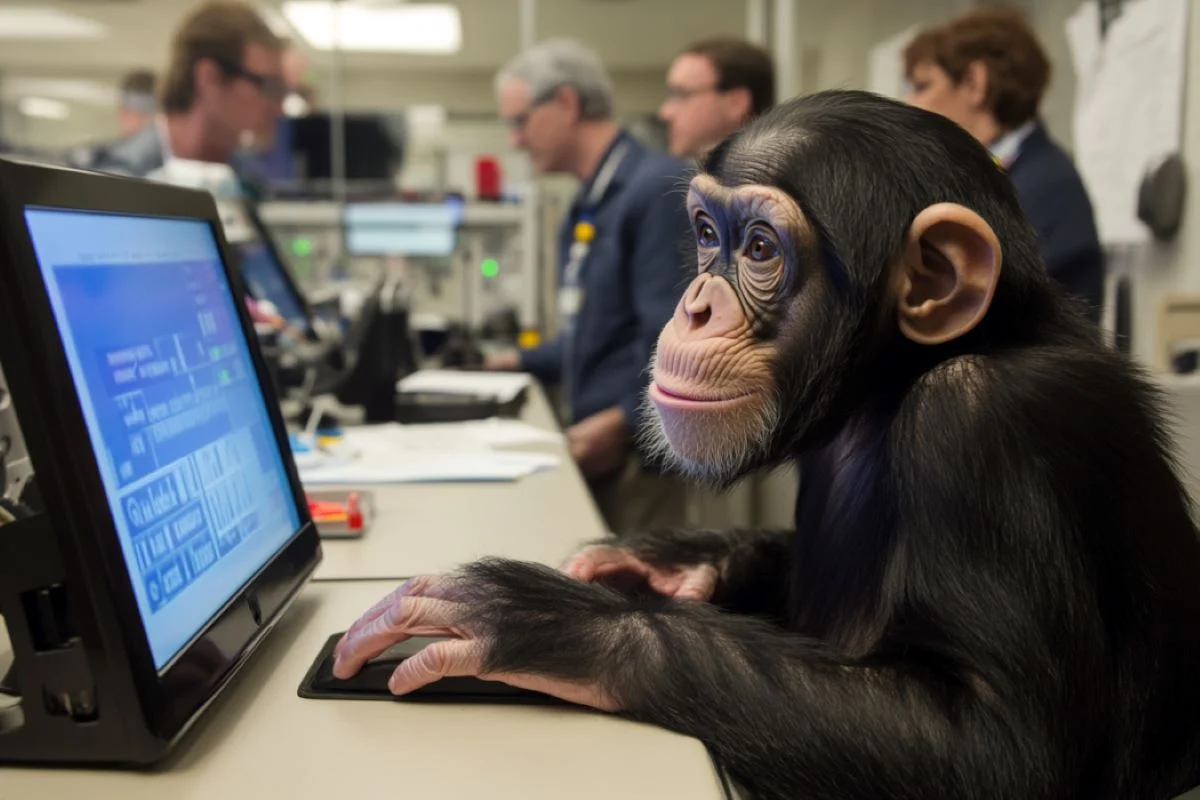
Chimpanzees have demonstrated improved performance on challenging tasks when they are observed by humans, according to a study published in iScience on November 8. Conducted at Kyoto University, the research focused on chimpanzees performing number-based tasks on touchscreens. The study found that their task performance improved with increased task difficulty when a greater number of human observers were present. However, for simpler tasks, chimpanzees performed worse when observed by larger audiences, suggesting that the presence of humans has a complex impact on their behavior and task outcomes.

The study, led by Shinya Yamamoto and Akiho Muramatsu, sought to explore whether chimpanzees experience what is known as an “audience effect,” a phenomenon often associated with humans who modify their behavior based on the presence of others. In this case, the researchers were interested in understanding if chimpanzees, who are regularly exposed to human interaction, would exhibit a similar response. The study’s participants were chimpanzees familiar with touchscreen tasks and accustomed to receiving food rewards for correct answers. The comfortable relationship between the animals and humans allowed the researchers to assess how the presence of an audience might affect the chimpanzees’ performance.

Over six years and thousands of experimental sessions, the researchers measured the chimpanzees’ ability to complete tasks of varying difficulty levels. The results were striking: chimpanzees performed better on more complex tasks when watched by a larger human audience. However, their accuracy declined when performing simpler tasks in the presence of more observers. This nuanced response challenges previous assumptions about animal cognition, suggesting that chimpanzees are capable of some level of social awareness, similar to the audience effects seen in humans.

This finding sheds light on the cognitive abilities of chimpanzees and raises interesting questions about the role of social dynamics in animal behavior. The researchers’ conclusion that chimpanzees may adjust their performance based on the presence of others opens up new avenues for studying animal intelligence and social interaction. The study suggests that, like humans, chimpanzees may be influenced by the social context in which they perform tasks, revealing a more complex and socially-aware animal behavior than previously understood.
New Study Reveals Mitochondria Split Functions for Energy and Molecular Synthesis in Low-Nutrient Environments

A groundbreaking study has revealed a new “division of labor” within mitochondria, showing that different subpopulations of mitochondria take on distinct functions when cells face nutrient scarcity. Led by Dr. Craig Thompson, a cell biologist at Memorial Sloan Kettering Cancer Center, the research team discovered that under low-nutrient conditions, some mitochondria focus on energy production, while others shift to molecular synthesis for cellular repair and protein production. This newly identified specialisation could have crucial implications for how cells adapt to injury and respond to resource limitations.

Traditionally, mitochondria are known as the powerhouses of the cell, responsible for generating adenosine triphosphate (ATP), which fuels many cellular activities. However, they also play a role in synthesising essential molecules like amino acids, which are crucial for protein production and cell function. When cells are deprived of nutrients—such as during blood loss after an injury—mitochondria may struggle to simultaneously support both energy production and molecular synthesis. Dr. Thompson’s team sought to understand how mitochondria manage this balance under stress, revealing a surprising adaptation mechanism.

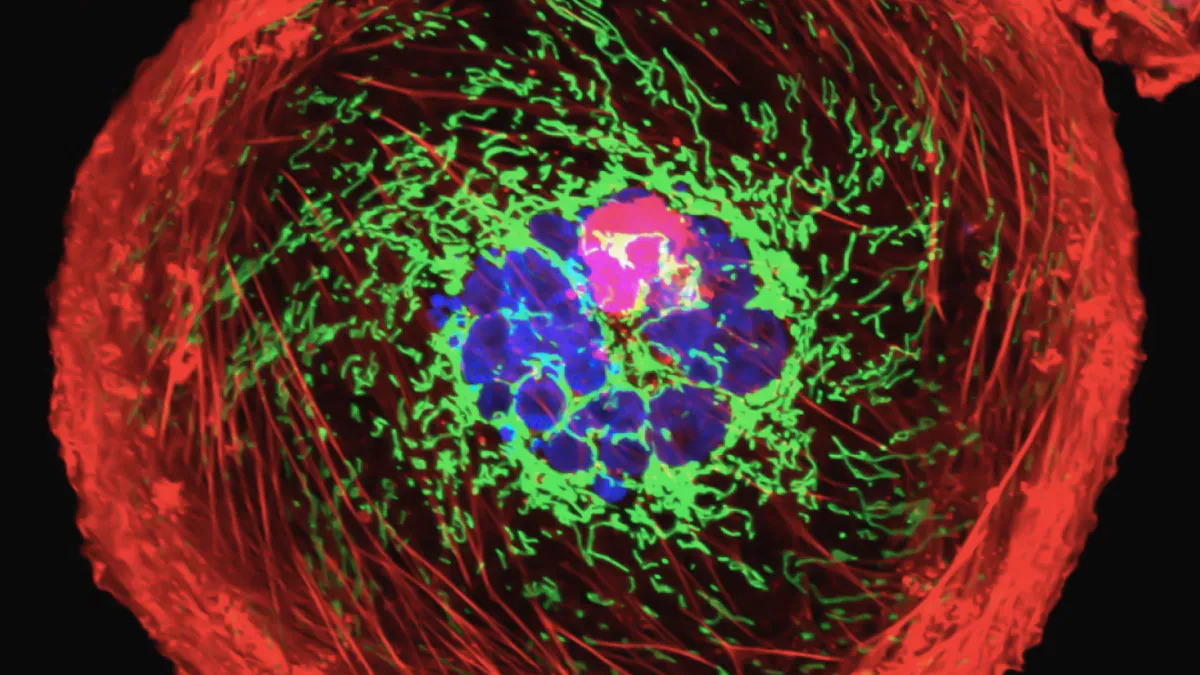
In experiments involving mouse cells, the researchers imposed conditions that forced the cells to rely exclusively on mitochondrial ATP production, limiting the use of other energy sources. Surprisingly, despite these constraints, the mitochondria continued to synthesise amino acids, a task usually considered secondary to energy production. Further investigation pinpointed a key enzyme, P5CS, which was found to be crucial for this process. The enzyme was located only in specific mitochondria, which clustered together in a way that enabled amino acid synthesis. When the scientists genetically modified the cells to prevent this clustering, amino acid production ceased, highlighting the critical role of P5CS in enabling mitochondria to perform multiple functions under low-nutrient stress.

This research adds a new layer of understanding to mitochondrial function, showing that these organelles are not just energy producers but also dynamic responders to environmental challenges. The discovery could have significant implications for understanding how cells repair themselves after injury or cope with diseases like cancer, where nutrient availability is often compromised. By uncovering the specialised roles of mitochondria under nutrient stress, this study opens up potential avenues for therapeutic interventions that could harness the adaptability of mitochondria to improve cell survival and function.

Pompeii DNA Study Unveils Unexpected Ancestry and Challenges Traditional Views on Family and Gender Roles

A groundbreaking DNA study conducted by researchers from the University of Florence, Harvard University, and the Max Planck Institute for Evolutionary Anthropology has revealed surprising new insights into the lives of Pompeii’s ancient population. The research, which challenges long-held assumptions about the social and familial structures of the city’s residents, revises historical perspectives based on previous visual evidence and physical remains. By extracting and analyzing DNA from 14 restored skeletal remains, the study has illuminated a much more complex social landscape than previously thought.

The eruption of Mount Vesuvius in 79 AD buried Pompeii under a thick layer of ash, preserving its population in an almost frozen moment in time. Prior to this DNA study, interpretations of Pompeii’s social dynamics were largely based on skeletal positions, grave goods, and other material artifacts like jewelry. These items suggested clear distinctions between gender roles and family structures. However, the genetic analysis uncovered discrepancies in these assumptions, revealing that kinship and gender roles in Pompeii may have been far more diverse and fluid than previously understood.

Professor David Caramelli, from the University of Florence’s Department of Anthropology, noted that the DNA evidence has provided surprising variations in family ties and gender, offering a richer, more nuanced view of Pompeii’s inhabitants. For instance, what was once thought to be a family group, such as a parent-child pair, was actually made up of unrelated individuals. These findings suggest that the social and familial bonds in Pompeii were not necessarily as rigid or traditional as once believed, and that personal relationships may have been more complex.

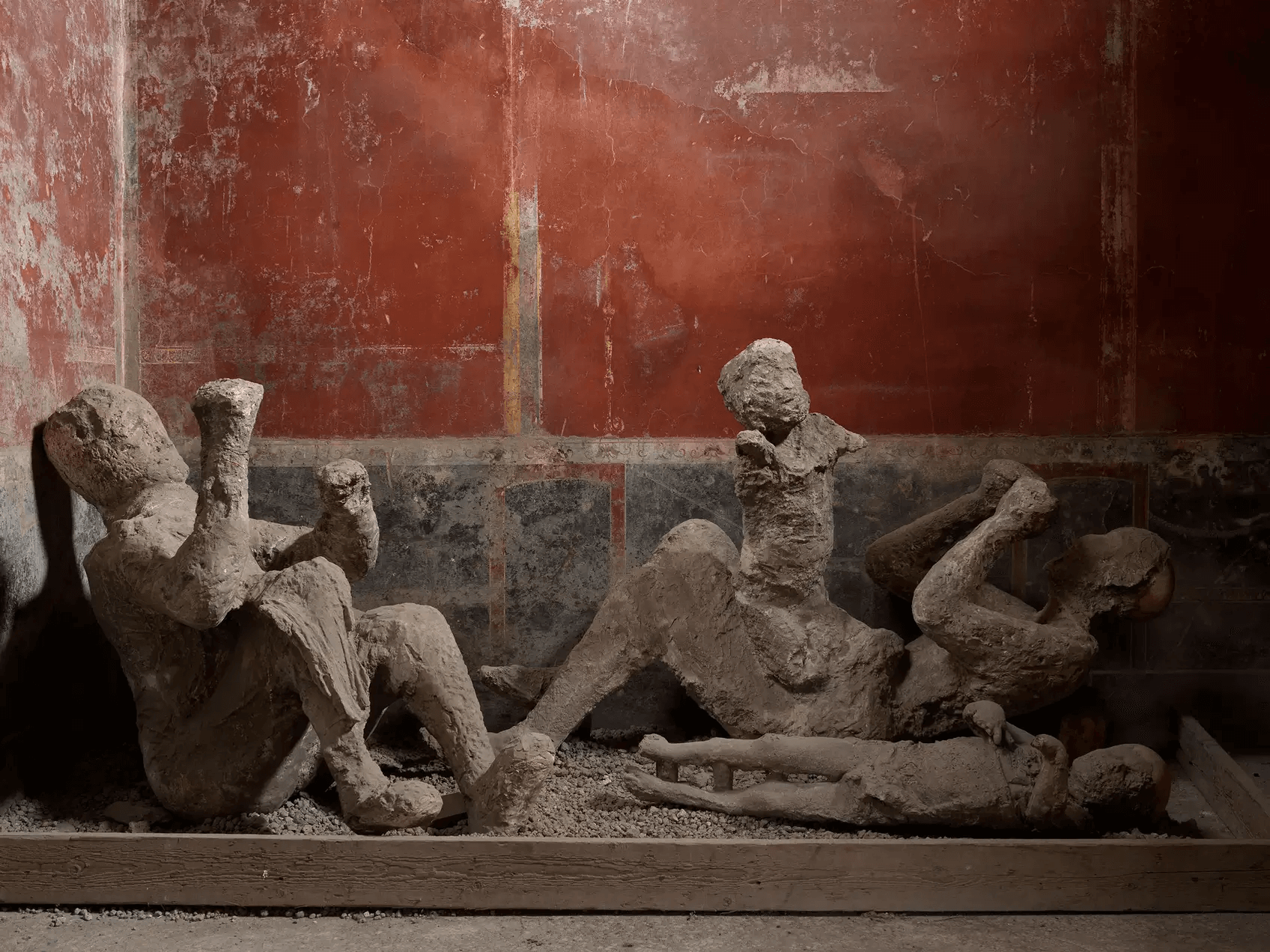
Further analysis, including the famous casts from the House of the Golden Bracelet, revealed that several individuals previously thought to be closely related were, in fact, not genetically connected at all. In addition, the study challenged traditional gender assumptions, with certain artifacts, once believed to be linked exclusively to women, being found alongside male remains. These revelations offer a new perspective on Pompeii, demonstrating a society that was far more diverse in its family structures and gender identities than historical records had suggested.