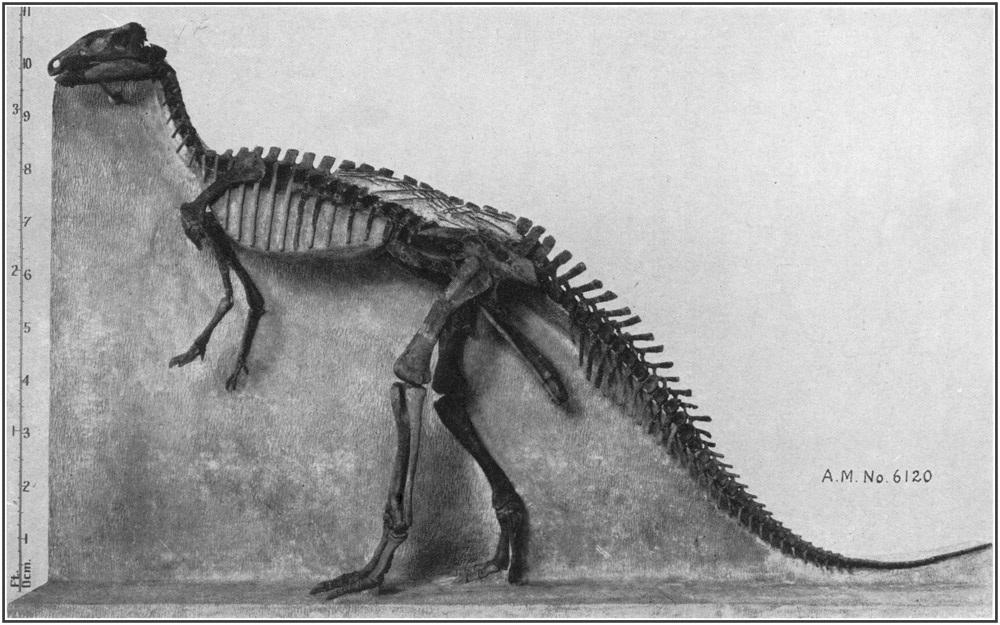
Fossils of Armored Dinosaur With Bony Spikes Discovered, Capable of Withstanding Car Crash Impacts

A remarkable fossil of a nodosaur, a plant-eating dinosaur, has been found to possess an armor so strong that it could endure the impact of a high-speed car crash. Discovered in Alberta, Canada, the fossil belongs to Borealopelta markmitchelli, a species that roamed the Earth approximately 110 million years ago during the Early Cretaceous period. This discovery is one of the best-preserved dinosaur fossils ever unearthed, offering scientists an unparalleled look at the defensive structures of this ancient creature.

New Insights into the Nodosaur’s Defense Mechanisms
Led by biomechanical paleontologist Dr. Michael Habib from UCLA, the research revealed fascinating details about the nodosaur’s protective features. The fossil’s bony armor was covered by a keratin sheath, which was found to be much thicker than previously assumed. In some areas, the keratin layer measured nearly 16 centimeters—significantly thicker than the keratin found on modern animals like cattle horns. This thick, robust coating, combined with the dinosaur’s bony spikes, provided a formidable defense against predators and likely helped it survive in a dangerous environment.

Unbelievable Strength of the Nodosaur’s Armor
According to the study, the nodosaur’s armor was capable of withstanding more than 125,000 joules of energy per square meter—an amount of force equivalent to that of a high-speed car collision. This discovery sheds light on the advanced defensive capabilities of the nodosaur, suggesting that its armor was not just for protection from predators but could also serve as a weapon or shield in combat between rival males of the same species. The armor’s ability to absorb such immense force highlights the evolutionary advantage that such a defense would have provided during its time.

Significance of the Discovery and Future Research
The fossil of Borealopelta markmitchelli offers rare insights into the complex evolutionary mechanisms that allowed dinosaurs to thrive in their environments. The study emphasizes the remarkable resilience and adaptability of these ancient creatures, which are only now being fully understood through modern scientific research. This discovery could have wider implications for paleontology, providing more information about how dinosaurs used their physical traits for survival and giving us a clearer understanding of life in the Cretaceous period. As new technologies and techniques emerge, more discoveries like this may continue to reshape our understanding of prehistoric life.
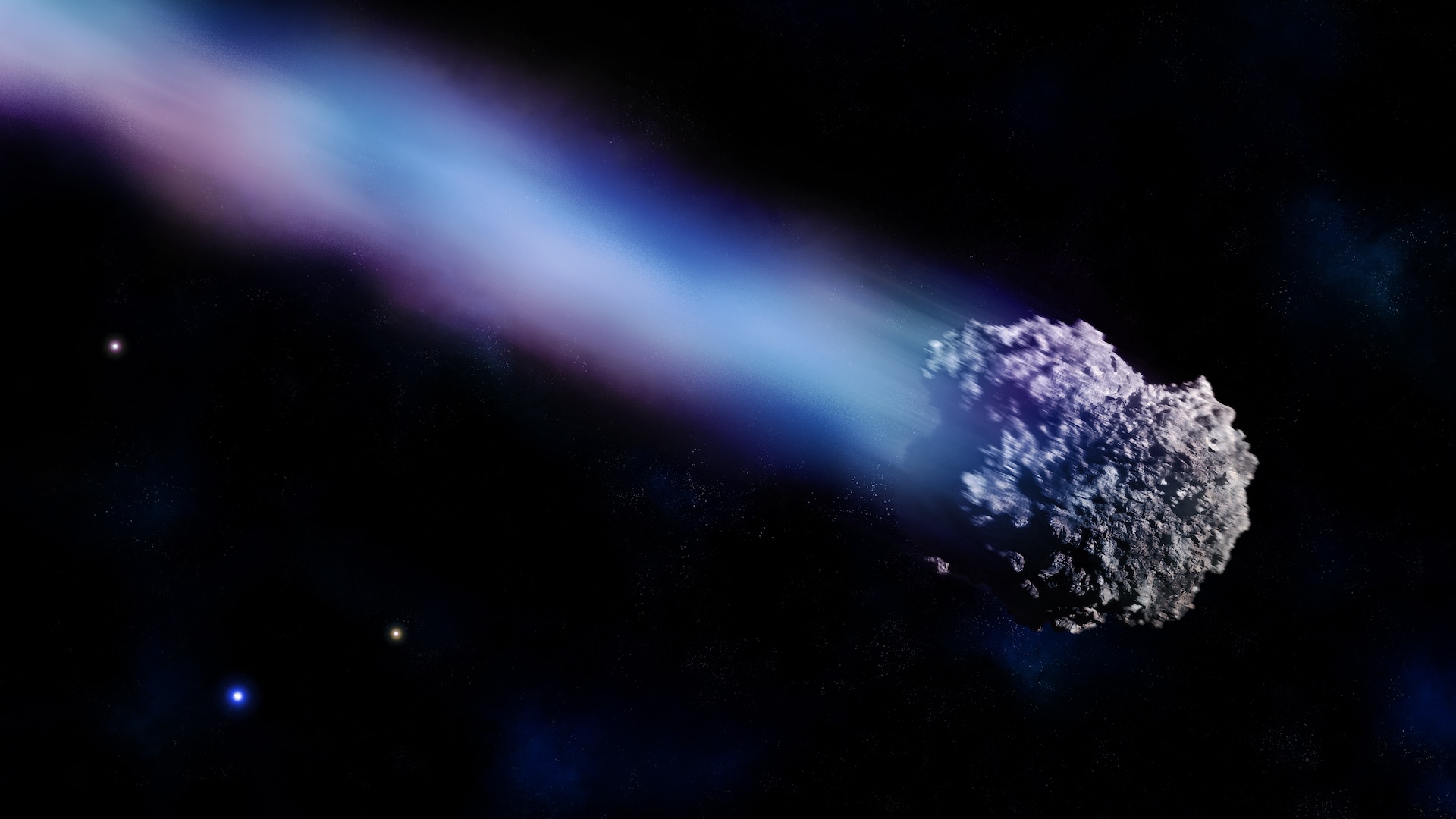

Meteoroid Trails May Provide Early Warning for Potentially Hazardous Comets

Meteoroid Trails Offer Early Warning for Hazardous Comets
New research suggests that meteoroid trails, which are left behind by long-period comets, could become a valuable tool in predicting the path of potentially hazardous comets years in advance. These rare comets, which take hundreds or even thousands of years to complete their orbits, often remain undetected until they approach Earth, leaving little time for preparation in case of a collision. The new findings offer hope that scientists could track these distant comets much earlier by observing the streams of meteoroids they leave behind.

Using Meteor Showers to Track Long-Period Comets
Published in The Planetary Science Journal, the study shows that long-period comets (LPCs), which appear in our solar system only once every few centuries or millennia, may be tracked through meteor showers. These showers, formed by debris from the comets as they pass through the solar system, could provide critical data about their parent comets’ trajectories. Some of these comets could pose a significant danger if their orbits bring them too close to Earth, releasing devastating amounts of energy in the event of an impact—equivalent to hundreds of thousands of megatons of TNT.

Meteoroid Streams and Comet Orbits
One of the key insights from the study is the idea that meteoroid streams from long-period comets are less affected by the gravitational forces of nearby planets. This makes them more predictable and allows scientists to determine the orbits of their parent comets with greater accuracy. Samantha Hemmelgarn, a graduate student at Northern Arizona University and lead author of the study, emphasized that this ability to track comet paths years before their potential approach could be critical in mitigating any possible impact risks.

Advancements in Early Detection Technology
The ability to predict the orbits of these infrequent visitors to our solar system could lead to major advancements in planetary defense efforts. By identifying potentially hazardous comets earlier, scientists would have more time to develop strategies for preventing or minimizing the effects of a collision. This research opens up new possibilities for understanding and preparing for the risks posed by long-period comets, contributing to ongoing efforts to safeguard Earth from space-related threats.

Fewer than Half of IVF Cycles Are Successful, but Scientists Are Working to Improve Odds

Since Louise Joy Brown’s birth in 1978, in vitro fertilization (IVF) has revolutionized infertility treatments, resulting in over 10 million births worldwide. Despite advancements, IVF remains a challenge, with success rates below 50% in many cases. Scientists are exploring cutting-edge methods to enhance these odds, but progress has been incremental.

Current Limitations and Mixed Results

IVF success has improved over decades, with live birth rates for women under 38 tripling since the 1990s. However, the overall live birth rate in the U.S. remains at 45% per embryo transfer. Technologies like time-lapse imaging, though promising, have shown no significant benefit in increasing live birth rates, as evidenced by a July 2024 Lancet study. Despite this, such methods are widely used, often adding considerable cost to patients.

Emerging Innovations in IVF

Researchers are exploring multiple avenues to boost IVF success rates:

  1. Egg Retrieval Improvements:
    A novel needle design by scientists in the UK could improve egg retrieval by inducing fluid motion to capture more eggs. Preliminary tests in cows have shown promise, and human trials are anticipated.
  2. Magnetic Nanoparticles for Egg Handling:
    In Spain, researchers have developed a magnet-based technique to manipulate eggs and embryos without physical contact, potentially reducing damage. While promising in animal studies, its efficacy in humans is still unproven.
  3. Embryo Analysis:
    In Australia, a method using light to measure lipid levels in embryos could predict metabolic activity, a key factor in embryo viability. This technique remains in early testing phases.
  4. Artificial Intelligence in Drug Optimization:
    AI is being used to tailor ovarian stimulation drug doses, aiming to improve egg quality and quantity.

In Vitro Gametogenesis (IVG): A Future Frontier

IVG could revolutionize fertility treatment by generating eggs or sperm from tissue samples like skin cells. This technology might enable same-sex couples, cancer survivors, and even single individuals to have genetically related children. However, ethical and regulatory challenges remain significant, and human applications are years away.

The Reality of IVF

Despite high-tech advancements, IVF is still emotionally and physically taxing, with many cycles ending in failure. Ethical concerns, like the misuse of IVG for unauthorized reproduction, highlight the need for stringent oversight as these technologies develop.

While breakthroughs are rare, small, evidence-based improvements continue to provide hope. IVF, for all its challenges, has already transformed millions of lives. As one patient recently shared with a reproductive specialist, after years of struggle, their baby’s heartbeat on an ultrasound was the culmination of hope and perseverance.