
SWOT Satellite Captures Seismic Tsunami Event in Greenland’s Dickson Fjord

In September 2023, the Surface Water and Ocean Topography (SWOT) satellite, a collaborative mission between NASA and France’s Centre National d’Études Spatiales (CNES), recorded an extraordinary seismic tsunami event in Greenland’s Dickson Fjord. This unprecedented event, caused by a massive rockslide, led to a nine-day sequence of waves reverberating throughout the fjord. The event is notable for being one of the few instances where satellite technology captured such a prolonged natural phenomenon with remarkable precision, providing valuable data that could aid in understanding similar events in the future.

The rockslide, which unleashed over 25 million cubic meters of rock and ice into the fjord, displaced vast amounts of water, creating a series of massive waves. These waves, which oscillated between the fjord’s steep walls every 90 seconds, continued for nearly a week, making this a rare and unique event. According to NASA’s Jet Propulsion Laboratory scientist Josh Willis, SWOT’s advanced technology allowed researchers to observe the wave contours in unprecedented detail. The wave height variation between the northern and southern sides of the fjord, with water levels rising by as much as 1.2 meters, demonstrated the immense force of the rockslide’s impact.

What makes SWOT’s detection particularly groundbreaking is its use of cutting-edge radar technology. Orbiting approximately 900 kilometers above Earth, the satellite employs a Ka-band Radar Interferometer (KaRIn) to measure water surface heights with exceptional accuracy. This technology proved crucial in capturing the dynamic effects of the tsunami in the remote, narrow fjord, where conventional altimeters with larger measurement footprints would have struggled. The satellite’s precision allowed scientists to observe the tsunami’s full duration and track its rhythmic movement, which was not possible with previous methods.

SWOT’s ability to detect and monitor such an event emphasizes the growing importance of advanced satellite technology in global hazard monitoring. According to Nadya Vinogradova Shiffer, a NASA scientist, SWOT’s precise measurements could significantly improve preparedness for natural disasters by providing real-time data that enhances risk assessment and management. This event highlights the satellite’s potential to monitor not just oceanic phenomena but also smaller, more localized natural events, contributing to a broader understanding of Earth’s dynamic systems and aiding in disaster risk reduction.
ESA’s Proba-3 Mission, Set to Study Solar Eclipses, Heads to Launch Site in India

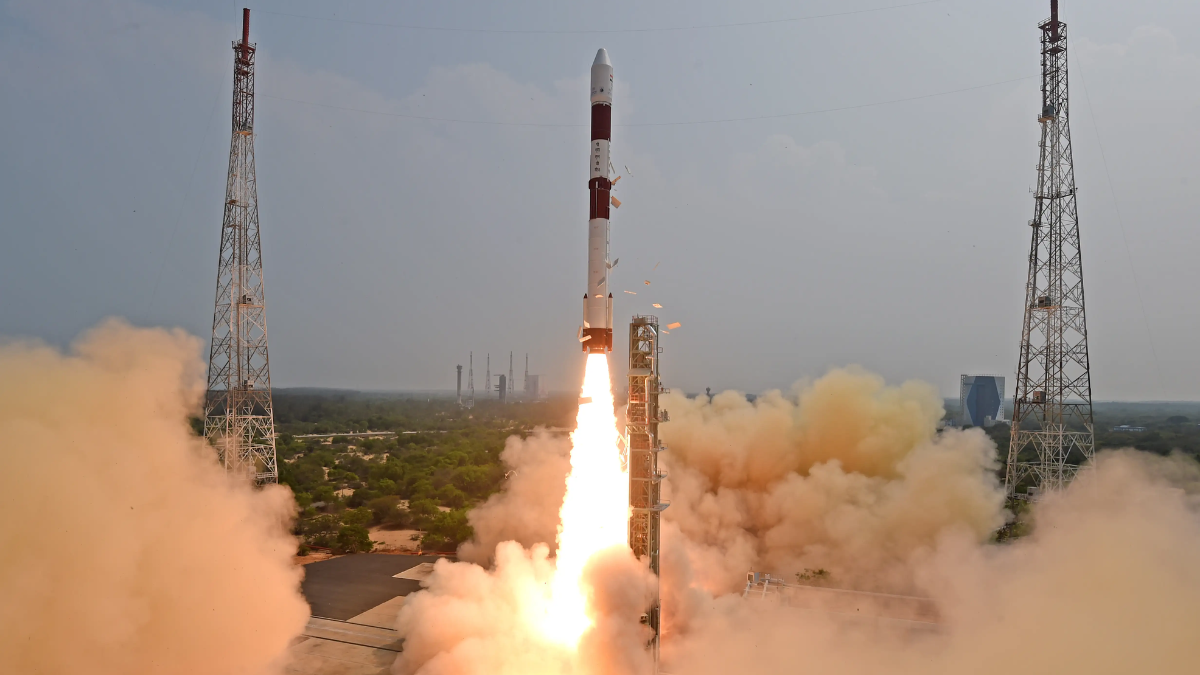
ESA’s Proba-3 mission, a groundbreaking project designed to simulate solar eclipses in space for studying the Sun’s corona, has officially left Europe and is now en route to its launch site in India. The dual-spacecraft mission departed from Redwire Space’s facility in Kruibeke, Belgium, and is on its way to the Satish Dhawan Space Centre near Chennai, where it will undergo final preparations for launch. The primary goal of Proba-3 is to create an artificial eclipse, allowing scientists to study the Sun’s outer atmosphere—an area that is usually only visible during brief moments of a natural eclipse on Earth.

The Proba-3 mission is a pioneering effort in space science and technology, involving two spacecraft: the Occulter and the Coronagraph. These two satellites will fly in formation with incredible precision, using one to cast a shadow on the other, effectively simulating the eclipse needed for the observation of the Sun’s corona. ESA Mission Manager Damien Galano emphasized the complexity of the mission, noting that achieving such precise formation flying, where the satellites must maintain an accuracy within a millimeter, required years of development. The mission is set to provide unprecedented insights into solar phenomena, giving scientists a clearer view of the Sun’s magnetic field and its impact on space weather.

Scheduled for launch on December 4, Proba-3 will be deployed aboard India’s PSLV-XL rocket. Once in orbit, the spacecraft will enter a highly elliptical trajectory, ranging from 600 kilometers to 60,000 kilometers above Earth. This specific orbit is crucial for enabling the formation flying required for the eclipse simulation, as it places the spacecraft at altitudes where the gravitational pull is weaker, reducing the amount of fuel needed for the precise movements. Despite some initial challenges, such as delays in air freight logistics that required the spacecraft’s batteries to be shipped separately, the mission is now on track for its December launch.

This mission marks a significant milestone in solar observation, as it provides a unique opportunity to study the Sun’s corona in greater detail than ever before. By mimicking the conditions of a solar eclipse, Proba-3 will give scientists access to crucial data about the Sun’s behavior and its effects on space weather, which can have far-reaching consequences for satellite operations and Earth’s communication systems. As the mission progresses, it is expected to contribute valuable knowledge to the field of heliophysics and deepen our understanding of the Sun’s dynamic nature.

Earth’s Brief ‘Second Moon’ 2024 PT5 Set to Depart as It Leaves Earth’s Orbit

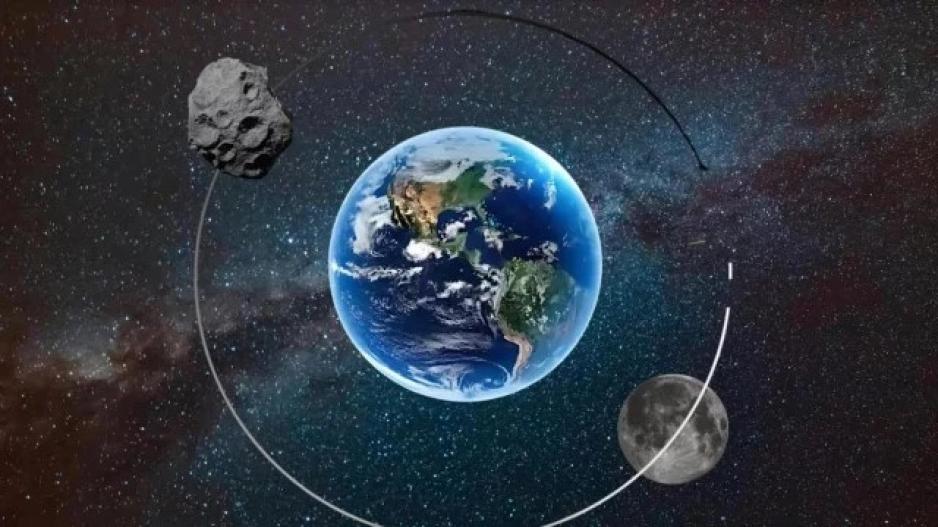
Earth has recently captured a small asteroid, 2024 PT5, temporarily turning it into a “second moon.” This rare occurrence, confirmed by teams from the Massachusetts Institute of Technology (MIT) and the Complutense University of Madrid, offers a fascinating glimpse into the phenomenon of “mini-moons”—tiny celestial objects that Earth occasionally snares into orbit for short periods. However, this temporary companion won’t remain for long. By mid-November 2024, 2024 PT5 is expected to escape Earth’s gravitational influence and continue its journey around the Sun.

The asteroid 2024 PT5 was first spotted on August 7, 2024, by NASA’s Asteroid Terrestrial-impact Last Alert System (ATLAS) at the Haleakala Observatory in Hawaii. Following this discovery, astronomers from the Complutense University conducted further observations using a high-powered telescope in Sutherland, South Africa. While Earth has captured such mini-moons before, these objects are often difficult to detect due to their small size and the brief nature of their orbits, making them elusive targets for astronomers.

Richard Binzel, a prominent astronomer at MIT, explained that advancements in telescope technology have made it easier to track these transient objects. “We’re only starting to observe these small objects with enough regularity to learn more about them,” Binzel said. This increasing ability to monitor mini-moons is a significant step forward in our understanding of near-Earth objects (NEOs), as it provides valuable data on how such bodies interact with Earth’s gravitational field. The brief capture of 2024 PT5 has generated significant interest among astronomers, eager to study the dynamics of small celestial bodies in Earth’s vicinity.

While the mini-moon’s visit is short-lived, it underscores the dynamic nature of Earth’s interaction with space objects. As astronomers continue to develop more advanced methods for detecting and tracking these transient moons, the scientific community is gaining deeper insights into the population of small asteroids that come close to Earth. This research could improve our understanding of the potential hazards posed by near-Earth objects and their role in the broader context of solar system dynamics.