
Long COVID Patients Face Slim Recovery Chances as Global Attention Shifts Away

After four years of struggling with severe long COVID symptoms like fatigue, pain, and panic attacks, Kenyan businesswoman Wachuka Gichohi is aware that she may never fully recover. Hearing phrases like “Feel better soon” has become especially difficult, as she’s had to accept that recovery might not come. New research now supports the notion that those with prolonged symptoms face diminished recovery odds, with the best chances occurring within the first six months after infection. For patients whose symptoms extend beyond two years, experts warn that a full recovery may be “very slim.”

Studies in the U.S. and U.K. indicate that people with mild initial infections or those who were vaccinated have a better shot at recovery within the first six months. After this period, especially beyond two years, recovery prospects decline significantly, according to Dr. Manoj Sivan, a rehabilitation medicine professor at the University of Leeds. He suggests that “persistent long COVID” should be seen as a chronic condition, similar to diseases like chronic fatigue syndrome or fibromyalgia.

The Waning Global Focus on Long COVID

Long COVID, which involves a range of symptoms from brain fog to joint pain, remains challenging for patients, with no definitive diagnostic tests or treatments available. While there are still advances in understanding risk factors, attention and funding for long COVID research are declining, especially in wealthier countries that initially funded large-scale studies. Patient advocates and researchers have noted that interest and resources for long COVID research have diminished, particularly in low- and middle-income countries where support was scarce to begin with.

Professor Amitava Banerjee of University College London, who is co-leading a study on long COVID treatments, argues that it should be approached as a chronic condition that can be managed rather than cured, similar to heart disease or arthritis.

Personal Experiences: Debilitating Effects and Coping Strategies

Leticia Soares, a 39-year-old researcher from Brazil, has battled with fatigue and chronic pain since contracting COVID in 2020. On good days, she manages to stay out of bed for about five hours. Soares, who is active in long COVID advocacy and research, points out that symptoms may improve temporarily only to return, creating a false sense of recovery. She describes the condition as “profoundly disabling,” requiring constant adjustments to her daily life.

Some patients have found relief through over-the-counter treatments like antihistamines, which a few specialists recommend due to their safety and preliminary evidence of symptom relief. Gichohi, whose doctor initially dismissed her symptoms, turned to a functional medicine practitioner who helped her explore holistic treatments like acupuncture and trauma therapy. She also moved to a quieter area near Mount Kenya to avoid overstimulation and manage her energy levels. Her approach has shifted from actively pursuing recovery to adapting to her condition.

Shannon Turner, a 39-year-old cabaret singer from Philadelphia, also faces ongoing challenges. Already managing autoimmune conditions before her COVID diagnosis, Turner experienced a significant resurgence of symptoms following a recent reinfection, leading to mobility issues that now require a walker. Despite her difficulties, Turner is committed to her music career, saying, “I don’t want to live my life in bed.”

The Road Ahead: Uncertain Outcomes and Long-Term Implications

While some research continues, a lack of global funding and standardized care makes it difficult to address the complexities of long COVID. Dr. Anita Jain, a specialist at the World Health Organization, acknowledges that a piecemeal approach to treatment is likely as scientific understanding progresses. For those enduring long COVID, each COVID wave brings the risk of reinfection, which studies suggest can worsen their symptoms.

With estimates of long COVID cases ranging between 65 million and 200 million worldwide, the condition represents a significant public health challenge. For millions of individuals, the path to recovery remains uncertain, demanding a balanced approach of coping and hope as scientific research evolves.

 

NASA’s Perseverance Rover Captures ‘Googly Eye’ Eclipse on Mars

NASA’s Perseverance rover, stationed in Mars’ Jezero Crater, recently captured a stunning celestial event as the Martian moon Phobos passed across the Sun. This moment, observed on September 30, provided a rare glimpse into the Martian sky and featured an intriguing “googly eye” effect, which was recorded by the rover’s Mastcam-Z camera. The eclipse offered a unique visual of Phobos’ orbit and helped scientists gain valuable data about the moon’s trajectory as it continues to slowly move closer to Mars. The footage released by NASA showcases the intricate dance of Mars’ moons and the dynamic nature of the Martian system.

The event unfolded as Perseverance observed Phobos casting its shadow across the Sun, creating a brief and distinctive visual effect. This “googly eye” effect occurred when Phobos partially blocked the sunlight, leaving a silhouette that was especially noticeable against the Martian backdrop. The eclipse, occurring on the 1,285th Martian day (sol) of the Perseverance mission, highlighted the moon’s rapid orbit around Mars. Phobos takes just 7.6 hours to complete one orbit, a much faster motion compared to Earth’s moon, which results in quick transits across the sky that last only about 30 seconds. This provides a fleeting but beautiful spectacle that is rarely visible from Earth.

Phobos, the larger of Mars’ two moons, follows an increasingly tight orbit around the Red Planet. Measuring around 27 kilometers at its widest point, Phobos appears much smaller in the Martian sky compared to Earth’s moon, and its proximity to Mars means that it crosses the sky more frequently. However, this close orbit comes at a cost: Phobos is gradually moving closer to Mars over time, and scientists predict that within the next 50 million years, it will either crash into the Martian surface or break apart, forming a ring around the planet. The periodic eclipses caused by Phobos’ orbit, including those recorded by Perseverance and previous rovers like Curiosity and Opportunity, have provided crucial insights into the moon’s orbit and its eventual fate.

This recent observation of Phobos’ eclipse adds to a growing body of knowledge about Mars and its moons. Each eclipse captured by rovers helps scientists refine their understanding of Phobos’ path, and in turn, offers important clues about the evolution of Mars’ natural satellites. As Perseverance continues its mission on Mars, more such events are expected, providing scientists with deeper insights into the Martian system and the behavior of its moons. These observations not only enrich our understanding of Mars’ present but also offer a glimpse into the future of the Red Planet and its celestial companions

South Korea’s KASA and NASA Collaborate on Launch of CODEX Solar Coronagraph to ISS

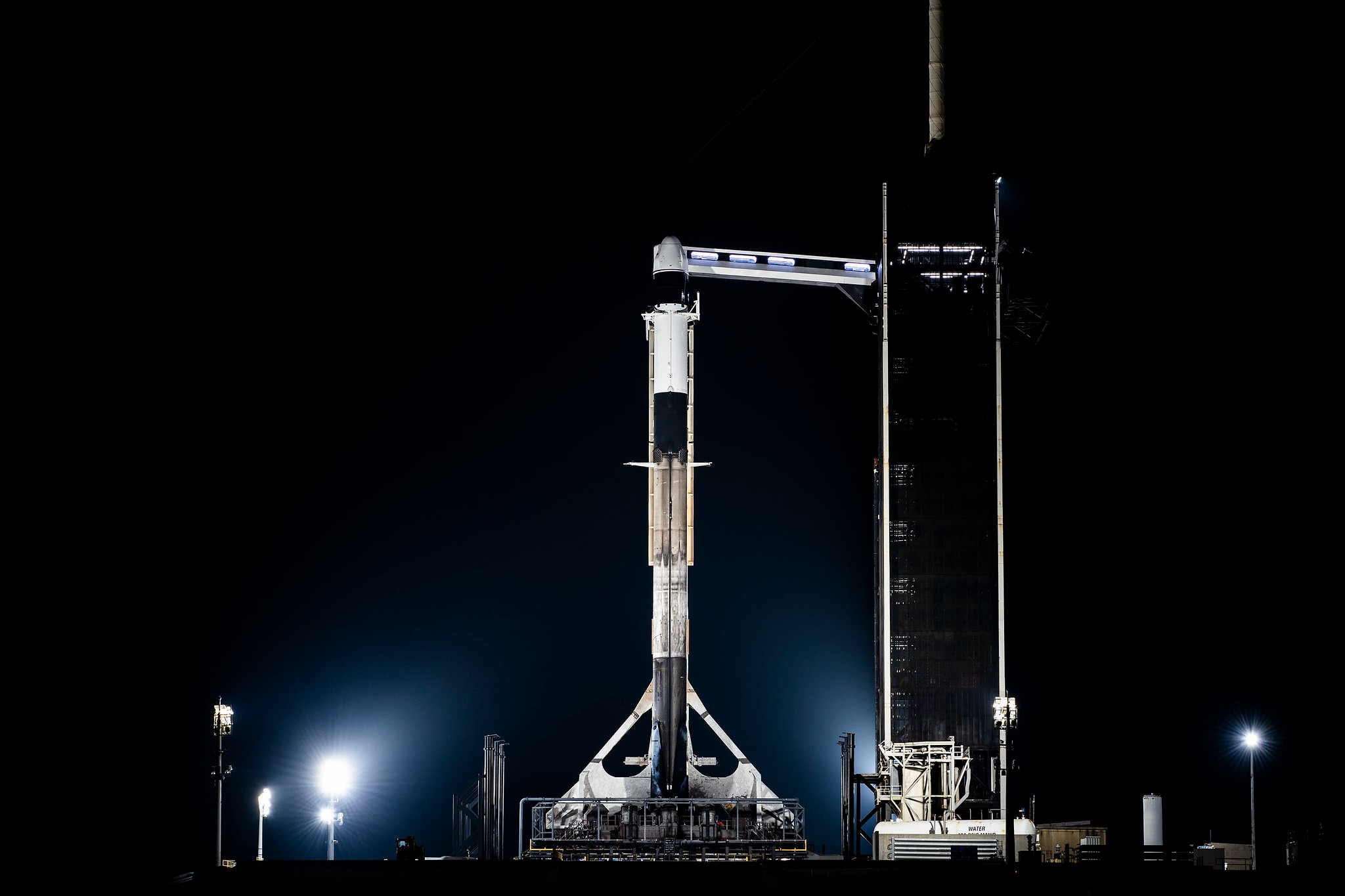
South Korea’s space agency, the Korea Aerospace Research Institute (KASA), has announced a groundbreaking collaboration with NASA to launch a solar coronagraph to the International Space Station (ISS). The instrument, developed as part of the Coronal Diagnostic Experiment (CODEX), is designed to study the Sun’s corona and the solar wind, which consists of charged particles emitted from the Sun’s outer atmosphere. This crucial mission, which aims to expand our understanding of solar phenomena, will be launched aboard SpaceX’s Falcon 9 rocket from Florida’s Kennedy Space Center, scheduled for Monday, according to Yonhap News Agency.

The CODEX project represents a major achievement in space science, as it will be the first coronagraph capable of measuring key solar wind parameters such as temperature, velocity, and density. This groundbreaking technology is expected to provide valuable data about the Sun’s outer atmosphere and the solar wind, which can have significant effects on space weather. Once aboard the ISS, CODEX will be mounted on the station’s express logistics carrier, offering approximately 55 minutes of solar observation during each 90-minute orbit around Earth. The mission’s findings could play a critical role in improving space weather forecasting and enhancing our ability to predict solar storms.

The collaboration between KASA and NASA on CODEX is part of a broader expansion of South Korea’s role in space exploration. This partnership also extends to the Artemis lunar exploration program, with KASA contributing to research on sustainable lunar exploration and future Mars mission preparations. South Korea’s involvement in the Artemis program marks an important milestone, as the country becomes the fifth nation to officially cooperate with NASA on lunar and interplanetary exploration. This strengthened partnership highlights the growing significance of international cooperation in advancing space science and exploration.

Through this mission and the broader space cooperation initiatives, South Korea and NASA aim to make significant strides in understanding space weather, solar dynamics, and the broader challenges of space exploration. As both countries continue to expand their partnership in space, the CODEX project serves as a symbol of their commitment to advancing scientific knowledge and enhancing global space exploration capabilities. The mission not only represents a technological breakthrough but also reinforces the importance of international collaboration in addressing the challenges of space science.