
2022 Tonga Eruption: How Public Observations and Scientific Data Reveal the Global Impact of Hunga Volcano

On January 15, 2022, the Hunga volcano near Tonga erupted in a dramatic and explosive event, sending shockwaves that rippled across the globe. The eruption coincided with Cyclone Cody, which compounded the chaotic environmental conditions in the region. This massive volcanic explosion produced a shockwave so powerful that it generated low-frequency booming sounds that could be heard as far away as New Zealand and Alaska. In addition, the eruption caused a significant tsunami, affecting coastlines thousands of miles from the epicenter, cementing it as one of the most impactful volcanic events in recent history.

In the aftermath of the eruption, GNS Science, New Zealand’s geological agency, sought to gather public observations to complement the data collected by scientific instruments. They encouraged residents to share their experiences, resulting in over 2,100 responses. The reports varied widely, with individuals describing rumbling sounds, sensations of pressure in their ears, windows shaking, and even unusual animal behavior. These accounts provided valuable context and perspective, filling in gaps where scientific instruments alone might have missed certain human experiences of the event.

The public’s input proved instrumental in helping scientists better understand how the eruption’s effects were felt across New Zealand. Dr. Emily Lane, a Senior Scientist at GNS, explained that by comparing the public’s reports with seismic and atmospheric data, researchers could identify patterns in how the eruption’s shockwave traveled across the country. Most of the loud “booms” were reported from the North Island, indicating that the pressure wave moved from north to south. This kind of pattern recognition, based on public input, offered insights into the eruption’s dynamics that were not immediately visible through standard measurements.

This collaborative effort between the scientific community and the public highlighted the importance of real-time observations in understanding the broader impact of natural disasters. The combination of advanced instruments and firsthand accounts allowed researchers to build a more comprehensive picture of the Tonga eruption’s global consequences. It also underscored the valuable role that local residents can play in disaster research, offering data that may not be captured through traditional scientific methods.

New Geodynamic Model Sheds Light on Erosion Process of North China Craton

Researchers from the China University of Geosciences in Beijing, led by Professor Shaofeng Liu, have provided new insights into the North China Craton (NCC), revealing the complex process of its gradual erosion over millions of years. The team’s study, published in Nature Geoscience, introduces a groundbreaking geodynamic mantle-flow model that challenges long-standing assumptions about the stability of ancient continental crust. This model uncovers the tectonic forces that have destabilized the NCC, particularly focusing on events that began in the Mesozoic era, a time of significant geological change.

Unveiling the Tectonic Forces Behind the Erosion

The research suggests that beneath the Eurasian plate, where the NCC resides, an unusual form of tectonic movement called flat-slab subduction played a critical role in the craton’s erosion. Unlike typical subduction, where one tectonic plate sinks directly beneath another, the Izanagi plate slid horizontally under the NCC’s crust. This horizontal movement weakened the crust’s foundation, setting off a series of chemical reactions that gradually eroded the once-stable base of the craton. The study reconstructs these ancient tectonic events using seismic and stratigraphic data, offering a fresh perspective on the forces that reshaped this significant portion of Earth’s continental crust.

Three Key Phases of Deformation

The researchers have identified three distinct stages in the deformation of the NCC, each driven by different tectonic interactions. The first stage began with the subduction of the Izanagi plate, which applied horizontal pressure on the NCC, altering its composition. As the subduction process progressed, the plate eventually rolled back, leading to a thinning of the lithosphere in the second stage. This rollback also caused surface uplift and the formation of rift basins, reshaping the landscape above. In the final phase, a mantle wedge—a zone of partially melted material—formed between the sinking plate and the craton, further weakening the foundation and promoting volcanic activity.

Implications for Understanding Craton Stability

This research significantly alters the way scientists view the stability and evolution of ancient cratons. While cratons were once thought to be immutable and stable over geological timescales, this new model highlights the dynamic forces that can gradually erode and reshape even the most ancient parts of Earth’s crust. By detailing the stages of deformation and the processes driving the erosion of the NCC, the study provides a deeper understanding of how tectonic interactions at the Earth’s core can have long-lasting impacts on the surface. These findings could have broader implications for understanding the evolution of other ancient continental cratons worldwide.

Researchers Create Cell-Level Wearable Devices to Rejuvenate Neuron Function

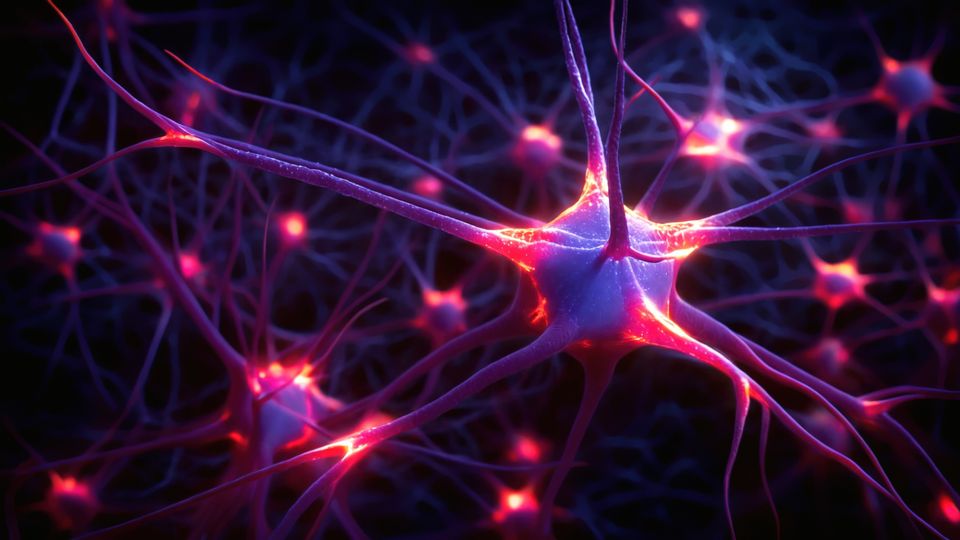
Scientists at the Massachusetts Institute of Technology (MIT) have made a revolutionary breakthrough in the field of neuroscience with the development of cell-level wearable devices that could offer new hope for treating neurological disorders, such as multiple sclerosis (MS). These innovative micro-scale devices are designed to wrap around individual neurons, mimicking the natural myelin sheath to restore disrupted electrical signaling in neurodegenerative diseases. The devices are battery-free and powered by light, providing a non-invasive method to monitor and possibly modulate neuronal activity within the body.

Restoring Function with Synthetic Myelin

The groundbreaking technology involves soft polymer-based devices that can conform to the intricate shapes of axons and dendrites when exposed to specific wavelengths of light. This adaptability allows the devices to encase the neuronal structures without damaging delicate cellular components, making it a significant advancement for repairing nerve damage. Deblina Sarkar, the head of MIT’s Nano-Cybernetic Biotrek Lab, emphasizes the potential of these devices to create “symbiotic neural interfaces,” closely interacting with the neurons to restore their function. By wrapping around the axons—the neural wiring responsible for transmitting electrical impulses—the devices act as synthetic myelin, offering the possibility of repairing and rejuvenating damaged neurons.

Microelectronics Meets Biology

At the heart of these cell-wearable devices is azobenzene, a light-sensitive material. When activated by specific light wavelengths, azobenzene films transform into microtubes that securely wrap around neuronal structures. This highly specialized material and the novel fabrication method allow for precise control over the devices’ interaction with the neurons. According to Marta J. I. Airaghi Leccardi, lead author of the study and a Novartis Innovation Fellow, the team has developed a scalable technique to produce thousands of these devices without the need for a semiconductor cleanroom. This breakthrough opens the door to mass production, making it possible to create affordable and accessible therapies for patients with neurological disorders.

Implications for Therapeutic Applications

The potential applications of these cell-level wearable devices are vast. Beyond the treatment of MS, they could help patients with a variety of neurodegenerative conditions by restoring lost functions at the cellular level. By enabling more precise and localized interventions, these devices could offer targeted treatments that are both effective and minimally invasive. As the technology matures, it could lead to new, revolutionary ways to treat nerve damage, offering hope to millions of people living with conditions that impair neuronal function.