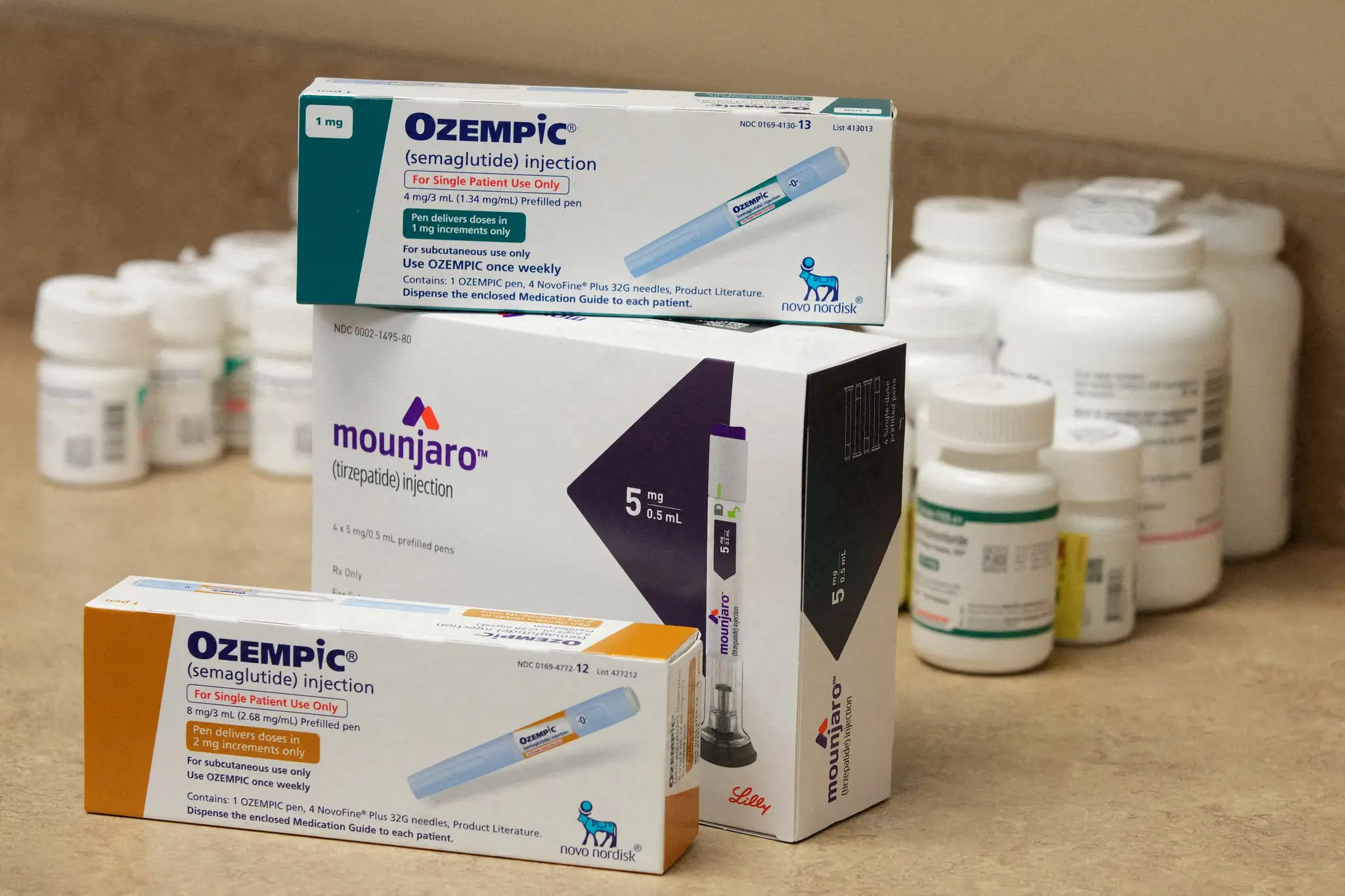
Medicaid Dominates U.S. Coverage for Novo Nordisk and Eli Lilly Weight-Loss Drugs

Government Programs Drive Access to GLP-1 Drugs

State Medicaid programs and federal employee health plans are the leading sources of coverage for popular new weight-loss drugs, including Novo Nordisk’s Wegovy and Eli Lilly’s Zepbound. According to data from the AXIACI Obesity Coverage Nexus, government-funded plans provide access to these treatments for over 52 million Americans, significantly outpacing private employer and commercial insurance coverage.

Coverage Breakdown:

  • Medicaid Programs: Cover 31.6 million low-income individuals.
  • Federal Employee Plans: Provide access to 14.6 million federal workers and dependents.
  • State and Local Employee Plans: Cover an additional 6 million individuals.

In contrast, approximately 13.7 million Americans under commercial health plans have coverage for these drugs. An additional estimated 10.7 million privately insured individuals may also have coverage, bringing the total private sector figure to a potential 24.4 million—still less than half of government-backed coverage.


Barriers to Broader Coverage

The discrepancy between public and private plans highlights employer hesitancy to absorb the costs of GLP-1 drugs, which carry list prices exceeding $1,000 per month. Kathy Hempstead of the Robert Wood Johnson Foundation attributes this to rising health insurance premiums, which make funding weight-loss treatments an added challenge for private employers.

Many private insurers impose stringent prerequisites, such as dietary consultations or lifestyle programs, before approving coverage. Additionally, patients often face limited drug availability and may turn to cheaper alternatives from compounding pharmacies.


Impact on Drugmakers and Patients

While Medicaid’s steep drug price discounts may affect Novo Nordisk and Eli Lilly’s profit margins, higher obesity rates among Medicaid recipients present a significant market opportunity. For many patients, insurance coverage is the only feasible way to access these expensive medications, which can be required for long-term use.

Both companies are lobbying for broader insurance coverage, emphasizing the societal cost savings from reducing obesity-related conditions like heart disease and diabetes. Novo estimates that about half of U.S. adults with obesity now have access to weight-loss medications. However, Lilly acknowledges gaps in commercial insurance coverage, citing ongoing stigma and mismanagement of obesity as barriers to treatment.


State-by-State Medicaid Approaches

Currently, 14 state Medicaid programs, including California, Pennsylvania, and North Carolina, offer coverage for GLP-1 drugs to treat obesity. Seventeen states extend coverage to public employees and their dependents, with five—Connecticut, Delaware, Kansas, Massachusetts, and Michigan—offering both.

Medicare, the federal program for individuals 65 and older, does not cover GLP-1 drugs for weight loss, limiting its use to managing type 2 diabetes and cardiovascular disease.

Christine Ferguson, a healthcare policy expert, noted the fragmented nature of state decisions on coverage, saying, “Everyone is being very cautious here,” with no clear national pattern emerging yet.


Future of GLP-1 Coverage

As the use of GLP-1 receptor agonists continues to reshape obesity treatment in the U.S., the divide between public and private insurance coverage underscores ongoing challenges in integrating weight-loss drugs into broader healthcare frameworks. Drugmakers are likely to intensify advocacy efforts for expanded insurance support, seeking to address both financial and cultural barriers to care.


Astronomers Discover Black Hole Devouring Matter at 40 Times Its Theoretical Limit

Astronomers Detect Record-Breaking Black Hole Consuming Matter at Unprecedented Rate
A team of astronomers, utilizing data from NASA’s James Webb Space Telescope (JWST) and the Chandra X-ray Observatory, has identified a black hole that is consuming matter at an astonishing rate, far exceeding theoretical limits. The black hole, named LID-568, is located in a galaxy formed just 1.5 billion years after the Big Bang, offering a rare glimpse into the early universe. This discovery challenges existing models of black hole growth, suggesting that supermassive black holes may have formed much more rapidly than previously thought.

Revolutionary Observation Technique Offers New Insights
The breakthrough was led by Dr. Hyewon Suh from the International Gemini Observatory at NSF NOIRLab, with the team identifying LID-568 within a cluster of galaxies that emit bright X-rays despite being faint in the visible spectrum. In a departure from traditional observational methods, the researchers employed JWST’s integral field spectrograph in the Near Infrared Spectrograph (NIRSpec) to capture data from every pixel in the target area. This innovative approach allowed for precise positioning of the black hole, revealing significant gas outflows surrounding it.

Intense Feeding and Rapid Growth
The outflows detected around LID-568 suggest that the black hole is likely undergoing periods of rapid, short-lived feeding, contributing to its extraordinary growth rate. Dr. Emanuele Farina, a co-author of the study, emphasized the importance of the new technique, noting that it was essential to capture the faint signals coming from such a distant and early cosmic object. These findings could redefine our understanding of how supermassive black holes form and evolve, providing key insights into their growth in the early universe.

Implications for Understanding Early Universe Phenomena
The discovery of LID-568 challenges existing theories of black hole formation, particularly how these massive objects could grow so quickly in the early stages of the universe. As astronomers continue to study this and other similar galaxies, they may uncover new mechanisms that explain the rapid growth of supermassive black holes. This research not only pushes the boundaries of astrophysics but also sheds light on the processes that shaped the universe as we know it.

Largest Ocean Predator-Prey Encounter Ever Recorded Captured Near Norway’s Coast

A groundbreaking predator-prey event in the coastal waters of Norway has recently captivated the scientific community. This remarkable spectacle, which represents the largest observed marine feeding event to date, has revealed fascinating insights into the complex dynamics of the ocean’s food chain. Led by Professor Nicholas Makris from MIT’s Department of Mechanical and Ocean Engineering, a team of researchers witnessed a vast congregation of cod aggressively pursuing spawning capelin, offering a fresh perspective on the behavioral patterns of these species.

Every February, billions of capelin, small Arctic fish, embark on an essential migration from the Arctic ice edge to Norway’s coastline to spawn. This migration is crucial for the survival of numerous marine species, as it provides a rich food source for seabirds, whales, and predatory fish such as the Atlantic cod. During this time, cod take full advantage of the capelin’s presence, building up energy reserves that will sustain them throughout the year. The predator-prey relationship between cod and capelin is usually well-balanced, but disruptions to this dynamic can have far-reaching consequences on the broader Arctic ecosystem.

Professor Makris and his team used an innovative imaging technology known as Ocean Acoustic Waveguide Remote Sensing (OAWRS) to track these massive fish movements. This technique involves sending sound waves deep beneath the water’s surface to map fish populations over large areas in real-time. The method allows researchers to observe the intricate details of predator-prey interactions across vast distances, offering a more comprehensive understanding of these underwater phenomena. Additionally, the team integrated multispectral acoustic mapping, a novel approach that identifies specific fish species by analyzing the unique resonant frequencies of their swim bladders.

By differentiating between species such as cod and capelin based on the sounds they emit, researchers were able to monitor and document the event with remarkable precision. This technological advancement marks a significant leap forward in marine biology, allowing scientists to observe complex ecological interactions that were previously difficult to capture. The findings from this study not only expand our understanding of marine life but also underscore the critical importance of the capelin migration in maintaining the delicate balance of the Arctic ecosystem.