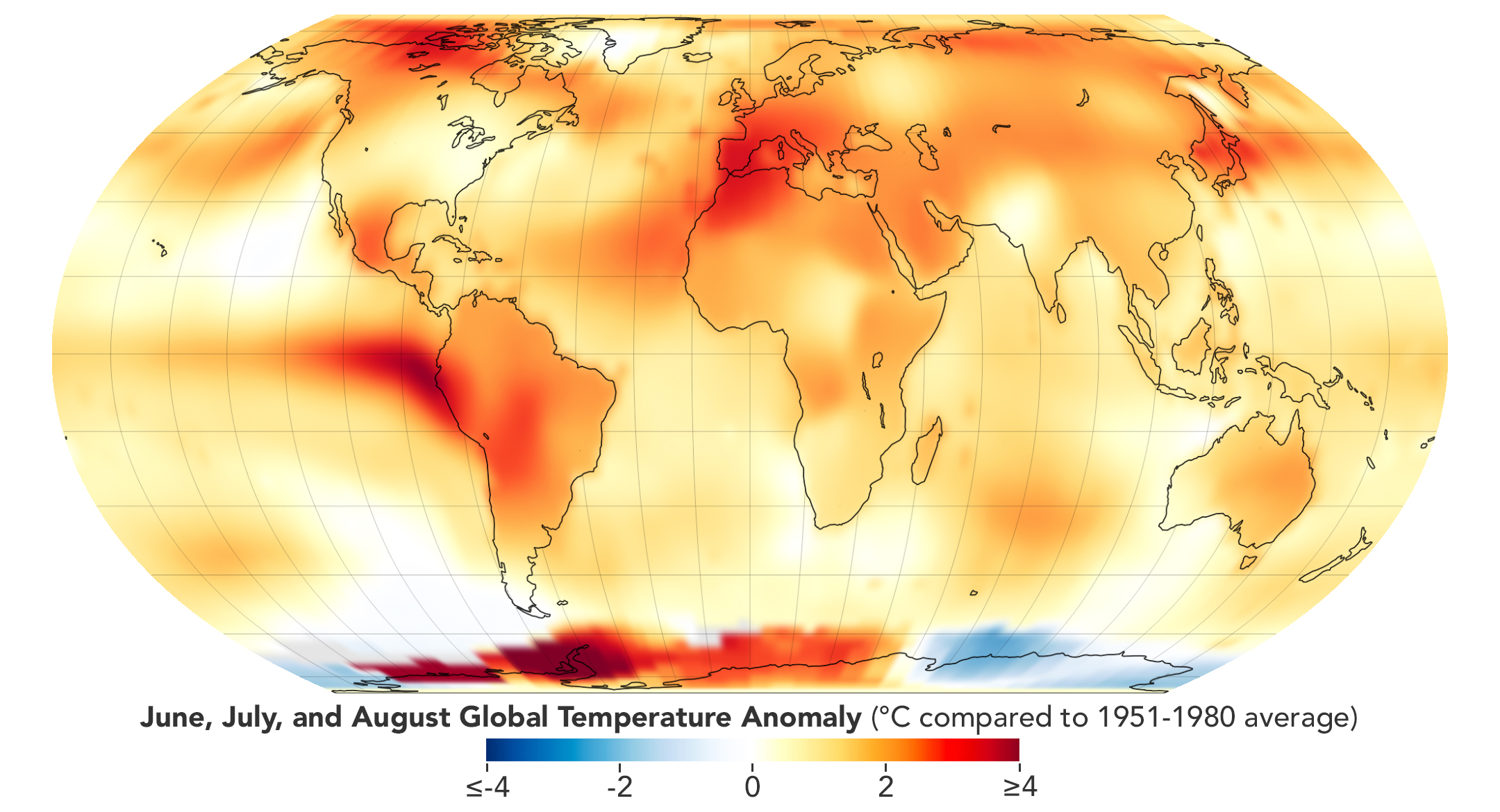
El Niño Contributes to Unprecedented Global Temperature Rise in 2023, Studies Show

Global temperatures have reached unprecedented levels in 2023, raising alarm bells among climate scientists worldwide. With an average increase of nearly 0.3°C compared to the previous year, this dramatic rise has left many experts puzzled about the underlying causes. Notably, James Hansen, a prominent climate scientist, indicated that this could signify the onset of a new phase in global warming, further accelerated by a decrease in air pollution. Gavin Schmidt, director of NASA’s Goddard Institute for Space Studies, has also pointed out that this unusual temperature spike might expose gaps in our current understanding of climate feedback mechanisms.

Recent research highlights the critical role of El Niño in driving these temperature anomalies. The tropical Pacific Ocean’s shifting conditions, particularly the transition from a prolonged La Niña phase to a strong El Niño event, have significant implications for global climate patterns. Traditionally, La Niña conditions occur when trade winds push warm surface waters towards Indonesia, allowing cooler, deeper waters to rise in the eastern Pacific. This process typically leads to lower global temperatures, creating a stark contrast with El Niño’s effects.

During an El Niño event, warmer waters are pushed back eastward, disrupting the ocean’s natural cooling effect. This phenomenon effectively “turns off” the ocean’s role as an “air conditioner,” leading to an increase in global temperatures. Studies led by Shiv Priyam Raghuraman at the University of Illinois Urbana-Champaign have further reinforced the connection between the end of La Niña and the emergence of a robust El Niño, attributing the spike in temperatures in 2023 to this climatic shift.

The implications of this temperature rise are profound, raising concerns about the accelerating effects of climate change and the urgent need for a deeper understanding of climate dynamics. As scientists continue to investigate the intricacies of these phenomena, the findings underscore the importance of monitoring both air pollution levels and oceanic conditions. Moving forward, addressing the challenges posed by climate change will require a collaborative global effort to enhance our understanding of these complex systems and implement effective mitigation strategies.


Discovery of Head of Ancient Car-Sized Millipede Provides Insights into Evolutionary Mysteries

A remarkable fossil has been unearthed, revealing the head of Arthropleura, a gigantic millipede-like arthropod that roamed the Earth approximately 346 to 290 million years ago. This creature was one of the largest arthropods ever recorded, measuring up to 8.5 feet (2.6 meters) in length. The discovery, made in Montceau-les-Mines, France, marks the first time the head of Arthropleura has been found and sheds light on the longstanding evolutionary questions surrounding this ancient organism. Mickaël Lheritier, a paleontologist at Claude Bernard Lyon 1 University, emphasized the importance of this find, particularly the new insights it provides into the creature’s anatomical features.

The fossil comprises two juvenile specimens of Arthropleura, meticulously preserved in rock. Researchers utilized advanced CT scanning technology to examine the fossils, revealing distinctive features such as stalked eyes and mandibles reminiscent of those found in centipedes. These characteristics had perplexed scientists for years, as Arthropleura exhibited traits common to both millipedes and centipedes. The new evidence offers a clearer understanding of where Arthropleura fits within the complex arthropod family tree, bridging gaps in our knowledge of its evolutionary history.

The unique features of the newly discovered head provide valuable insights into the life cycle of Arthropleura. The presence of stalked eyes is particularly intriguing, as such adaptations are typically associated with aquatic species rather than terrestrial arthropods. This has led researchers to propose that juvenile Arthropleura may have been semi-aquatic, potentially spending part of their early lives in water before transitioning to a land-based existence as adults. This revelation adds a fascinating layer to our understanding of how these ancient creatures adapted to their environments.

Overall, this discovery not only enriches our knowledge of Arthropleura but also enhances our comprehension of the evolutionary trajectories of ancient arthropods. By piecing together the anatomical features and possible life habits of Arthropleura, scientists are beginning to unravel the mysteries of prehistoric ecosystems and the diverse forms of life that inhabited them. As research continues, this fossil could pave the way for further exploration into the evolutionary links between ancient and modern arthropods, opening new avenues in the study of life’s history on Earth.

NASA’s Europa Clipper Mission Launches Today: Watch Live Online for Exclusive Details and Updates

NASA’s Europa Clipper mission is poised to embark on an exciting journey to Jupiter’s enigmatic moon, Europa, with its launch scheduled for October 14, 2024, at 12:06 PM EDT (9:36 PM IST). The spacecraft will lift off aboard a SpaceX Falcon Heavy rocket from Launch Complex 39A at NASA’s Kennedy Space Center in Florida. This mission holds immense promise as it aims to investigate Europa’s potential to support life, with the spacecraft expected to reach its destination by April 2030. By closely studying Europa’s icy surface and subsurface ocean, scientists hope to gain crucial insights into the moon’s habitability and the broader implications for life beyond Earth.

To celebrate the launch, NASA will host a series of festivities on launch day, starting with live coverage from 11:00 AM EDT. This event will be accessible to viewers around the world via multiple platforms, including YouTube, NASA+, and various social media channels such as X, Twitch, and KSC Facebook. For Spanish-speaking audiences, NASAes will provide coverage on YouTube and NASA+. The extensive coverage reflects NASA’s commitment to transparency and public engagement, allowing space enthusiasts to witness the critical moments leading up to the launch.

For those looking to enhance their launch day experience, NASA is offering several opportunities for public participation. Aspiring virtual guests can sign up to receive exclusive mission resources and a commemorative stamp for their virtual passport, making the experience even more memorable. Additionally, NASA encourages fans to host their own launch watch parties, providing resources through their Launch Party Hub. This initiative not only fosters community engagement but also enables individuals to share their excitement about space exploration with friends and family.

The Europa Clipper mission represents a major milestone in planetary science, promising to unravel the mysteries surrounding one of the most intriguing bodies in our solar system. As the spacecraft prepares for its groundbreaking journey, the involvement of the public through virtual participation and watch parties serves as a reminder of the collaborative spirit of space exploration. With each mission, NASA continues to inspire curiosity and wonder about the universe, inviting everyone to be part of this incredible adventure.