Archaeologists Unearth 50 Viking Age Burials in Denmark: Key Insights and Discoveries

Remarkable Discovery of 50 Viking Age Burials in Denmark: Unveiling Insights into a Lost Era

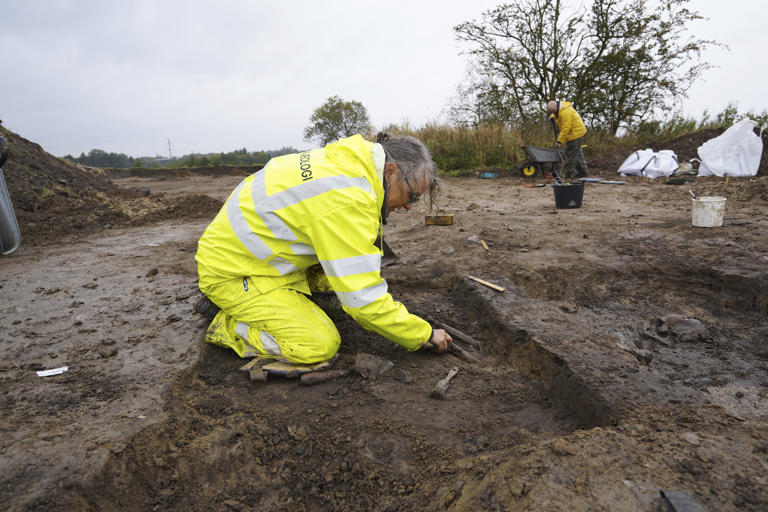
A groundbreaking archaeological discovery in Denmark has unveiled a burial ground containing approximately 50 Viking Age individuals, dating back to the 900s. This significant find was made during preparatory work for electrical cable installation near the village of Åsum on the island of Funen. Over the past six months, archaeologists from Museum Odense have excavated these graves, providing a unique opportunity to study human remains from a pivotal era in Scandinavian history.

One of the most noteworthy aspects of this discovery is the unusual preservation of the skeletal remains, which is a rarity in Scandinavia due to the region’s acidic soil that often hampers bone retention. The excavation of 50 graves represents a critical breakthrough, as it allows researchers to conduct various scientific analyses that could offer insights into the health, diet, and origins of the individuals interred at the site. Archaeologist Michael Borre Lundø from Museum Odense emphasized the exceptional nature of this find, highlighting its potential to enhance our understanding of Viking culture and society.

The burial ground not only provides a glimpse into the physical remains of the Viking Age but also offers insights into the social hierarchy of the time. Many of the individuals buried at this site appear to have held high status, as evidenced by the grave goods found alongside them. For instance, one notable burial features a woman interred in a Viking wagon, surrounded by luxurious items that include a beautiful glass bead necklace, an iron key, a knife adorned with a silver-threaded handle, and a small glass shard likely used as an amulet. These artifacts indicate the importance of burial customs and the significance of material wealth in Viking society.

In addition to personal items, the graves may also contain evidence of burial practices and rituals that can help researchers piece together the cultural practices of the Vikings. The presence of certain artifacts may provide clues about the individuals’ occupations, social standing, and even their beliefs about the afterlife. As archaeologists continue to analyze the site, they hope to uncover more information about the relationships between those buried and the broader Viking community.

This discovery has sparked excitement within the archaeological community, as it comes at a time when interest in Viking history is at an all-time high. The Viking Age, known for its maritime exploration, trade, and cultural exchange, remains a fascinating subject for historians and enthusiasts alike. By shedding light on the lives and customs of those who lived during this era, the findings from Åsum could significantly enhance our understanding of Viking society and its impact on the region.

As research progresses, the artifacts and remains from this burial site are expected to provide a wealth of information, potentially leading to new interpretations of Viking life and culture. The excavation serves as a reminder of the importance of archaeological work in uncovering the past, and it underscores the ongoing relevance of Viking heritage in modern Denmark. With continued study and analysis, the findings from this burial ground may not only illuminate the lives of those who came before us but also inspire a deeper appreciation for the rich history that shapes our present.

Hubble Observations Reveal Supermassive Black Hole Jets Linked to Surge in Nova Explosions

Hubble Discovers Connection Between Supermassive Black Hole Jets and Increased Nova Explosions

At the core of most large galaxies resides a supermassive black hole, a cosmic entity that significantly influences the dynamics of its surrounding environment. These black holes are known for their voracious appetite for energy and matter, leading to the generation of powerful jets of plasma that travel at nearly the speed of light. A prime example is the supermassive black hole located in Messier 87, which is situated approximately 54 million light-years from Earth and produces jets that extend over 3,000 light-years into space. These jets are not merely a byproduct of black hole activity; they play a crucial role in shaping the galaxies around them.

Recent observations from the Hubble Space Telescope have brought to light an intriguing phenomenon: double-star systems located near these supermassive black hole jets are experiencing a notable increase in nova explosions. Typically, these systems consist of a normal star and a white dwarf. When the normal star expands during its life cycle, it can shed material that becomes attracted to the dense white dwarf. This material accumulation eventually leads to a catastrophic explosion known as a nova. The proximity to the powerful jets generated by the black hole seems to enhance this explosive process, suggesting a fascinating interplay between black holes and their stellar neighbors.

Research conducted by astronomers, including Alec Lessing from Stanford University, highlights the significance of these findings. Lessing remarked on the implications of the study, stating, “This means there’s something missing from our understanding of how black hole jets interact with their surroundings.” The research team collected data over a period of nine months, revealing a statistically significant correlation between the activity of black hole jets and the increased frequency of nova explosions in the vicinity. This correlation indicates that the influence of supermassive black holes extends beyond their immediate vicinity and may have broader implications for stellar evolution and galactic dynamics.

While the exact mechanism by which black hole jets enhance nova activity remains uncertain, the research opens new avenues for exploration in astrophysics. Understanding the relationship between supermassive black holes and nova explosions could provide insights into the lifecycle of stars and the intricate interactions that occur within galaxies. The findings also raise questions about the role of other cosmic phenomena in influencing stellar behavior, prompting further investigation into the nature of these explosive events.

Looking ahead, researchers are eager to delve deeper into the dynamics of black hole jets and their impact on surrounding celestial bodies. Future observations, potentially utilizing advanced telescopes and monitoring systems, may provide additional data to unravel the complexities of these interactions. By enhancing our understanding of how supermassive black holes influence their environments, scientists can piece together a more comprehensive picture of galactic evolution.

In summary, the discovery of a link between supermassive black hole jets and increased nova explosions signifies a noteworthy advancement in our understanding of cosmic dynamics. As researchers continue to study this relationship, we may uncover new aspects of the universe that challenge existing theories and expand our knowledge of the intricate tapestry of celestial phenomena.

Scientists Discover Thriving Ecosystem Beneath Seafloor’s Volcanic Caves

A team of scientists has made an astonishing discovery of vibrant animal communities, including tube worms and snails, living in volcanic caves beneath the seafloor. This newly uncovered ecosystem was found during a 30-day research expedition aboard the Schmidt Ocean Institute’s vessel, Falkor (too), exploring an underwater volcano along the East Pacific Rise near Central America.

This volcanic ridge, formed by tectonic plate activity, is known for its hydrothermal vents — openings in the ocean floor where seawater meets hot magma to create deep-sea hot springs. These vents have long been studied for their unique ecosystems, which support life at extreme ocean depths. However, the area beneath these vents had largely remained unexplored until now.

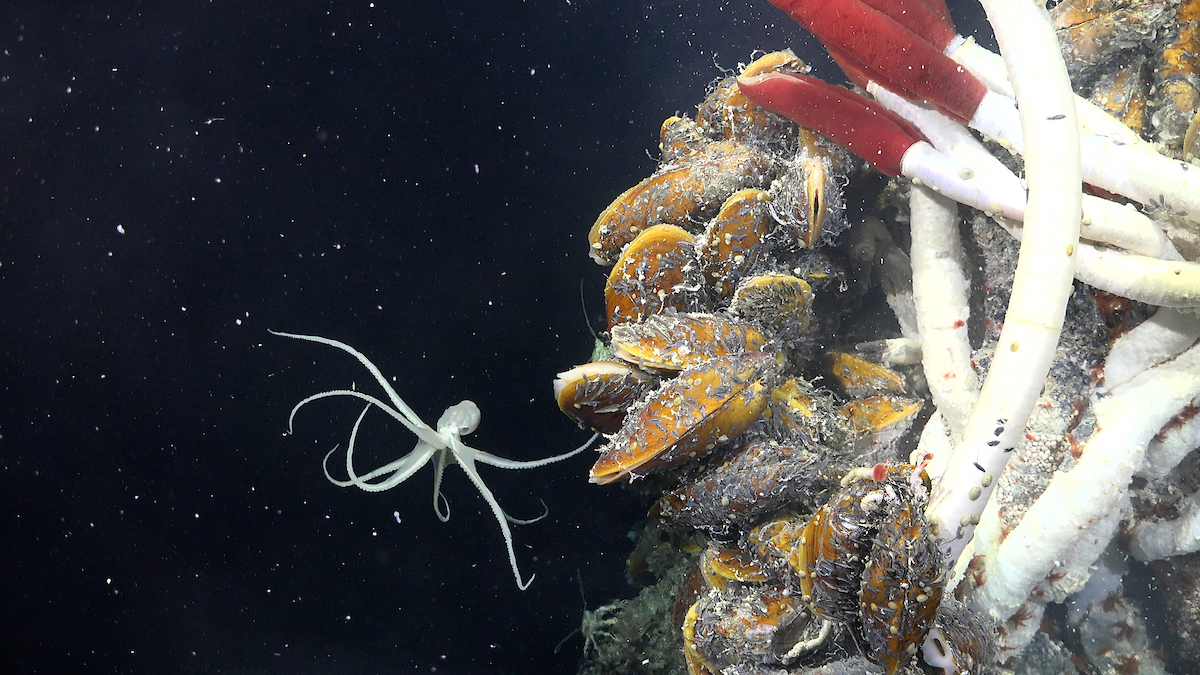
Using a remotely operated vehicle (ROV) named SuBastian, researchers uncovered caves beneath the seafloor, revealing thriving ecosystems in cavities teeming with tube worms up to 1.6 feet long, snails, and other animals. This discovery suggests that the seafloor and the subseafloor ecosystems are interconnected, with life existing in surprising abundance both above and below the ocean floor.

This remarkable ecosystem was first observed in the summer of 2023, and findings were recently published in Nature Communications. Dr. Sabine Gollner, a marine biologist from the Royal Netherlands Institute for Sea Research, expressed her amazement at the discovery: “Animals are able to live beneath hydrothermal vents, and that, to me, is mind-blowing.”

For decades, scientists have studied life around hydrothermal vents, observing how foundational species such as tube worms can colonize new vent sites within a few years, thanks to tectonic shifts that generate new vents. While microbial life beneath the seafloor has been suggested before, this study provides the first direct evidence of large animals inhabiting subterranean caves connected to hydrothermal systems.

Picture background

The research team, led by Dr. Monika Bright from the University of Vienna, designed an experiment to collect samples from cracks in the seafloor, 8,251 feet below the surface. Using the SuBastian ROV, they drilled into rocks and flipped over chunks of the volcanic crust. What they found was a hidden network of water-filled cavities at around 75 degrees Fahrenheit, supporting tube worms, snails, and chemosynthetic bacteria — organisms that survive by converting chemical reactions into energy rather than relying on sunlight.

This discovery has significant implications for understanding the deep-sea environment. Previously, scientists believed that deep-sea life was mostly restricted to the surface of the seafloor. However, this revelation opens up the possibility that many more ecosystems remain hidden beneath the ocean floor. Marine biologist Alex Rogers, who was not involved in the study, commented that this finding expands our knowledge of vent ecosystems and suggests there may be more life in the deep ocean than previously documented.

The research raises intriguing questions about how extensive these subseafloor ecosystems are and whether they exist beneath all hydrothermal vents. These underground habitats could persist long after vents become inactive, providing potential new homes for other species.

As researchers continue to explore this “underworld” of the seafloor, they caution that extreme care must be taken when studying such fragile ecosystems. During their expedition, the team only lifted six small sections of the seafloor to minimize disturbance. There is concern that larger disturbances, such as deep-sea mining or extensive drilling, could alter the flow of hydrothermal vents, jeopardizing the delicate life forms that depend on them.

The study emphasizes the need to protect not only the surface ecosystems around hydrothermal vents but also the ecosystems that exist below them. Dr. Bright summed up the importance of this discovery, stating, “With this understanding, we also know that we not only need to protect what we see on the surface, but also we should protect what is living below, because it is one important component of this ecosystem.”