Vernal Equinox 2025: When It Happens and Why It Matters

Vernal Equinox 2025: Understanding the Science and Significance of the Event

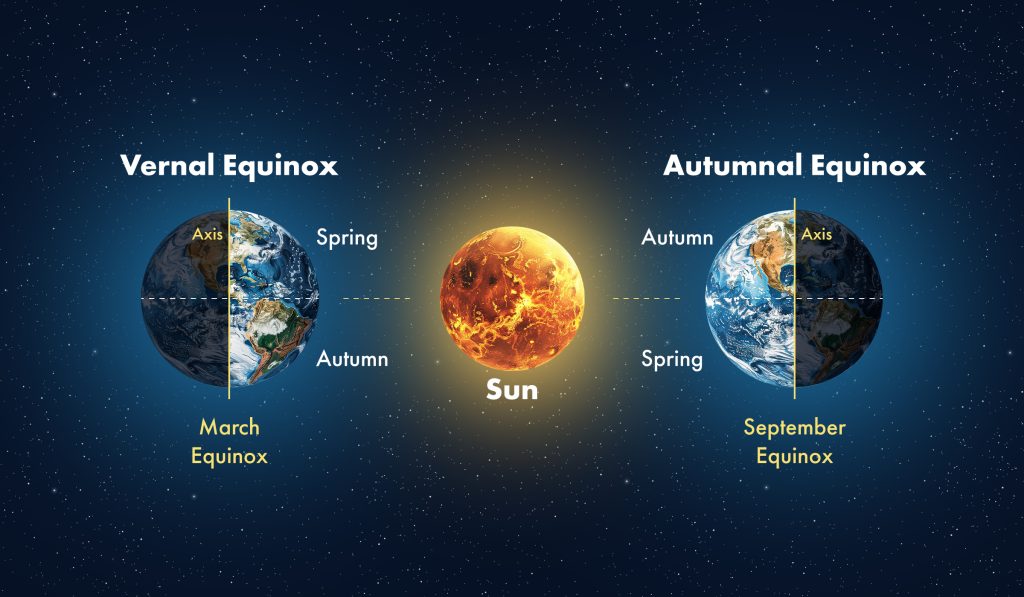
The vernal equinox of 2025 will occur on March 20, marking the official start of spring in the Northern Hemisphere, while the Southern Hemisphere will experience the arrival of autumn. This annual event signifies the moment when day and night are nearly equal in length across the globe, offering a rare instance of balance between daylight and darkness. The occurrence of the equinox is due to Earth’s axial tilt of about 23.5 degrees, which influences how sunlight is distributed across the planet throughout the year. During the equinox, the Earth is positioned in such a way that it is neither tilted toward nor away from the Sun, resulting in almost equal durations of day and night.

The cause of the equinox lies in Earth’s orbital movement around the Sun. While orbiting, Earth maintains a fixed axial tilt, which causes the Sun to shine directly over the equator during the equinox. This alignment distributes sunlight more evenly between the Northern and Southern Hemispheres, creating a temporary balance between daytime and nighttime hours. However, complete equality is not achieved because of factors such as atmospheric refraction and the apparent size of the Sun, which lead to minor discrepancies in the exact length of daylight. Locations on the equator generally receive about 12 hours and 6 minutes of sunlight, with regions further from the equator experiencing slightly longer days.

Despite occurring around March 20 and September 22 each year, equinoxes do not always fall on the exact same date. The Earth’s orbit around the Sun is slightly longer than 365 days, and this extra fraction of a day accumulates over time, causing slight shifts in the calendar dates of the equinoxes. As a result, the timing of the equinox changes by a small amount each year, though it typically remains within a few days of the standard dates. In meteorology, spring is commonly considered to begin on March 1, while the astronomical definition of the season starts with the equinox.

The vernal equinox holds significance not only in scientific terms but also in cultural and historical contexts. It has long been a symbol of renewal and balance, marking the transition from the cold, dark winter months to the warmer, brighter days of spring. For many societies, the equinox has been celebrated as a time of new beginnings, growth, and the return of life to the natural world. Whether viewed from a scientific, cultural, or personal perspective, the equinox remains an event that connects us to the rhythms of the Earth and the cosmos.

Massive Iceberg A23a Strands Near South Georgia, Sparking Ecological Concerns

Giant Iceberg A23a Stalls Near South Georgia, Raising Ecological Concerns

The world’s largest iceberg, A23a, has grounded near South Georgia, a vital wildlife refuge in the South Atlantic. The British Antarctic Survey (BAS) confirmed on March 4 that the colossal iceberg, roughly the size of Rhode Island, came to a halt about 80 kilometers from the island. After drifting through the Southern Ocean for months, its movement has been closely tracked by scientists. Experts are now assessing its potential impact on the delicate ecosystem, particularly on species such as penguins, seals, and krill-dependent marine life.

A23a has had a long and complex journey. Originally part of Antarctica’s Filchner Ice Shelf, it calved in 1986 but remained grounded on the seabed for more than 30 years. In 2020, the iceberg finally began drifting, eventually getting temporarily lodged near the South Orkney Islands in early 2024. After breaking free in December, it continued its slow path northward toward South Georgia. Researchers had previously warned that its approach could disrupt the region’s rich biodiversity and ocean currents.

Scientists are particularly concerned about the potential impact on the island’s wildlife. South Georgia is home to vast colonies of penguins and seals, which depend on access to open water for food. If A23a remains grounded, the risks may be minimal. However, if it moves closer to the island or begins to fragment, it could block foraging routes, forcing adult animals to travel further for food. This disruption could have dire consequences for their offspring, increasing mortality rates due to starvation.

Beyond wildlife, A23a’s presence may also affect ocean circulation and nutrient distribution. Icebergs of this scale release large volumes of freshwater as they melt, which can alter local ocean chemistry and impact krill populations—the foundation of the food chain. As researchers continue monitoring its position, they are also considering potential long-term effects on marine ecosystems, emphasizing the need for continued scientific observation.

SpaceX Starship Flight 8: Successful Booster Recovery, Upper Stage Faces Another Setback

SpaceX Starship Flight 8: Mixed Success as Booster Lands, Upper Stage Fails Again

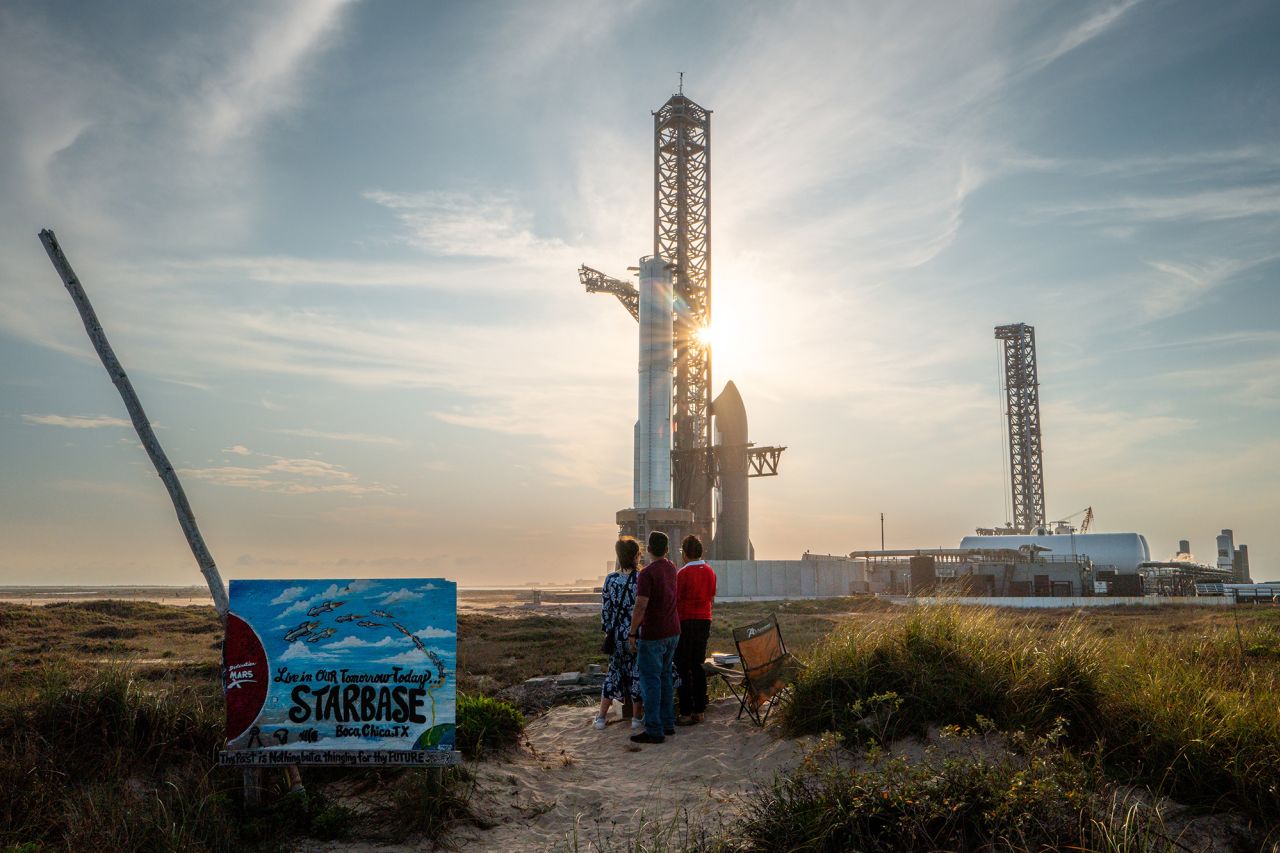
SpaceX conducted its eighth Starship test flight on March 6, launching from the Starbase facility in South Texas at 6:30 p.m. EST. The massive 403-foot-tall rocket lifted off smoothly, and the first-stage booster, Super Heavy, executed a controlled descent, successfully being caught by the launch tower’s “chopstick” arms. This marked the third time SpaceX has achieved this milestone, demonstrating continued progress in booster recovery. However, the mission encountered problems when the upper stage, known as Starship, failed to complete its intended trajectory, resulting in another mid-flight failure.

The upper stage was expected to follow a suborbital trajectory, deploy four test payloads, and eventually splash down in the Indian Ocean. Unfortunately, multiple Raptor engines malfunctioned late in the ascent, leading to a loss of control. Nine minutes after liftoff, SpaceX lost communication with Starship, and debris was later observed falling over the Bahamas. This failure closely resembled the outcome of Flight 7 in January, where similar propulsion issues caused an early mission termination.

Leading up to Flight 8, SpaceX implemented various design changes based on findings from previous tests. Engineers had identified a harmonic resonance issue in Flight 7, which caused excessive stress on propulsion components, leading to leaks and onboard fires. To address this, SpaceX modified fuel feedlines, adjusted propellant temperatures, and altered thrust levels. Additional vents and a gaseous nitrogen purge system were also introduced to mitigate leaks. Despite these updates, the upper stage was lost again, suggesting that further refinements are necessary.

The results of Flight 8 highlight both progress and ongoing challenges in Starship’s development. The successful booster catch underscores improvements in reusability, a key goal for SpaceX. However, the repeated upper-stage failures indicate that more work is needed to enhance reliability before Starship can be cleared for operational missions, including future lunar and Mars expeditions. SpaceX engineers will now analyze flight data to refine systems further in preparation for the next test launch.