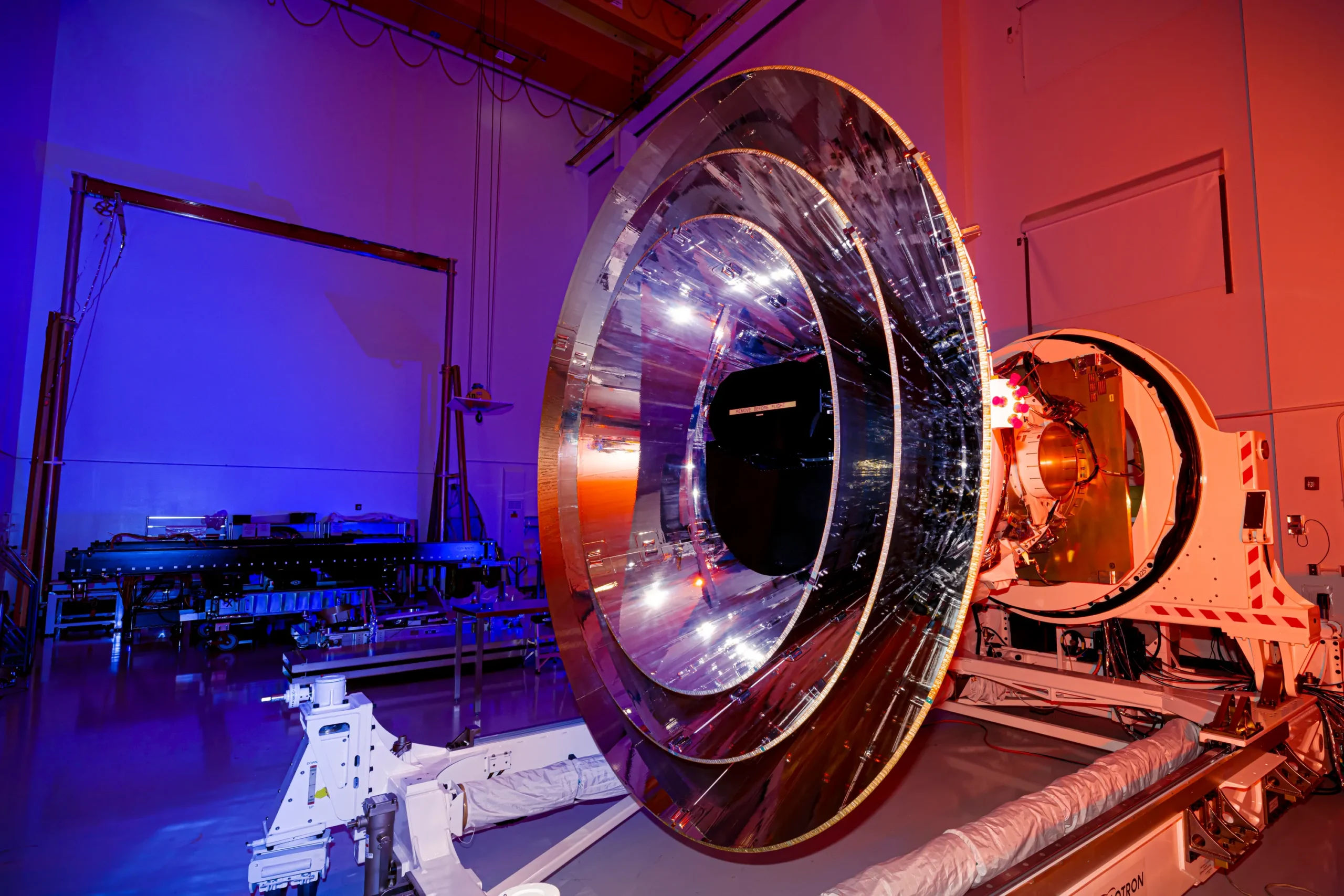
NASA Announces New Launch Date for SPHEREx and PUNCH Missions

NASA has announced another delay for its SPHEREx and PUNCH missions, which are now scheduled for launch on March 7. Initially set for February 27, the launch has encountered several setbacks, with the most recent delay moving the date from March 4. The two missions will launch aboard a SpaceX Falcon 9 rocket from Vandenberg Space Force Base in California, with liftoff now expected at 10:09 p.m. EST from Launch Complex 4E. The delay is primarily due to scheduling constraints at the launch site, particularly involving the availability of a launch window on the Western Range.

The reasons behind the earlier delays were tied to extensive checks and processing of the Falcon 9 rocket, ensuring all systems are functioning correctly for the missions. The latest postponement, however, stems from the complexities of coordinating launch windows at Vandenberg, a crucial aspect of timing for space missions. Despite these delays, both SPHEREx and PUNCH are poised to contribute valuable data to their respective scientific fields.

SPHEREx, which stands for the Spectro-Photometer for the History of the Universe, Epoch of Reionization, and Ices Explorer, is an infrared telescope with a mission to survey the sky and gather data on the early universe. Unlike the James Webb Space Telescope, which focuses on deep-space observations, SPHEREx will offer a broader, all-sky view in infrared wavelengths. This mission aims to explore key cosmic phenomena such as the formation of galaxies, stars, and planetary systems.

The PUNCH mission, or the Polarimeter to Unify the Corona and Heliosphere, will study solar activity through four small satellites. These satellites will focus on phenomena like coronal mass ejections (CMEs), which can cause disturbances on Earth, including radio blackouts and potential threats to satellite communications. By improving predictions of space weather, PUNCH aims to enhance our understanding of the Sun’s influence on the solar system and help mitigate the impact of space weather events on modern technology.
Alpha Centauri Might Be Responsible for Millions of Asteroids Entering the Solar System

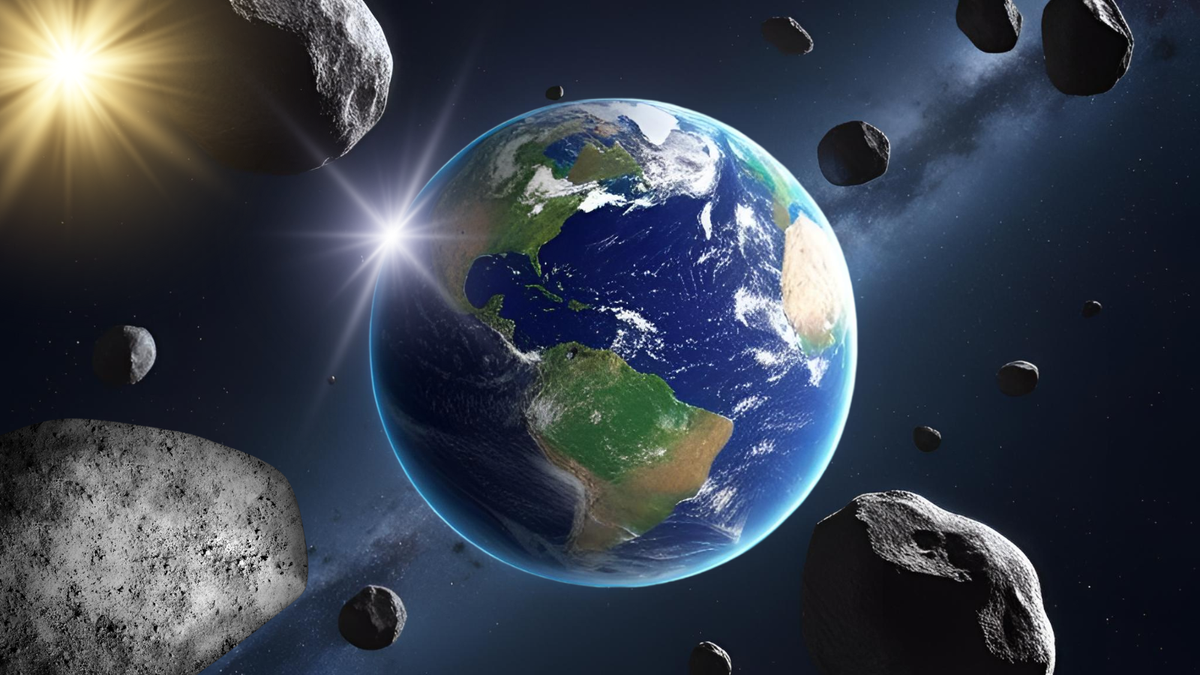
A new study suggests that a substantial number of asteroids originating from Alpha Centauri may have made their way into the solar system. Researchers estimate that if the amount of material ejected by Alpha Centauri is similar to that released by the solar system, nearly a million space rocks larger than 100 meters in diameter could be scattered throughout the Oort Cloud. Some of these interstellar objects might even migrate toward the inner solar system over time. As Alpha Centauri gradually moves closer to the solar system over the next 28,000 years, the influx of such objects is expected to increase.

According to research published on the preprint server arXiv, scientists from the University of Western Ontario conducted simulations to track the movement of Alpha Centauri’s ejected material over a span of 100 million years. Paul Wiegert, one of the researchers, explained to Space.com that detecting material from another star system at significant levels was unexpected. While space is vast, the possibility of foreign objects infiltrating the solar system in such numbers challenges previous assumptions about interstellar debris.

The study also reveals that approximately 50 objects from Alpha Centauri may enter the outer edge of the solar system each year. However, only a small fraction of these interstellar asteroids are likely to move inward. The researchers estimate that the probability of one such object currently residing within the orbit of Saturn is about one in a million. Due to their high velocities, most of these objects are unable to be captured by the sun’s gravity, making their presence within the solar system only temporary.

If confirmed, this discovery could reshape our understanding of interstellar material exchange between star systems. The potential presence of Alpha Centauri’s asteroids within our solar system raises intriguing questions about their composition and origins. Future space missions and telescope observations may provide further insights into these foreign visitors, helping scientists determine whether interstellar asteroids contribute to the chemical and physical evolution of planetary systems like our own.

Scientists Propose That Black Hole Singularities Might Not Exist

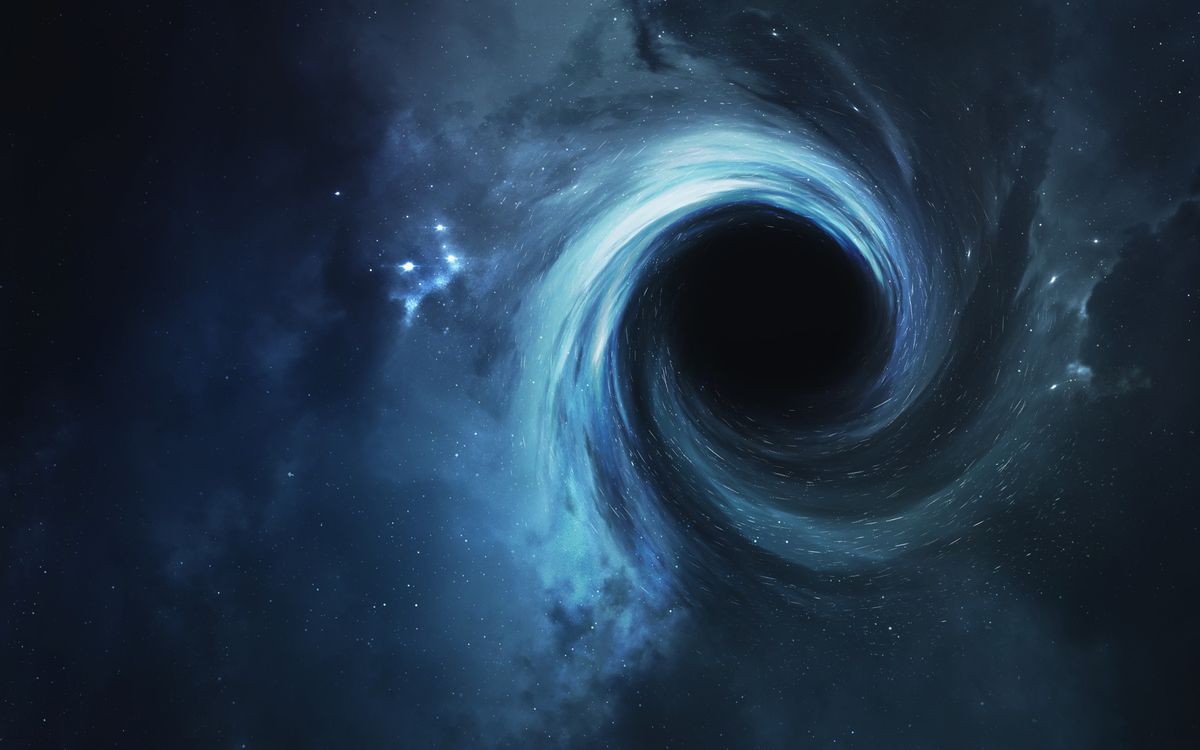
The concept of singularities at the core of black holes has long posed a paradox in physics, as these infinitely dense points challenge the fundamental principles of space, time, and matter. However, new research suggests that singularities may not exist at all. Physicists have proposed modifications to Einstein’s general relativity equations, offering an alternative view of black hole interiors. If these changes are correct, they could resolve one of the biggest inconsistencies between general relativity and quantum mechanics, restoring predictability to physical laws.

A study published in Physics Letters B introduces refinements to general relativity based on principles from quantum gravity. While Einstein’s theory has been remarkably successful in describing cosmic phenomena like black holes and neutron stars, it breaks down under extreme conditions. The incompatibility of singularities with quantum mechanics has long suggested that general relativity is incomplete. The new modifications aim to bridge this gap, potentially eliminating the need for singularities while maintaining the theory’s ability to describe gravitational systems accurately.

Robie Hennigar, a postdoctoral researcher at Durham University, explained in an interview with Live Science that singularities represent a fundamental problem in our understanding of the universe. He described them as regions where space, time, and matter are crushed into a state of nonexistence—something that most physicists see as a sign that a deeper theory is required. By adjusting general relativity with insights from quantum mechanics, researchers hope to develop a more complete framework for understanding black holes.

If singularities are indeed mathematical artifacts rather than physical realities, this could have profound implications for black hole physics and cosmology. Future advancements in observational technology, such as next-generation space telescopes and gravitational wave detectors, may provide further evidence to test these new models. As theoretical and experimental research progresses, the true nature of black hole interiors may soon be better understood, reshaping our understanding of the universe’s most mysterious objects.