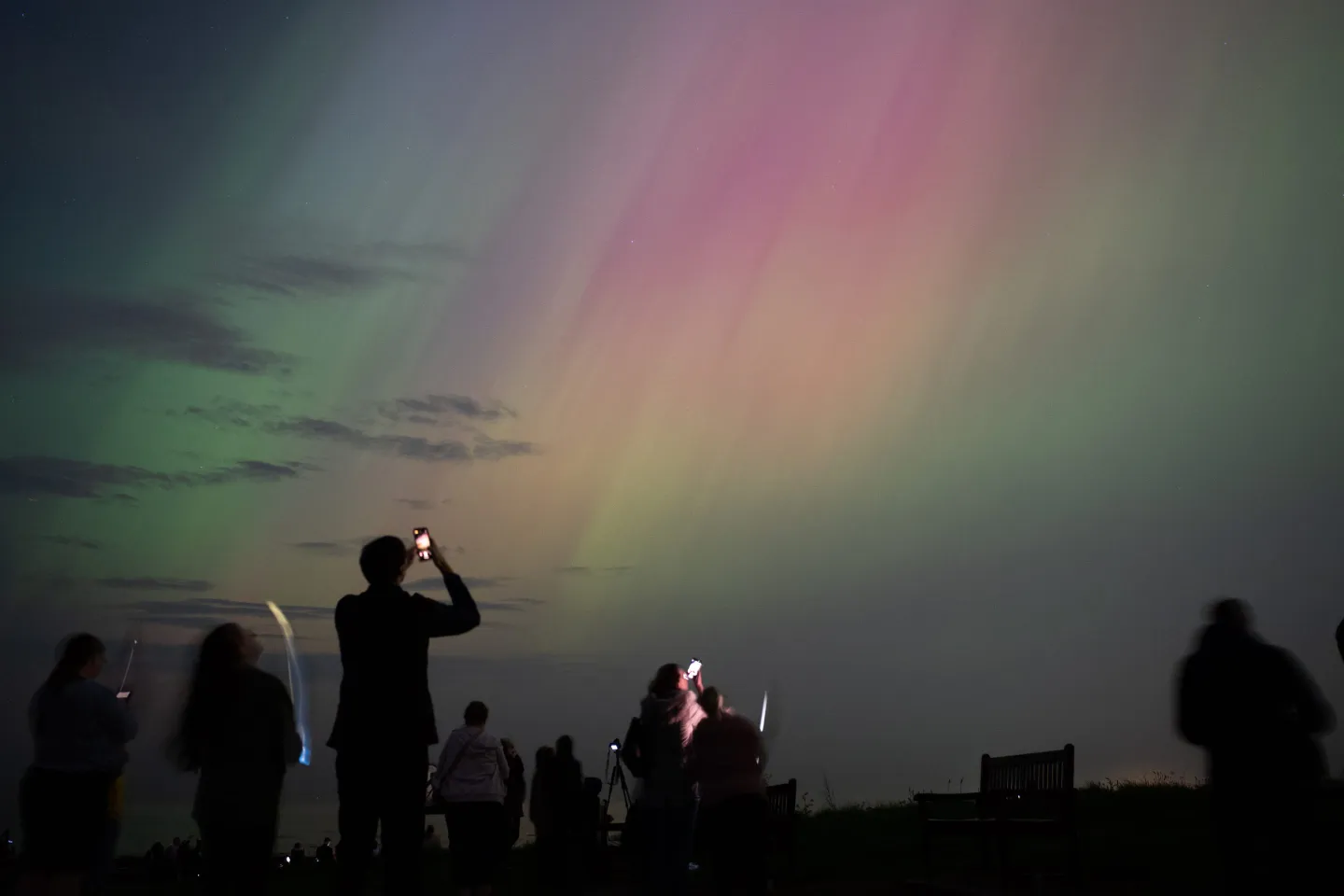
Solar Storm Expected to Illuminate US Skies with Northern Lights: What to Expect

A solar storm is expected to reach Earth tonight, sparking excitement among skywatchers as the northern lights may become visible as far south as New York and Idaho. This event is the result of a coronal mass ejection (CME) that erupted from the Sun on March 1. The Space Weather Prediction Center (SWPC) of the National Oceanic and Atmospheric Administration (NOAA) has classified this storm as a G1-level geomagnetic storm, with the possibility of it escalating to a G2-level storm. As a result, areas with clear skies, especially in mid-latitude regions, could be treated to an impressive aurora borealis display.

The CME is projected to strike Earth’s magnetic field between March 4 and March 5, with the storm’s intensity expected to peak between 7:00 p.m. and 10:00 p.m. EST on March 5. While a G1 storm is generally considered minor, space weather physicist Tamitha Skov has suggested that there is a chance of stronger G2 conditions. If this occurs, the auroral display could be more extensive, allowing even more viewers to catch a glimpse of the northern lights further south than usual.

Geomagnetic storms happen when charged particles from the Sun collide with Earth’s magnetosphere, creating disturbances that can have various effects on technology. Although a G1 storm is typically not a major concern, it can still cause minor disruptions, particularly in satellite communications and GPS systems. The storm’s heightened intensity, if it reaches G2 levels, may also lead to increased interference with power grids and communication systems, particularly in the northern regions of the planet.

Experts warn that individuals relying on radio communications, GPS technology, or drones may experience temporary signal disruptions, especially in the evening when the storm’s effects on Earth’s magnetic field are most pronounced. While the beauty of the aurora borealis is sure to captivate those lucky enough to witness it, it’s important for those in affected areas to be aware of potential impacts on technology and plan accordingly.


Experts Sound the Alarm Over Rising Marine Heat Waves and Their Devastating Effects on Oceans

An alarming trend of increased marine heat waves has been observed across global oceans, leading to significant disruptions in both marine ecosystems and the livelihoods of coastal communities. Scientists have noted that many regions are experiencing extended periods of higher-than-normal ocean temperatures at an unprecedented pace. These extreme temperature spikes, persisting over longer stretches of time, are triggering a cascade of adverse effects. Marine life is struggling to adapt, and coastal areas are facing growing risks, including increased vulnerability to powerful storms. Experts are raising red flags about the future of these areas, warning that recovery may become increasingly difficult as these events occur with greater frequency.

The surge in marine heat waves has reached concerning levels, with studies showing a 240 percent increase in their frequency during the 2023–2024 period compared to historical averages. Researchers from top institutions, including those in Australia and the U.K., are sounding the alarm. They have found that higher ocean temperatures contribute to intensified evaporation, which fuels extreme weather conditions. For example, Cyclone Gabrielle, which devastated New Zealand in 2023, is believed to have been exacerbated by the rising temperatures of nearby oceans. The tragic aftermath of this storm, which resulted in fatalities and widespread damage, underscores the potential threats posed by these climate shifts.

The impact on marine life has been equally devastating. Many species are being forced to alter their migratory patterns, with some traveling closer to shore in search of food, leading to an increased number of strandings. Whales, dolphins, and other marine creatures are not alone in facing these challenges; smaller, less mobile species are also suffering. Mussels, for instance, are unable to flee to cooler waters, resulting in large-scale die-offs. These disruptions are having ripple effects throughout the food chain, further threatening the delicate balance of oceanic ecosystems.

Perhaps the most concerning of all is the damage being done to coral reefs. These vital underwater ecosystems, often referred to as the “rainforests of the sea,” are highly sensitive to temperature changes. Prolonged heatwaves are causing widespread coral bleaching, which weakens the reefs and leads to the collapse of ecosystems that countless marine species rely on. As these vital habitats deteriorate, the repercussions for both marine life and the human populations who depend on these resources are becoming increasingly dire. Scientists continue to urge immediate action to mitigate these temperature spikes and protect the future health of our oceans.

Ancient 125-Million-Year-Old Scorpion Fossil Found in China Reveals Insights into Mesozoic Predators

A remarkable discovery has been made in northeastern China, where scientists unearthed a 125-million-year-old scorpion fossil, shedding new light on the evolution of these ancient arachnids. The fossil represents the first terrestrial scorpion species from the Mesozoic era found in the country and provides crucial information about the early development of scorpions. Measuring around 10 centimeters in length, this scorpion is notably larger than many other species from the same period, suggesting it may have been a dominant predator in the Early Cretaceous ecosystem, preying on both small vertebrates and invertebrates.

The fossil was found in the Yixian Formation, a well-known site rich with fossils from the Early Cretaceous period. The study, published in Science Bulletin, identified the scorpion as a previously unknown species, which has been named Jeholia longchengi. The name pays tribute to the Jehol Biota, an ecosystem that flourished between 133 and 120 million years ago, and to the Longcheng district in Chaoyang, where the fossil is currently housed. This discovery adds valuable information to the understanding of life during the Cretaceous period and the role of scorpions in prehistoric food webs.

Jeholia longchengi displays several distinctive features that set it apart from other known Mesozoic-era scorpions. It has a pentagonal body shape, rounded spiracles for respiration, elongated legs, and slender pincers without spurs. These characteristics are somewhat similar to those of modern Asian scorpion families, but with key differences that make Jeholia longchengi unique. According to Diying Huang, a researcher at the Nanjing Institute of Geology and Palaeontology, the size of this species makes it stand out from other scorpions from the Mesozoic era, as most of them were much smaller in comparison.

The discovery of Jeholia longchengi not only enhances our understanding of scorpion evolution but also provides a glimpse into the dynamics of the Early Cretaceous food chain. The size and predatory nature of this scorpion suggest it occupied an important ecological niche, potentially influencing the behavior and evolution of other species in its environment. This fossil is a valuable addition to the growing collection of Mesozoic-era fossils from the region, offering a rare look at the ancient ecosystems that existed millions of years ago.