
X-ray Emission from Helix Nebula Indicates Possible Planet Destruction by White Dwarf

For over four decades, an unusual X-ray signal emanating from the Helix Nebula has puzzled astronomers, but new findings have now linked the source of this high-energy emission to the destruction of a planet by the white dwarf at its center. The white dwarf, WD 2226-210, located approximately 650 light-years away, has displayed unexpected X-ray activity, a phenomenon that defies the typical behavior of such stars. White dwarfs, which are the remnants of aging stars, generally do not emit strong radiation, making this discovery particularly intriguing. The X-ray signal is believed to be caused by planetary debris being pulled toward the white dwarf, offering a rare glimpse into the violent end of a planet in the final stages of its existence.

The study, published in the Monthly Notices of the Royal Astronomical Society, analyzed data from several X-ray telescopes, including NASA’s Chandra X-ray Observatory and ESA’s XMM-Newton. These observations have helped provide a clearer picture of the activity taking place around the white dwarf. Earlier missions, such as the Einstein X-ray Observatory and ROSAT, had also detected the unusual high-energy X-rays, but it is only now that scientists are able to link the signal to the destruction of a planet. The continuous emission from the white dwarf suggests that material from a planet is being gradually accreted onto its surface, a process that could provide valuable insights into the fate of planets around aging stars.

Sandino Estrada-Dorado, the lead author of the study from the National Autonomous University of Mexico, described the signal as potentially representing “the death knell from a planet that was destroyed by the white dwarf.” This marks a significant breakthrough in understanding how planets meet their end in the vicinity of white dwarfs, which could have broader implications for the study of planetary systems around aging stars.

This discovery also raises questions about the survival of planets around dying stars. As stars evolve into white dwarfs, the remaining planets in their systems are often subject to intense gravitational forces and radiation, leading to their potential destruction. The observations of WD 2226-210 not only provide evidence of such an event but also offer a rare opportunity to study the processes that govern the final stages of planetary life, expanding our knowledge of stellar evolution and the ultimate fate of planetary systems.

Private Venus Mission Aims to Collect Cloud Samples for Astrobiological Studies

A private space mission is being developed with the ambitious goal of collecting atmospheric samples from Venus, specifically from its cloud layers, to bring back to Earth for analysis. This initiative, led by a team of planetary scientists and supported by commercial spaceflight companies, aims to explore the possibility that Venus’ clouds could harbor conditions suitable for life. Venus’ atmosphere, which is dominated by sulfuric acid, has long been considered inhospitable for life. However, recent studies have suggested that these extreme conditions might not completely preclude the presence of organic chemistry, which is fundamental to life as we know it. This mission could provide groundbreaking insights into whether complex molecules can exist in such a harsh environment.

Recent studies have brought a new perspective to the potential for life on Venus. Iaroslav Iakubivskyi, a planetary scientist from the Massachusetts Institute of Technology, shared findings that suggest sulfuric acid could play a role in sustaining organic chemistry. In laboratory experiments, sulfuric acid has been shown to support the stability of nucleic and amino acids, which are essential components of biological systems. Rather than being a deterrent, sulfuric acid might act as a solvent that facilitates key molecular processes. To test these theories, however, physical samples directly from Venus’ atmosphere are required, which is where the upcoming mission comes in.

The mission, dubbed Morning Star, is being developed in collaboration with Rocket Lab, a private spaceflight company. The first phase of the mission, which is slated for launch in 2026, will involve sending a probe through Venus’ thick atmosphere to study the size and distribution of sulfuric acid droplets within its clouds. This data will help scientists understand the chemical processes occurring in the planet’s atmosphere. Following the initial probe, a second mission will use a two-ton rocket to collect samples of Venus’ clouds, which will then be sent into Venusian orbit to be retrieved by a spacecraft for transport back to Earth.

If successful, this would be the first privately-led interplanetary mission to Venus and could pave the way for future research into the potential for life beyond Earth. By studying the composition of Venus’ clouds, scientists may unlock new clues about the origins of life and the viability of other planets and moons as hosts for life. The Morning Star mission represents a bold step toward understanding the enigmatic atmosphere of Venus and could have profound implications for astrobiology and space exploration.

James Webb Space Telescope Spots Enigmatic Planetary-Mass Object Drifting in Space

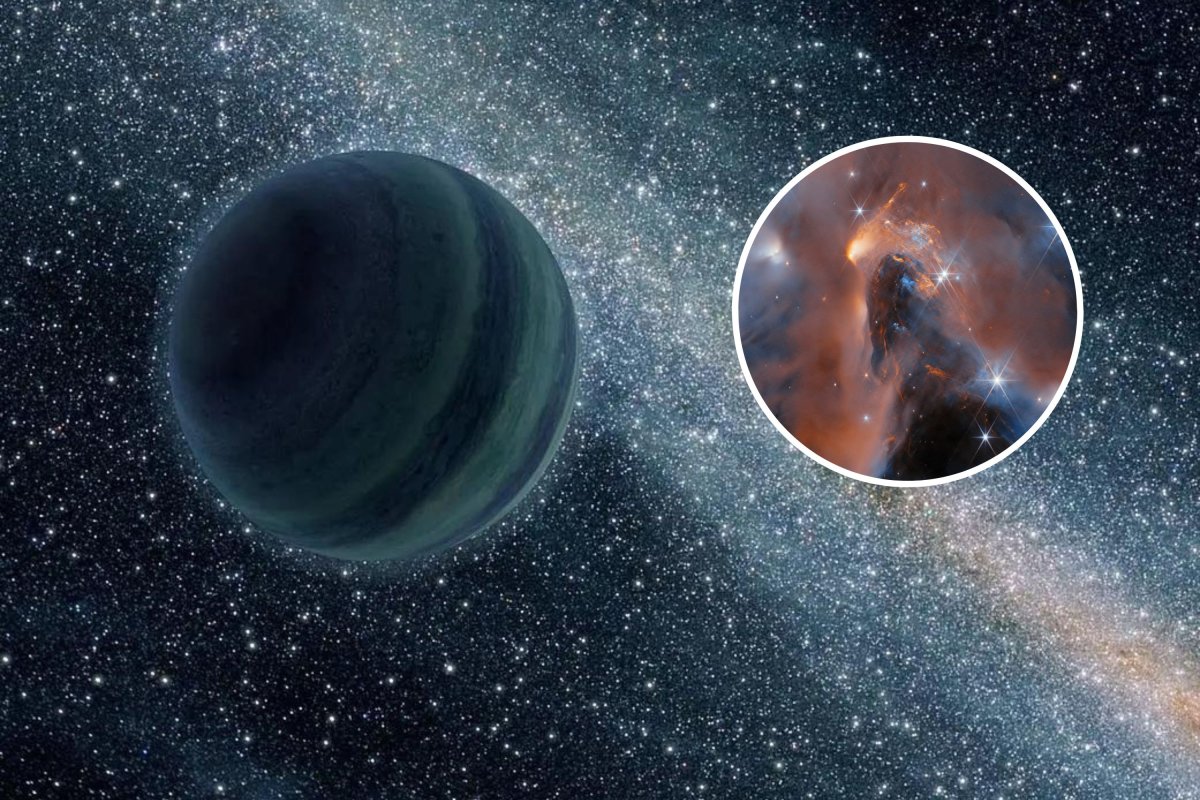
A recent study using the James Webb Space Telescope (JWST) has provided new insights into SIMP 0136, an intriguing planetary-mass object located roughly 20 light-years from Earth. This mysterious celestial body, which drifts freely in space without orbiting a star, blurs the line between planets and failed stars. With an estimated mass around 13 times that of Jupiter but a similar size, SIMP 0136 challenges conventional classifications. Adding to its uniqueness, the object rotates rapidly, completing a full spin in just 2.4 Earth hours, making it one of the fastest-rotating planetary-mass objects ever observed.

The study, published in The Astrophysical Journal Letters, explores whether SIMP 0136 should be categorized as a rogue planet or a brown dwarf. Brown dwarfs are objects that form like stars but lack the necessary mass to sustain hydrogen fusion, leaving them in a transitional state between planets and stars. JWST’s advanced instruments captured data over two full rotations, allowing scientists to analyze the object’s atmosphere in unprecedented detail.

Led by Allison McCarthy from Boston University, the research team focused on detecting variations in brightness, which suggested complex atmospheric activity. By utilizing JWST’s Near-Infrared Spectrograph (NIRSpec) and Mid-Infrared Instrument (MIRI), scientists were able to capture infrared light curves, mapping changes in brightness across different wavelengths. This data revealed fluctuations in atmospheric layers, hinting at dynamic weather patterns, including potential cloud formations and temperature shifts.

The findings from JWST’s observations could provide deeper insights into the atmospheres of both rogue planets and brown dwarfs, helping astronomers refine their understanding of planetary evolution. As researchers continue to analyze SIMP 0136, future studies may uncover more about the nature of these isolated objects and their role in the broader cosmic landscape.