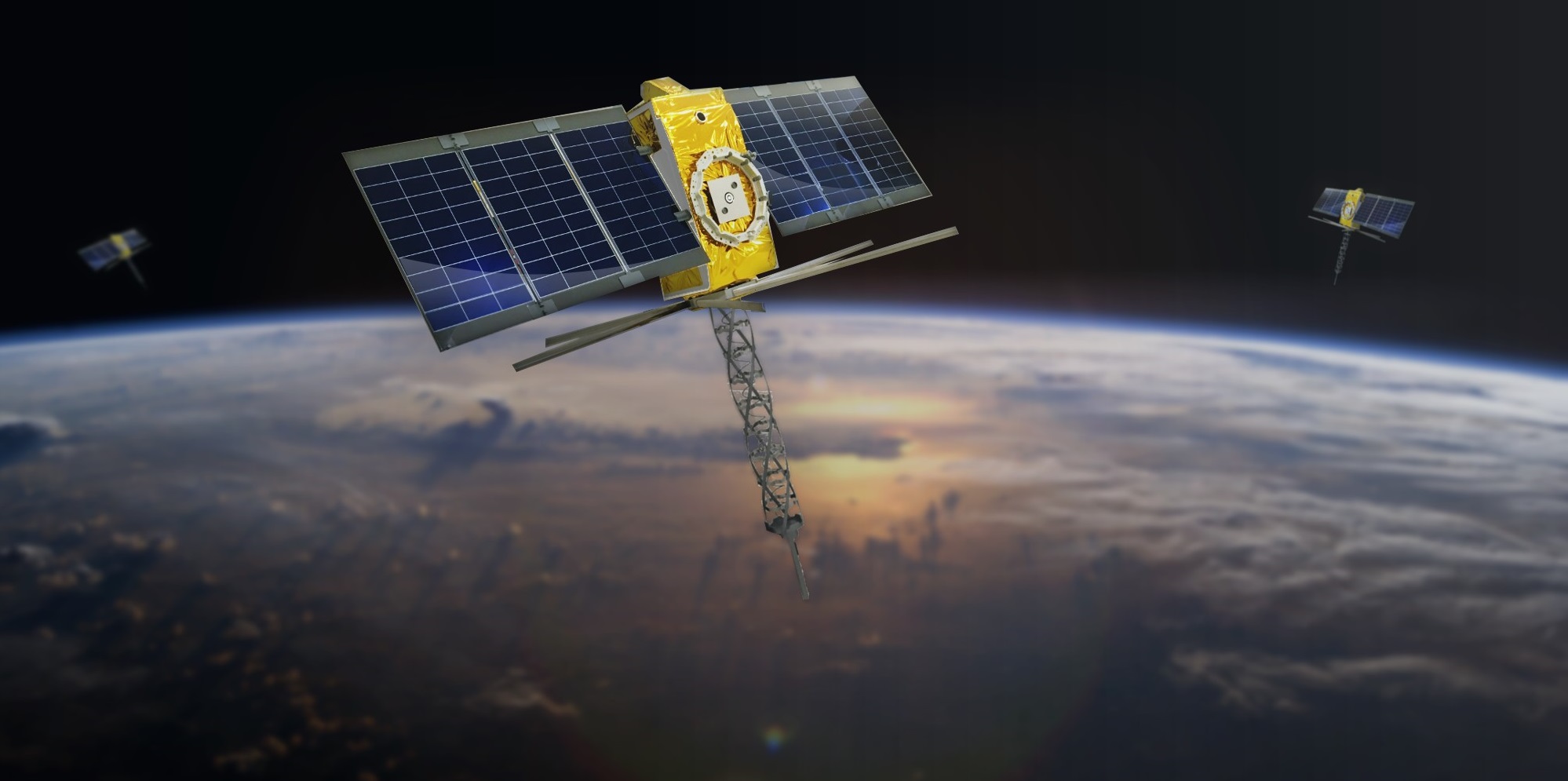
Rocket Lab Postpones Launch of Synspective’s Earth-Imaging Satellite

Rocket Lab’s scheduled launch of a radar-imaging satellite for the Japanese firm Synspective encountered an unexpected delay. The Electron rocket, intended to launch from Rocket Lab’s New Zealand facility on December 20, 2024, was grounded roughly 17 minutes before liftoff. According to the company’s statement on X (formerly Twitter), the delay was due to the need for additional analysis of sensor data. As of now, no new date for the launch has been provided.

The mission, named “Owl The Way Up,” is designed to deploy a synthetic aperture radar (SAR) satellite for Synspective. The satellite is part of Synspective’s ongoing effort to create a constellation of 30 Strix SAR satellites, which will orbit Earth in low Earth orbit. The Strix satellites are capable of providing high-resolution images of Earth’s surface, even detecting minor changes as small as a few millimeters.

The mission would mark the sixth deployment in the Strix series. Synspective, a company focused on space-based data solutions, relies on Rocket Lab for the launch of its radar-imaging satellites, with 16 dedicated launches planned to complete the Strix constellation. If successful, the upcoming Electron rocket launch will place the Strix satellite into a circular orbit approximately 574 kilometers above Earth, 54.5 minutes after takeoff.

With this mission, Rocket Lab continues to support innovative satellite technologies that contribute to Earth observation and monitoring. However, the postponement serves as a reminder of the complexities involved in space missions, where data integrity and review are critical to ensuring the success of the operation. As the revised launch date remains unclear, both Synspective and Rocket Lab are likely working to ensure all aspects are thoroughly checked before proceeding.


New Study Reveals Arctic Siberia Summers Were 10°C Warmer During Last Interglacial

A new study, currently under review in Climate of the Past, reveals that summers in Arctic Siberia were up to 10°C warmer during the Last Interglacial period, which occurred around 115,000 to 130,000 years ago. This research, led by Dr. Lutz Schirrmeister and colleagues from the Helmholtz Center for Polar and Marine Research in Germany, sheds light on how polar ecosystems responded to a period of heightened warmth. Using sediment cores and fossil remains, the team was able to reconstruct the climate of the region during this warm phase, providing critical insights into the historical climate dynamics of the Arctic.

One of the key findings of the study is the amplification of warming in the Arctic compared to the broader northern hemisphere, which was driven by a phenomenon known as ice-albedo feedback. This process occurs when melting ice reduces the amount of solar radiation that is reflected back into space, thereby increasing the amount of heat absorbed by the Earth’s surface. The researchers found that this feedback loop significantly accelerated warming in Arctic Siberia during the Last Interglacial, contributing to the higher-than-average temperatures observed in the region.

The team conducted fieldwork in coastal sections along Siberia’s Dmitry Laptev Strait, where landscapes shaped by permafrost have been well-preserved. This area provided a unique opportunity to study the impacts of climate change on the region’s environment. The thermokarst topography in the area, formed by the thawing of ice-rich permafrost, helped the researchers gain valuable insights into past climate conditions. By analyzing sediment cores from layers of peat, clay, and silt, they were able to trace the climate history of the region.

The sediment cores, collected between 1999 and 2014, contained fossil evidence, including pollen, insects, and mollusks, which helped the team reconstruct the vegetation and climate of the past. Their findings indicate that during the Last Interglacial, the Arctic environment underwent significant shifts, with changes in vegetation patterns and climate conditions that are now being closely studied to better understand how polar regions might respond to current and future climate change. The study highlights the importance of examining historical climate data to anticipate the effects of ongoing warming in the Arctic.

Biodegradable Microbeads Could Serve as Eco-Friendly Alternative to Plastic Exfoliants in Skincare

Researchers have recently developed a biodegradable microbead made from a polymer, offering a promising solution to replace plastic exfoliants commonly used in skincare products. These new beads, which break down into sugar and amino acid-like substances, provide an eco-friendly alternative to the plastic microbeads that have raised environmental concerns in recent years. Published in Nature Chemical Engineering on December 6, the study highlights the potential of these polymer-based microbeads to deliver effective exfoliation results while being safer for the environment. Made from poly(β-amino ester), the microbeads have shown to provide the same benefits as plastic alternatives but without the long-lasting environmental impact.

Ana Jaklenec, a biomedical engineer at MIT, explained that this breakthrough could encourage the materials industry to explore more sustainable, non-microplastic alternatives. While the polymer is already utilized in medical applications like drug delivery, its use in skincare products marks an exciting new avenue for innovation. The success of these biodegradable microbeads may inspire further research into developing environmentally responsible ingredients for the cosmetic industry, which has been under increasing pressure to reduce its reliance on harmful plastics.

In terms of performance, the new microbeads have been put to the test using pig skin samples to evaluate their cleaning effectiveness. When mixed with soap foam, the polymer-based beads were able to remove 74% of permanent marker ink after just 50 wipes, outperforming soap foam alone, which only removed 38%. Additionally, the beads were highly efficient at removing eyeliner, clearing twice as much as regular soap. These results demonstrate that the biodegradable microbeads can effectively replace plastic alternatives without compromising on cleaning power.

Another key advantage of the new polymer microbeads is their biodegradability. Degradation tests revealed that more than 94% of the polymer broke down into harmless sugar-like and amino acid-like molecules within two hours when exposed to boiling water. This rapid breakdown process makes the beads an ideal choice for use in personal care products, ensuring that they won’t contribute to long-term pollution in water systems or ecosystems. The successful development of these biodegradable microbeads represents a step forward in making the beauty and personal care industry more sustainable.