
Scientists Suggest Robots Could Soon Detect Emotions by Analyzing Sweat

Robots Could Soon Detect Emotions by Analyzing Sweat, New Study Suggests

A recent study published in IEEE Access has revealed groundbreaking findings about the connection between human emotions and skin conductance, the measure of how well the skin can conduct electricity due to sweat. The research, conducted by scientists at Tokyo Metropolitan University, suggests that changes in skin conductance could offer valuable insights into human emotional states, potentially paving the way for emotionally intelligent robots and devices. The study indicates that emotional responses such as fear, humor, and family bonding may trigger different patterns of sweat production, which could be measured to understand how people are feeling.

Exploring Skin Conductance and Emotional Responses

The study involved 33 participants who were shown a series of videos designed to evoke various emotional responses, ranging from fear-inducing horror clips to heartwarming family reunion scenes. Using probes attached to their fingers, the researchers measured how the skin’s electrical conductance varied in reaction to these emotional stimuli. They found that emotional reactions such as fear caused the skin’s conductivity to increase and persist for a longer period of time, while humor induced a rapid but shorter-lived spike in skin conductance.

Fear and Humor: Unique Emotional Signatures

The study’s authors believe that the prolonged response to fear could be rooted in evolutionary survival instincts, where heightened physical responses are necessary for alertness in stressful situations. On the other hand, the quicker response to humor may reflect the brain’s rapid processing of positive, humorous stimuli. The research also touched upon the complexity of family bonding emotions, which seemed to produce mixed reactions with overlapping patterns, suggesting a more nuanced emotional process. While previous studies have explored the connection between skin conductance and basic emotions like fear, this is one of the first studies to explore the dynamics of humor and familial feelings through this method.

The Future of Emotion Detection in Technology

This study opens up fascinating possibilities for the future of emotion-aware technology. By measuring skin conductance, robots and artificial intelligence could soon be able to detect and respond to human emotions more effectively. Such technology could have widespread applications, from improving human-robot interactions in caregiving settings to enhancing customer service through emotionally intelligent machines. While there is still much to learn about the full range of emotions and their physiological markers, this research marks an important step toward understanding how robots could gain emotional intelligence through physiological signals like sweat.
2024’s Biggest Solar Flares: Top 10 Events and Their Earthly Impacts

2024’s Most Powerful Solar Flares: A Year of Intense Solar Activity

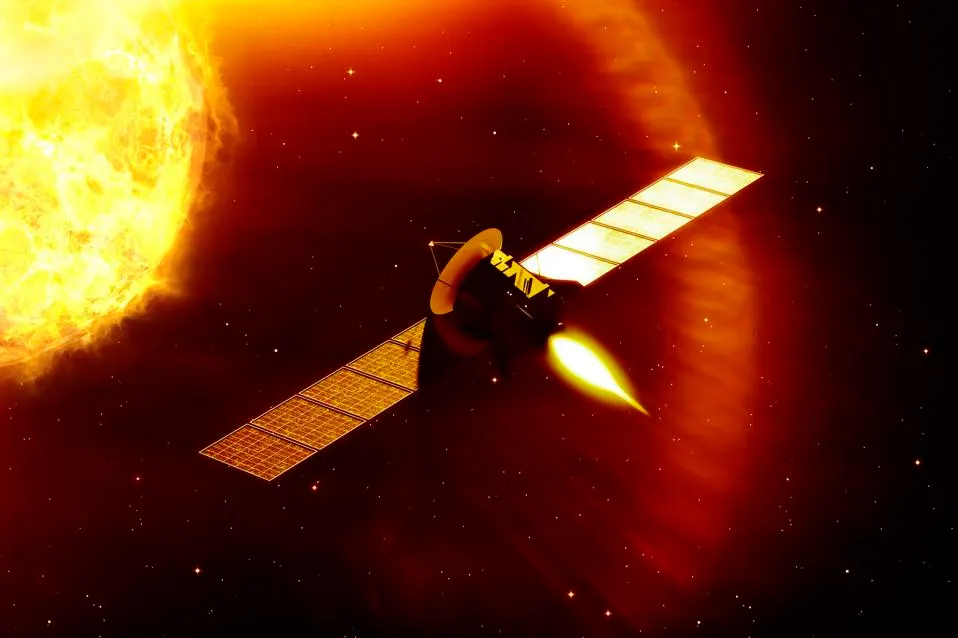
The year 2024 saw unprecedented solar activity as the Sun approached its solar maximum, a peak phase in its 11-year cycle. Over 50 X-class solar flares—classified as the most intense—were recorded, showcasing the Sun’s extraordinary energy output. These powerful eruptions, which can significantly impact Earth’s satellites, power grids, and communication systems, ranged in intensity and effect. The strongest, recorded as X9.0, erupted on October 3 and drew widespread attention from scientists and space weather observers. Below, we detail ten of the year’s most remarkable solar flares.

February 9 – A Hidden Giant (X3.38)

On February 9, an X3.38-class flare erupted near the Sun’s southwestern edge. While its intensity was significant, its position limited the visible impact on Earth, leading scientists to speculate that the flare might have been even more powerful than detected. This event created a striking “coronal wave,” a ripple of solar material spreading across the Sun’s surface. Such features offer researchers valuable insights into the dynamics of solar explosions.

February 22 – Silent But Strong (X6.37)

Less than two weeks later, a flare rated at X6.37 was observed. Despite its magnitude, the event was devoid of Earth-directed coronal mass ejections (CMEs), which are typically responsible for geomagnetic disturbances. Its lack of immediate impact on Earth’s systems allowed scientists to focus on its underlying mechanisms. NASA’s Solar Dynamics Observatory captured detailed images, which have proven critical for advancing our understanding of solar flare formation.

March 15 – X7.45 and Its Auroral Display

An X7.45 flare on March 15 made headlines for its stunning auroral effects. Unlike the earlier February events, this eruption released a large CME directed toward Earth, causing a geomagnetic storm that disrupted GPS systems temporarily. The event also lit up skies in high-latitude regions with vibrant auroras, drawing attention from both scientists and skywatchers.

October 3 – The Year’s Most Powerful Flare (X9.0)

The pinnacle of 2024’s solar activity came on October 3 with an X9.0-class flare. This eruption not only disrupted satellite communications but also triggered temporary radio blackouts in several regions on Earth. The flare’s scale and impact underscored the potential risks of heightened solar activity during the solar maximum phase. Scientists continue to analyze the event to refine predictions for future solar weather.

These remarkable solar flares reflect the Sun’s dynamic nature and its influence on Earth’s technological and natural systems. As solar maximum continues, scientists are closely monitoring the Sun to anticipate and mitigate the effects of future eruptions.

Ancient Moche Tomb Unveils 1,500-Year-Old Family Sacrifices Through Genetic Clues

1,500-Year-Old Moche Tomb Reveals Familial Sacrifices

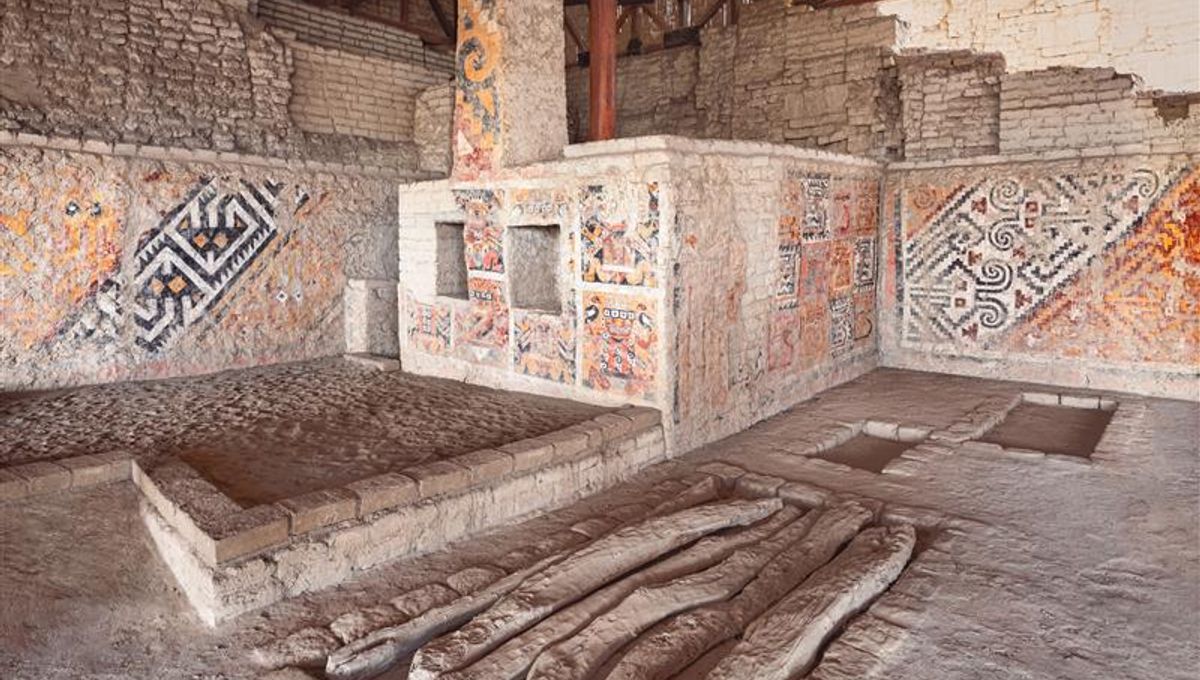
Archaeologists have uncovered evidence of familial sacrifices in a 1,500-year-old tomb from the Moche culture at the Huaca Cao Viejo temple in Peru. Genetic analysis of six individuals buried there revealed that two teenagers, who were strangled as part of a ritual, were closely related to the adults interred in the same tomb. Published in the Proceedings of the National Academy of Sciences (PNAS), the findings shed light on a previously unknown practice of sacrificing close relatives during funerary rites in this ancient civilization.

A Rare Glimpse into Moche Ritual Practices

The Moche culture, which flourished along Peru’s northern coast between A.D. 300 and 950, is well-known for its elaborate ceremonies, often involving human sacrifices to appease deities. However, this discovery marks the first documented instance of family members being sacrificed for such rituals. Lars Fehren-Schmitz, an archaeogeneticist from the University of California, Santa Cruz, noted that no prior archaeological evidence suggested the involvement of close relatives in these sacrifices, making this a groundbreaking revelation about Moche societal and ritualistic norms.

Genomic Evidence of Family Ties

Genomic sequencing revealed that the sacrificed teenagers were directly related to the deceased individuals they were buried with. One of the boys was likely sacrificed following the death of his father, while a girl appears to have been offered during her aunt’s burial. This analysis also identified the tomb’s central figure as Señora de Cao, a high-ranking woman whose remains were interred alongside her brothers. One of these brothers was identified as the father of the sacrificed girl, highlighting the intertwined familial dynamics within the ritual.

A New Perspective on Ancient Peruvian Rituals

This discovery adds a profound layer to our understanding of the Moche civilization’s cultural practices. The inclusion of close relatives in sacrificial rites suggests a deep intertwining of familial loyalty, religious beliefs, and social hierarchy. It also raises questions about the societal pressures and spiritual motivations behind such rituals. By combining genetic analysis with archaeological investigation, researchers are piecing together a more nuanced view of how the Moche honored their dead and engaged with the divine through acts of profound sacrifice.