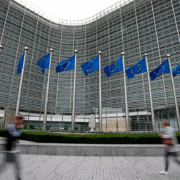
Big Tech to Avoid Strict Obligations in EU Digital Rules Overhaul, Sources Say

Major U.S. technology companies including Alphabet, Meta Platforms, Netflix, Microsoft and Amazon are set to avoid strict new regulatory obligations under the European Union’s upcoming overhaul of digital rules, according to people with direct knowledge of the matter.

Despite strong lobbying from telecoms companies for tougher measures targeting Big Tech, the companies will instead fall under a voluntary framework as part of the planned Digital Networks Act (DNA), the sources said. The European Commission has declined to comment.

The DNA, which will be presented by EU tech chief Henna Virkkunen on January 20, is aimed at boosting Europe’s competitiveness and encouraging greater investment in telecoms infrastructure. The proposal will still need approval from EU member states and the European Parliament before it can become law.

Under the draft rules, Big Tech firms will be encouraged to cooperate voluntarily with telecoms operators in discussions moderated by BEREC, rather than being subject to binding obligations similar to those imposed on telecoms providers. One source described the approach as a “best practices regime” with no new mandatory requirements.

The planned overhaul will also address spectrum policy, with the Commission setting out guidance on licence duration, sale conditions and pricing methodologies to be used by national regulators during spectrum auctions, which often generate billions of euros for governments. While the goal is to harmonise spectrum allocation across the EU and reduce regulatory burdens for telecoms firms, some national regulators are expected to resist what they may see as increased centralisation of power.

In addition, the Commission plans to issue guidance on the rollout of fibre infrastructure, a key element of the EU’s digital strategy to narrow the gap with the United States and China. Governments may also be allowed to extend the 2030 deadline for replacing copper networks with fibre if they can demonstrate they are not ready to meet the target.

The EU’s digital policy push has drawn criticism from Washington in recent years, with U.S. officials arguing that new rules unfairly target American companies. Brussels has repeatedly rejected those claims.

MiniMax, China’s Second ‘AI Tiger’, Doubles in Hong Kong IPO Debut

Shares of MiniMax Group, one of China’s so-called “AI tigers,” surged on their first day of trading in Hong Kong on Friday, with the stock more than doubling as investors piled into the consumer-focused artificial intelligence firm.

MiniMax closed at HK$345 per share, compared with its offer price of HK$165, valuing the company at around $13.7 billion. The shares climbed as high as HK$351.8 during the session. The strong debut followed the company’s initial public offering, which raised about HK$4.8 billion ($620 million) to fund research and development.

The performance outpaced that of fellow AI tiger Zhipu AI, which rose 13% in its Hong Kong debut a day earlier. Zhipu AI extended gains on Friday, climbing another 20.6% and pushing its valuation close to $9 billion.

Analysts said MiniMax’s focus on consumer-facing applications helped fuel investor enthusiasm. “MiniMax’s consumer orientation appealed more to investors seeking high-growth opportunities, while Zhipu’s enterprise and government focus was seen as more stable but less exciting,” said Lian Jye Su, chief analyst at Omdia. He added that strong benchmark results for MiniMax’s open-source foundation models also boosted sentiment.

Founded in early 2022 by former SenseTime executive Yan Junjie, the Shanghai-based company develops multimodal AI models capable of processing text, audio, images, video and music. Its popular products include Hailuo AI, a video generation tool, and Talkie, an AI character interaction app that allows users to engage with virtual personas.

“This is only the beginning,” Yan said at the listing ceremony, adding that he hoped the pace of technological progress in AI would remain rapid over the coming years.

MiniMax’s cornerstone investors include Alibaba Group, the Abu Dhabi Investment Authority, Boyu Capital and Mirae Asset. The listing comes amid strong global investor appetite for AI-related stocks, as China accelerates efforts to build homegrown technology champions.

Hong Kong has seen a sharp rebound in IPO activity, emerging last year as the world’s leading listing venue. Companies raised about $37.2 billion from 115 new listings, the highest level since 2021, according to LSEG data.

Meta Strikes Long-Term Nuclear Power Deals With Vistra, Oklo and TerraPower

Meta Platforms said on Friday it has signed 20-year agreements to secure nuclear power from three U.S. plants operated by Vistra and to support the development of small modular reactor (SMR) projects with Oklo and TerraPower.

The move underscores how large technology companies are seeking long-term electricity supplies as artificial intelligence workloads and data centres push U.S. power demand higher for the first time in two decades. Following the announcement, Oklo shares surged nearly 20%, while Vistra rose about 8% in premarket trading.

Meta said it will buy power from Vistra’s Perry and Davis-Besse nuclear plants in Ohio, as well as the Beaver Valley plant in Pennsylvania. The company said the agreements will help finance expansion at the Ohio facilities and extend the operational life of the plants, which are licensed to run through at least 2036. One of Beaver Valley’s two reactors is licensed through 2047.

In addition to power purchases from existing plants, Meta said it will help develop new nuclear capacity through partnerships focused on small modular reactors. SMRs are designed to be built largely in factories rather than on-site, which supporters say could eventually reduce costs, though critics argue they may struggle to achieve the economies of scale of traditional large reactors. There are currently no SMRs operating commercially in the United States, and all projects still require regulatory approval.

Meta said the agreements could provide up to 6.6 gigawatts of nuclear power by 2035. A typical nuclear power plant produces about 1 gigawatt. In 2024, Meta sought proposals from nuclear developers for between 1 and 4 gigawatts of capacity.

Under the deal with TerraPower — a company backed by Bill Gates — Meta will help fund the development of two reactors expected to generate up to 690 megawatts as early as 2032. The agreement also gives Meta rights to energy from up to six additional TerraPower reactors by 2035. TerraPower President and CEO Chris Levesque said the partnership would support rapid deployment of new reactors.

Meta’s partnership with Oklo is aimed at developing up to 1.2 gigawatts of nuclear capacity in Ohio as early as 2030. Oklo co-founder and CEO Jacob DeWitte said Meta’s support would help fund early procurement and development work.

Meta Chief Global Affairs Officer Joel Kaplan said the new agreements, together with a deal signed last year with Constellation Energy to keep an Illinois reactor running for 20 years, would make Meta “one of the most significant corporate purchasers of nuclear energy in American history.”